


Shop our ASTM F1004 certified fabric safety gates today and protect your stairs the right way. Browse The Stair Barrier collection now.
Baby gate safety standards are defined by ASTM F1004, the federal safety code for all expansion gates and enclosures. The standard covers gate strength, gap spacing, lock safety, and labeling. The essential rule: pressure-mounted gates must never go at the top of stairs because they can collapse under a child's weight. Only hardware-mounted or certified gates that meet these strict requirements are safe for stairways.
What Is ASTM F1004 and Why Does It Matter for Baby Gates?
ASTM F1004 is the mandatory federal safety standard for all baby gates and enclosures sold in the United States. It sets minimum requirements for gate height, strength, gap spacing, locking mechanisms, and labeling. The Consumer Product Safety Commission (CPSC) adopted this standard into federal law under 16 C.F.R. Part 1239. Any gate that does not meet these requirements cannot legally be sold in the U.S.
When you shop for a stair safety gate, you will see the term ASTM F1004 on packaging and product pages. This is not a voluntary badge or a marketing claim. It is the legally required safety specification that every expansion gate and expandable enclosure sold in the United States must meet before it reaches store shelves.
The full name is the Standard Consumer Safety Specification for Expansion Gates and Expandable Enclosures. It was developed by ASTM International and adopted into federal law by the CPSC. The goal is simple: ensure every gate on the market meets a minimum safety threshold that protects children from harm.
Who Enforces ASTM F1004
The Consumer Product Safety Commission (CPSC) oversees compliance. Manufacturers must test their products in third-party laboratories and certify that each model passes every requirement. The CPSC can issue recalls, fines, or bans for gates that fail to meet the standard.
What the Standard Covers
- Gate height: Minimum 22 inches to prevent climbing
- Bar spacing: Limits on gaps to prevent head and neck entrapment
- Locking strength: Hardware must resist tampering by children
- Sharp edges: No points or edges that could cut or puncture
- Small parts: No components small enough to be a choking hazard
- Toxic materials: Lead paint and other hazardous substances are banned
Why Pressure-Mounted Gates Are Not Safe for Stairways
Pressure-mounted gates are one of the most common types of baby gates on the market, and also one of the most dangerous when used in the wrong location. These gates stay in place by using tension against door frames or walls — they do not use screws, bolts, or any permanent mounting hardware.
Never use a pressure-mounted gate at the top of stairs. Only hardware-mounted or certified fabric safety gates are safe for stairway use.
The Danger of Gate Collapse
Safety experts and pediatricians strongly advise against using pressure gates at the top of stairs. Consumer Reports notes that hardware-mounted gates are the most secure option for stairways because they screw directly into wall studs or wood frames. A pressure gate can dislodge if a child leans on it, bumps into it, or tries to climb. When a gate fails at the top of stairs, the result can be a dangerous fall down the entire staircase.
Data from the CPSC reveals the real-world impact of gate-related accidents. Each year, nearly 2,000 children visit emergency rooms for gate-related injuries in the United States. Many of these incidents involve gates that failed or were installed in the wrong location.
Pressure Gates and Safety Standards
All baby gates must meet baby gate safety standards set by the CPSC. However, passing the basic standard does not mean a gate is safe for every location. Pressure-mounted gates pass the same lab tests as hardware-mounted gates, but real-world conditions — bumps, climbing attempts, and daily wear — can cause tension-only gates to fail. This is why the CPSC and all major safety organizations recommend hardware-mounted gates specifically for stairway use.
A Better Way to Secure Your Stairs
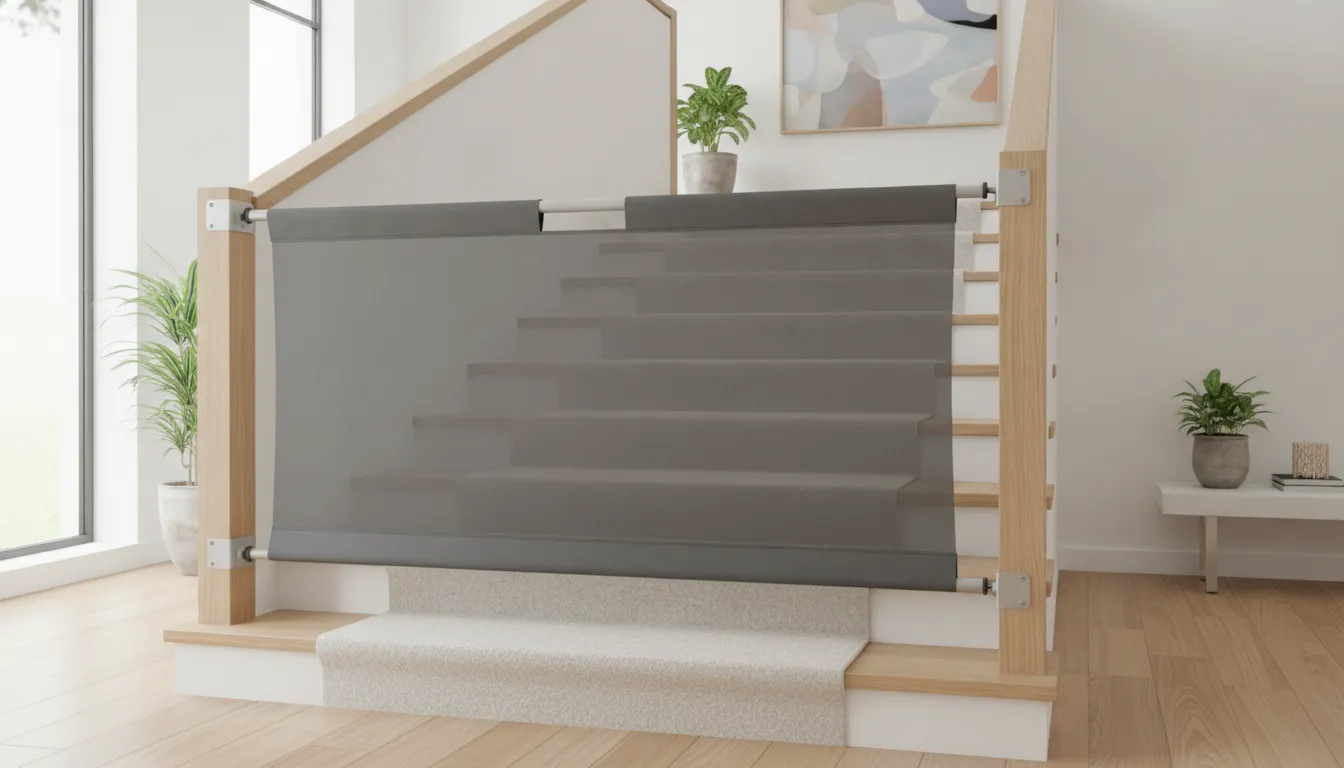
If you want a safe stair gate but do not want to drill into your wood banisters, modern fabric safety gates offer a no-drill solution. The Stair Barrier's banister-to-banister design uses straps that wrap around banisters for a secure fit without damaging the wood. This meets all ASTM F1004 requirements while preserving your home's appearance.
Key ASTM F1004 Requirements Every Parent Should Know
The ASTM F1004 standard covers multiple aspects of gate design and construction. These requirements exist to prevent the most common types of baby gate accidents, including falls, entrapment, and climbing injuries.
Height and Strength Rules
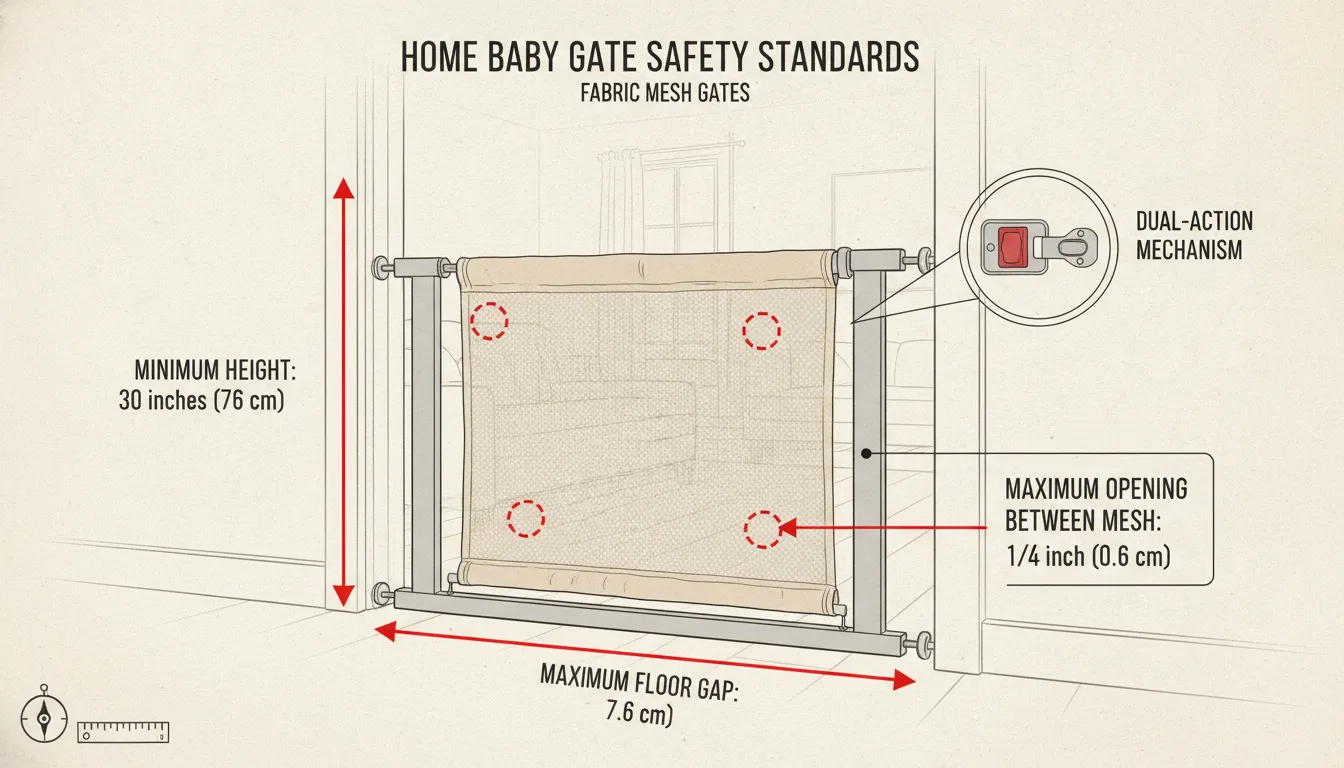
Gates must be at least 22 inches tall to prevent children from climbing over them. The Stair Barrier exceeds this requirement with a 32-inch gate height, giving parents extra protection against early climbers. The standard also requires gates to withstand a child's full body weight leaning or pushing against the gate without collapsing.
- Minimum gate height: 22 inches (The Stair Barrier: 32 inches)
- Gates must resist pushing, leaning, and climbing forces
- Sharp edges and points are strictly prohibited
- Small parts that pose choking hazards are banned
- Lead paint and other toxic substances are not allowed
Gap and Spacing Rules
Bar entrapment is one of the most serious risks with traditional baby gates. When a child's head or neck gets stuck between vertical bars, the result can be strangulation or serious injury. ASTM F1004 sets strict limits on gap sizes to prevent this.
The Stair Barrier eliminates this risk entirely by using solid fabric panels with internal vertical struts instead of exposed bars. This design prevents head entrapment while providing a smooth, safe surface for children.
Locking System Requirements
A gate is only effective when it stays closed. The ASTM F1004 standard requires locking mechanisms that are difficult for children to open but easy for adults to operate. The Stair Barrier uses a 6-point buckle system that requires two hands and adult-level dexterity to open. The buckles are positioned out of reach of toddlers, preventing them from playing with or manipulating the latch.
The standard also requires clear labeling on every gate, including:
- Model name and number
- Manufacturing date (at least month and year)
- Manufacturer contact information
- Consumer registration information for recall notifications
How The Stair Barrier Meets and Exceeds ASTM F1004 Standards
The Stair Barrier does not just meet the minimum requirements of ASTM F1004. Every gate is designed to exceed the standard in meaningful ways that provide better safety, easier maintenance, and a cleaner look in your home.
| Feature | Traditional Baby Gates | The Stair Barrier |
|---|---|---|
| Safety compliance | Meets ASTM F1004 minimum | Exceeds ASTM F1004 requirements |
| Entrapment risk | Gaps between vertical bars | No gaps, soft fabric panels |
| Gate height | 22 to 30 inches | 32 inches for better climb protection |
| Stair compatibility | Limited stair mounting options | Banister-to-banister and wall-to-banister |
| Cleaning | Wipe-down only | Machine-washable and dryer-safe fabric |
| Climb resistance | Horizontal bars offer footholds | Vertical struts resist climbing attempts |
Third-Party Safety Testing
The Stair Barrier submits every gate model to independent third-party labs for testing. These labs evaluate the gates for structural integrity, lock strength, gap compliance, and long-term durability. Results are documented and available for review, giving parents confidence that the safety claims are backed by real testing data.
Fabric Construction for Safer Protection
Traditional baby gates use hard plastic, metal, or wood bars that create entrapment risks and hard edges. The Stair Barrier uses upholstery-grade fabric stretched over an internal frame. This design eliminates the gaps between bars where children can get stuck. The fabric is also free from lead paint and other hazardous coatings found on some budget metal gates. Since the fabric is machine-washable and dryer-safe, parents can keep the gate clean and sanitary with regular washing.
What the 2026 ASTM F1004 Updates Mean for Your Family
In April 2026, the CPSC published updated rules adopting ASTM F1004-23 as the new federal standard. These updates raise the bar for gate safety and introduce new requirements that affect every gate sold in the United States.
Mandatory Product Registration
One of the most significant changes is the requirement for product registration. Every gate must now include a registration card or online form that consumers must complete after purchase. This allows manufacturers to contact you directly in the event of a recall or safety notice. Registering your gate is a simple but critical step for keeping your family informed.
Stronger Testing Requirements
The 2026 updates also strengthen testing protocols for gate strength and stability. Manufacturers must now conduct more rigorous tests to ensure gates remain secure under repeated use and impact. Audits of test results are now required, adding an extra layer of accountability.
Frequently Asked Questions
Do fabric baby gates meet the same safety standards as metal gates?
Yes. Fabric safety gates must pass the same ASTM F1004 tests as metal or plastic gates. These tests evaluate strength, lock safety, height, and gap compliance. The Stair Barrier uses heavy-duty fabric with an internal reinforced frame to meet and exceed these requirements. You get the safety of a certified gate without the hard bars or sharp edges of traditional designs.
Can I use a pressure-mounted gate at the bottom of stairs?
Pressure-mounted gates may be used at the bottom of stairs if the manufacturer's instructions permit it, but they are never safe at the top. For any stair-adjacent location, hardware-mounted or certified fabric gates are the safer choice because they remain fixed in place even under pressure from a child leaning or climbing.
How do I register my baby gate for safety recalls?
Each new gate includes a registration card or online registration option. Complete and submit this form as soon as you install the gate. Federal law requires manufacturers to maintain these records so they can reach you if a recall or safety notice is issued. Registering ensures you receive timely updates about your specific gate model.
What is the risk of bar entrapment in traditional baby gates?
Bar entrapment occurs when a child's head, neck, or limbs become stuck between vertical bars. ASTM F1004 sets maximum gap sizes to reduce this risk, but traditional bar-style gates still present a danger. Fabric gates eliminate this risk entirely because they use solid panels instead of exposed bars. The Stair Barrier's fabric design prevents entrapment while also making it harder for children to find climbing footholds.
How often should I replace my baby gate?
Baby gates should be inspected regularly for signs of wear, loose hardware, or damage. Most manufacturers recommend replacing gates every 3 to 5 years or whenever you notice that the gate does not close, latch, or lock securely. If your gate has been through a fall or impact, replace it immediately even if no visible damage is present.
Choose a Certified Fabric Safety Gate for Your Home Today
Your child's safety depends on choosing the right gate for the right location. Using a pressure-mounted gate at the top of stairs, or choosing a gate that does not meet current ASTM F1004 standards, puts your family at unnecessary risk. A certified fabric safety gate delivers the protection you need with a design that complements your home.
Ready to protect your stairs with a certified, ASTM F1004-compliant fabric safety gate? Shop The Stair Barrier collection today and find the perfect gate for your home.

Written by Arden Vale
Design & Safety Specialist
Arden provides expert guidance on blending ASTM safety standards with modern interior styling, helping parents and pet owners create secure, beautiful spaces.