


A stair gate should protect the drop without making a beautiful home look barricaded. The right choice starts with secure mounting and the correct fit, then adds a design you will gladly live with every day.
Shop The Stair Barrier's fabric safety gates to compare stair-ready options before you buy.
The best baby gates for stairs use secure, stair-appropriate mounting, fit the exact opening, and leave no easy path for a child to push through it. At the top landing, avoid pressure-mounted gates and choose a solution made for that high-risk location. Look for clear installation guidance, a dependable latch, and compliance with CPSC rules that incorporate ASTM F1004 for expansion gates and enclosures. Then weigh daily use, your stair layout, and materials that suit your style and complement the room's existing finishes rather than dominate them every day. A fabric safety gate can pair practical stair protection with a softer, design-led look, but no gate replaces careful adult supervision.
So, which features deserve priority before color and fabric enter the decision? Best baby gates for stairs: the safest starting point separates the nonnegotiable fit and mounting checks from the choices that make a barrier feel at home. The path begins with:
Best baby gates for stairs: the safest starting point
The best baby gates for stairs start with the location, not the color or gate style. A top-of-stairs opening calls for secure hardware or an approved stair-focused installation. Do not treat a pressure-mounted gate as a shortcut for this spot.
Gate standards also matter. The Consumer Product Safety Commission has incorporated ASTM F1004 into its mandatory standard for gates and enclosures. Choose a gate that meets that standard, install it as directed, and keep in mind that no gate replaces adult supervision.
Top-of-stairs gate choices
At the top of the stairs, start with a secure mounting plan. Do not use a pressure-mounted gate there. Look for a stair-focused design that fits the exact wall, banister, and trim around the opening.
Inspect both sides before choosing a model. A wall-to-banister opening needs a different setup than two facing banisters. For an unusual shape, review options for gates for difficult stair layouts instead of guessing about fit.
Bottom-of-stairs gate choices
The bottom of the stairs still needs a gate made and approved for that location. Choose its mounting method based on the surfaces around the first step. Avoid assuming that any gate will work just because the opening looks simple.
Bottom openings may include baseboards, wide trim, or an angled banister. Measure each feature that could affect the gate's fit. If the opening runs between two posts, a banister-to-banister fabric safety gate can pair a stair-focused fit with a softer visual profile.
Fit, function, and appearance
A safe choice must fit the opening and suit daily use. Measure the opening at the points named in the maker's instructions. Then check how the gate opens, stores, and works with nearby handrails or walking paths.
- For the top: prioritize secure mounting and a design approved for the exact stair setup.
- For the bottom: match the installation method to the walls, trim, posts, and first step.
- For either location: confirm the safety standard, follow all instructions, and ask for fit help when measurements are unclear.
- For the room: choose a finish or fabric that works with the space after the safety and fit checks are complete.
Style does not need to come at the cost of a sound stair setup. Fabric and low-profile designs can blend into a curated home, but mounting and fit come first. Parents should choose the installation plan before comparing colors, materials, or storage features.

Compare the main types of stair baby gates
Choosing among the best baby gates for stairs starts with the mounting point, opening width, and daily traffic. The right gate must fit the actual stair layout while staying simple for adults to use. Use this table to narrow the options before checking each maker's fit and placement rules.
A gate should meet current safety requirements and be installed as its maker directs. The U.S. Consumer Product Safety Commission incorporates ASTM F1004 into its mandatory standard for gates and expandable enclosures. That standard gives shoppers a useful baseline, but it does not make every gate right for every stair. No gate replaces active adult supervision.
| Gate type. | Use case. | Strengths. | Cautions. | Style impact. |
|---|---|---|---|---|
| Fabric stair barrier. | Banister-to-banister or wall-to-banister openings. | Soft surface, light build, and flexible fit. | Confirm the model matches the mounting points. | Upholstery-grade fabric can blend with the room. |
| Hardware-mounted swing gate. | Busy stair openings with solid mounting surfaces. | Fixed attachment and familiar walk-through access. | Needs drilling, swing clearance, and firm anchor points. | Metal or wood frame stays visible. |
| Retractable gate. | Openings where a clear path matters when not in use. | Rolls away and uses little floor space. | Check the approved placement, width, and mounting surfaces. | Low visual impact while retracted. |
| Pressure-mounted gate. | Doorways and other maker-approved, non-stair locations. | Fast setup without drilling. | Do not use at the top of stairs. | Frame and bottom rail remain noticeable. |
| Extension gate. | Wide or nonstandard openings. | Add-on panels can cover more width. | Use only compatible extensions and confirm stair approval. | Extra panels create a larger visual footprint. |
Mounting method and stair position
For the top of stairs, start with a model specifically approved for that position and layout. A hardware-mounted swing gate can suit solid walls, while a fabric barrier can address openings shaped by banisters. Do not treat a pressure-mounted gate as a top-of-stairs option.
Fabric barriers can be useful where a rigid rectangular frame would distract from the room or fit poorly. The Stair Barrier models are light, washable, and able to roll aside when not in use. For two open railings, consider a banister-to-banister fabric safety gate designed for that setup.
Opening width and daily use
A gate only works well when it fits the full opening and its mounting points. Before buying, measure at the spots where the gate's hardware or straps will sit. Note baseboards, trim, angled rails, and nearby doors that may affect placement.
Wide openings may call for an extension gate, but extra panels must match the base model. Retractable gates save space when open, while swing gates need a clear path through their full arc. In high-traffic areas, test whether every caregiver can operate the latch as intended.
Style and final fit
Style matters because a stair gate may stay in view for years. Fabric offers color and texture choices, while metal and wood gates create a stronger visual frame. Retractable designs nearly disappear when open, but their mounting hardware remains visible.
Compare the tradeoffs in the comprehensive stair safety gate guide, then verify the model's stated use. If the stair has unusual rails or trim, measure first and ask for fit help rather than guessing.
What features matter most for stair safety?
Secure mounting and stair-facing controls
The best baby gates for stairs begin with a mount that stays firm under daily use. At the top of a stairway, choose a hardware-mounted design rather than a pressure-mounted gate. The hardware should suit the wall, post, or banister without weakening the surface.
Next, check how the gate opens near the drop. A one-way opening or stop feature can keep it from swinging out over the stairs. Test the latch with one adult hand, then confirm a child cannot easily copy the motion.
Unusual rails, trim, and offset posts often need a more tailored plan. Review options for gates for difficult stair layouts before buying, and never force standard hardware onto an unsuitable surface.
- Choose a mount made for the exact stair location.
- Check that all fasteners stay tight after repeated use.
- Keep the gate from opening toward a stair drop.
- Make sure the latch closes fully each time.
A clear path and practical dimensions
A gate should protect the stair opening without adding a needless trip risk. Look for a low-profile threshold, or no floor bar where the design allows. This detail matters when an adult carries a child, laundry, or bags through the opening.
Height also matters, but a taller gate is useful only when it fits and latches well. Measure the opening at more than one point because walls and banisters may not be even. Include baseboards, trim, post shape, and nearby handrails in the fit check.
Compare every measurement with the maker's stated fit range before ordering. The Stair Barrier's installation resources can help clarify placement and fit. If the layout remains unclear, send photos and measurements to support instead of guessing.
Safety standards, fit, and supervision
Look for a gate that meets ASTM F1004, the safety specification for expansion gates and expandable enclosures. The U.S. Consumer Product Safety Commission incorporated this standard into its mandatory rule for gates and enclosures. A standards claim is a useful baseline, but it does not correct a poor fit or loose mount.
Banister compatibility deserves its own check. Confirm whether the model supports banister-to-banister, wall-to-banister, or wall-to-wall placement. Also check whether its attachment method protects the banister while holding the gate firm.
After installation, follow the maker's directions and test the gate often. Watch for loose hardware, fabric slack, latch wear, or a shift in alignment. No safety gate removes every risk or replaces close adult supervision around stairs.
How do you choose a gate that fits your stairs?
The best baby gates for stairs begin with the opening, not a product photo. Measure the exact space and note what stands on each side. A wall, round banister, square post, or trim edge can change the right gate and mounting setup.
Start with the stair location
First, decide whether the gate will sit at the top or bottom of the stairs. This choice shapes how the gate must mount and open. The U.S. Consumer Product Safety Commission has incorporated the ASTM F1004 gate standard into its mandatory safety rules.
- Mark the gate position. Choose the exact spot where the gate will sit. Check that it will not block a handrail or create a trip point.
- Name both mounting surfaces. Record whether each side is a wall, banister, post, or another firm surface. Do not treat trim or molding as open space.
- Measure the opening. Measure between the mounting points where the gate hardware will attach. Check the width near the floor and again higher up, since posts may angle.
- Check the surrounding space. Note baseboards, decorative trim, uneven posts, and nearby doors. Also check which direction the gate can open without reaching the stairs.
- Match the gate to the layout. Pick banister-to-banister or wall-to-banister when those surfaces frame the opening. For wall-to-wall spaces, confirm that the chosen gate and hardware suit two walls.
- Review the fit before ordering. Compare every measurement with the product guidance. If any surface or measurement is unclear, ask support to review photos instead of guessing.
Match the gate to both sides
A banister on each side calls for a Banister-to-Banister safety gate. A wall on one side and a banister on the other needs a Wall-to-Banister setup. Wall-to-wall openings need hardware made for that layout, rather than a forced fit.
Look beyond the opening width. Round posts, angled rails, thick baseboards, and uneven walls can affect where hardware sits. A safe-looking gap can still be a poor fit if the mounting points are not firm and aligned.
When should you ask for help?
Use the brand's installation resources before buying and again before mounting the gate. They can help you compare your opening with the intended setup. Keep your measurements and clear photos ready when contacting support.
Ask for help when the stairs curve, the posts differ, or the opening changes width from top to bottom. Support can guide the fit review, but adult supervision remains important after installation.
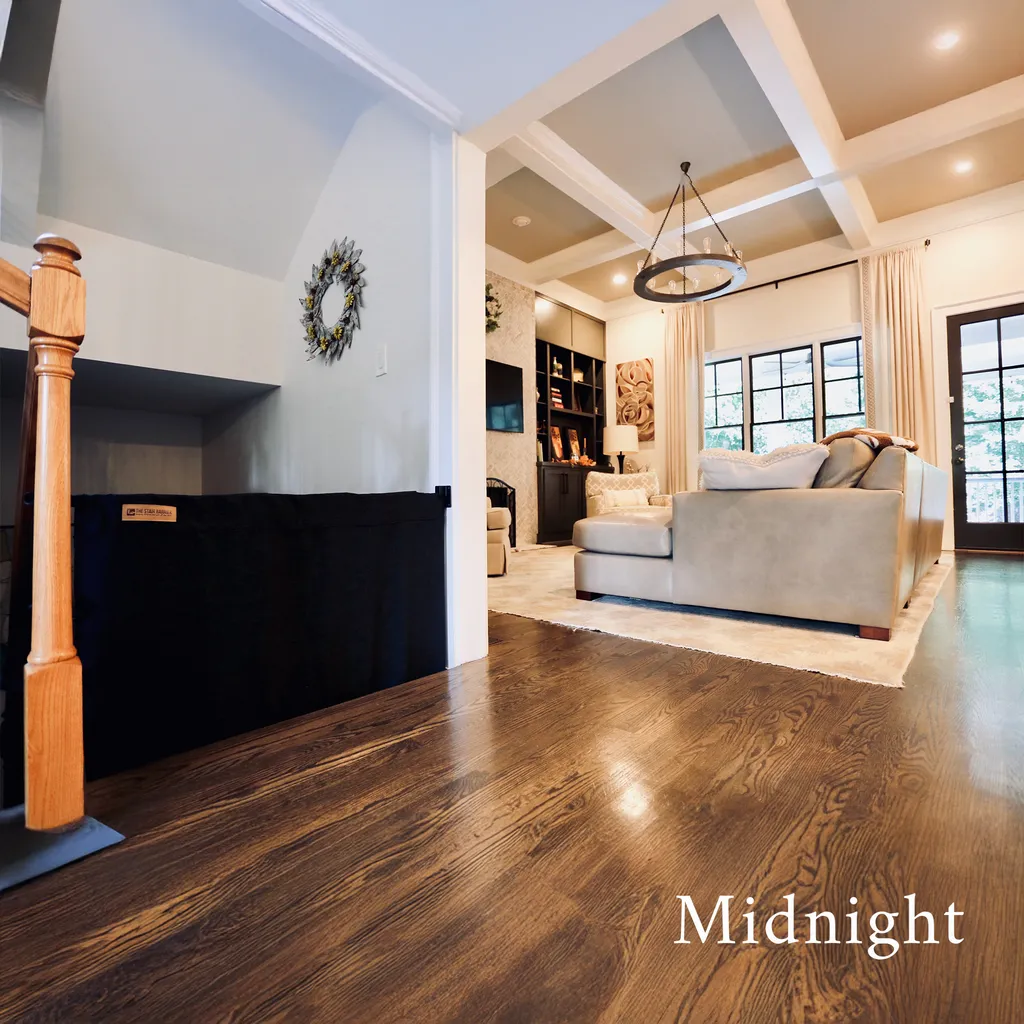
Style, cleaning, and daily use matter too
Safety and fit should lead every gate choice, but daily life does not stop after installation. The best baby gates for stairs also need to suit the room, handle routine messes, and stay easy to use. Those practical details often shape how well a gate works for a family over time.
This balance matters because a stair gate has a serious job. Falls on stairs are a common cause of medically attended injuries among children under five. Once safety needs are met, parents can compare how each option looks and works during an ordinary day.
A gate that belongs in the room
A safety gate becomes part of the home's visual landscape. It may sit beside a wood banister, patterned runner, or carefully chosen wall color. A bulky gate can draw attention away from those details, while a fabric design can feel softer and less industrial.
The Stair Barrier uses upholstery-grade fabric and offers a range of fabric options. That choice lets parents look for a color and pattern that works with nearby finishes. Its banister-to-banister fabric safety gate also shows how the barrier can work with an open stair layout.
Style is not a substitute for safe installation. Instead, it is a useful factor after the gate type, location, and fit have been checked. For design-conscious homes, that order makes it possible to protect the stairs without treating the gate as an unwanted eyesore.
Cleaning that fits family life
Stair gates sit in busy spaces where hands, shoes, pets, and spills can leave marks. A finish that is hard to clean may soon look worn. Parents should check the care instructions before buying, then decide whether the required upkeep fits their routine.
The Stair Barrier fabric is machine-washable and dryer-safe. That makes routine care more direct when the barrier needs a deeper clean. The fabric approach also avoids the many rigid corners and rails found on some traditional gates.
- Check whether the main barrier can be removed for washing.
- Review the care directions before treating a stain.
- Look for hardware that is simple to wipe clean.
- Make sure cleaning does not change the gate's secure fit.
After washing or routine care, inspect the full barrier before using it again. Confirm that the fabric, straps, and mounting points remain in good condition. A clean gate still needs the same careful setup and adult supervision as it did on day one.
Storage and daily flow
Think about what happens when the gate is not needed. A swinging gate needs clear floor space, and a loose removable gate needs a safe storage spot. The Stair Barrier can roll to the side, which keeps the opening more open without moving the full barrier elsewhere.
Daily use should also feel simple for the adults in the home. Consider how often people carry laundry, bags, or a child past the gate. A practical option should support that routine while keeping its hardware and barrier secure when in use.
Use The Stair Barrier's fit guidance before ordering so your gate matches the opening, mounting points, and daily traffic pattern.
Finally, compare the gate with the exact stair layout rather than the room alone. Banisters, walls, trim, and opening width can all affect fit. For unusual spaces, review gates for difficult stair layouts before choosing a style or fabric.
Which gate is best for your household?
Choosing the best baby gates for stairs starts with the opening, not the product style. A gate that suits one landing may be wrong for another. Before comparing materials or colors, note the gate location, mounting points, daily traffic, and people or pets using the space.
Start by noting whether the gate will sit at the top or bottom of the stairs. Then check whether each side has a wall, banister, or other firm mounting point. Fit and placement should lead the decision because falls on stairs are a common cause of medically attended injuries in young children.
Stair location and mounting points
At the top of stairs, avoid pressure-mounted models and choose a gate made for a secure stair installation. Check whether the gate can attach firmly without creating a trip hazard. A fabric safety gate can be a strong fit when the opening has banisters or a wall-and-banister pair.
At the bottom of stairs, focus on stopping access while keeping the nearby floor easy to cross. Keep the walking path, gate swing, and latch position in mind. If the route gets frequent use, choose a setup that adults can open and close with care.
Banisters, pets, and everyday style
Homes with two banisters need a model built around those mounting points. A banister-to-banister fabric safety gate is designed for that type of opening. For one wall and one banister, look for a matching wall-to-banister setup rather than forcing a standard gate to fit.
A design-led home may call for a barrier that does not look separate from the room. Upholstery-grade fabric offers a softer look than bulky plastic or metal. A washable fabric gate also makes sense in busy homes. Roll-to-side storage keeps the opening clear when the barrier is not needed.
Pet owners should consider the animal's size, habits, and response to a soft barrier. The gate still needs a firm fit and secure fastening. Check whether a dog tends to jump, push, or chew before choosing. For pet-only use, match the barrier to the animal rather than assuming a child gate suits every pet.
Shared homes and difficult layouts
Grandparents may value a gate that suits visits without making the home feel permanently divided. A lightweight fabric model can be useful when it is installed correctly and stored to the side between visits. Still, every visit calls for a quick check of the fasteners, fit, and latch.
Difficult stairs often have wide openings, angled walls, unusual trim, or mismatched banisters. Do not guess based on a single width measurement. Use the brand's installation resources to measure the full opening and review the mounting points. Ask for fit guidance when the layout does not match a standard setup.
Whichever gate type fits the household, treat it as one part of stair safety. Follow its instructions, check it often, and keep adult supervision in place. The strongest choice is the gate that fits the actual opening and works with the household's daily routine.
Frequently Asked Questions
What's the best baby gate for stairs?
The best baby gate fits the stair layout, mounts securely, and works well for daily use. At the top of stairs, avoid pressure-mounted gates. Look for a model that meets the ASTM F1004 safety standard. Measure the opening and identify whether the gate will connect to walls, banisters, or both before choosing a design.
What can you use instead of a baby gate for stairs?
Do not improvise a stair barrier with furniture, boxes, or other movable items. If a standard gate does not fit, choose a safety gate made for the specific layout. Banister-to-banister and wall-to-banister designs can address unusual mounting surfaces. Measure carefully and use installation resources or support when the correct fit is unclear.
Is it better to put a baby gate at the top or bottom of stairs?
A suitable gate may be needed at both ends when a child can reach the staircase from either direction. The top requires especially secure installation because a failed barrier can expose a child to a fall. Pressure-mounted gates are not recommended there. At the bottom, the gate should block access without creating a tripping hazard on a higher step.
When should you stop using a baby gate on stairs?
The ASTM F1004 standard says expansion gates are intended for children ages six months through 24 months. Age is only one factor, so also follow the gate manufacturer's limits. Stop relying on a gate if the child can climb over it, open its latch, or otherwise defeat it. Continue supervising children around stairs after removing the gate.
Ready to Choose the Right Gate for Your Stairs?
Waiting to choose a stair gate can leave a busy part of your home without the barrier your household needs. Starting now gives you time to measure each opening, compare installation options, and select a fabric that suits your space. A careful choice today can prevent rushed decisions and help you prepare a gate that fits your stairs and daily routine.
Ready to choose the right fabric safety gate? Use the installation resources to check your setup, confirm what to measure, and choose the right fabric safety gate. Review the steps before buying to avoid losing time correcting a preventable fit issue. If your stairs have an unusual layout, contact support before ordering instead of guessing about fit.

Written by Arden Vale
Design & Safety Specialist
Arden provides expert guidance on blending ASTM safety standards with modern interior styling, helping parents and pet owners create secure, beautiful spaces.