


Wide stairways and doorways deserve more than a gate chosen by appearance alone. If you want to buy extra wide fabric baby gate protection with confidence, start with the opening. Measure the span at the actual mounting points, identify the surfaces, and choose the configuration made for that layout. Then compare the gate's fit with your household's daily routine.
Shop the banister-to-banister fabric gate
Quick answer: For an opening greater than 43 inches and up to 52 inches, choose The Stair Barrier Wide size in the configuration that matches your mounting surfaces. Correct installation, regular inspection, and adult supervision remain essential.
How to Buy Extra Wide Fabric Baby Gate Protection
Quick answer: Measure between the surfaces where the gate will attach. Identify whether the opening is banister-to-banister or wall-to-banister. Then compare the span at those mounting points with Regular, 36 inches to 43 inches, or Wide, 43 inches plus to 52 inches.
A wide opening can look uniform from across the room but change at installation height. Trim, curved banisters, angled stairs, and uneven walls can affect the usable span. The right measurement is the distance between the points where the product will be secured, not a rough estimate across the widest part of the room.
- Identify both mounting surfaces. Decide whether the gate will connect two banisters or one wall and one banister. These configurations use different mounting approaches.
- Measure at the installation height. Measure from the inside edge of one mounting point to the inside edge of the other. Keep the tool level and record the result in inches.
- Check the other end. Stair openings can vary from top to bottom. Take another measurement at the second relevant installation point.
- Apply the size range. Regular covers 36 inches to 43 inches. Wide covers 43 inches plus to 52 inches. Use the span measured at the actual mounting points and confirm unusual or boundary measurements with product guidance.
- Confirm before checkout. Keep your measurements beside you while reviewing the product details. If the surfaces or angle are unusual, request fit guidance rather than guessing.
This process keeps the decision consistent. Measure the mounting span, match the configuration, and then select the size. If the opening is close to a boundary, pause for confirmation before ordering.
Which Mounting Style Fits a Wide Opening?
Quick answer: Choose banister-to-banister when banisters frame both sides. Choose wall-to-banister when one side is a wall and the other is a banister. After choosing the configuration, compare the measured mounting span with Regular or Wide. Width and mounting surfaces work together.
The Stair Barrier offers Wide fabric safety gates for both primary layouts. The banister-to-banister option connects across two banisters. The wall-to-banister option connects one side to a wall and the other to a banister. Select the product by the physical layout first.

| Opening layout | Starting point | What to confirm |
|---|---|---|
| Banister on both sides | Banister-to-banister | Measure between the banisters at the mounting points. |
| One wall and one banister | Wall-to-banister | Confirm the wall-side mounting area and installation surface. |
| 43 inches plus to 52 inches | Wide size | Confirm the configuration before choosing the size. |
When banister-to-banister is the better fit
When banisters frame both sides, the banister-to-banister design follows the existing architecture. It can help you avoid drilling into finished walls. The gate can also be installed on an angle when the stair layout calls for it, provided the installation follows the product directions.
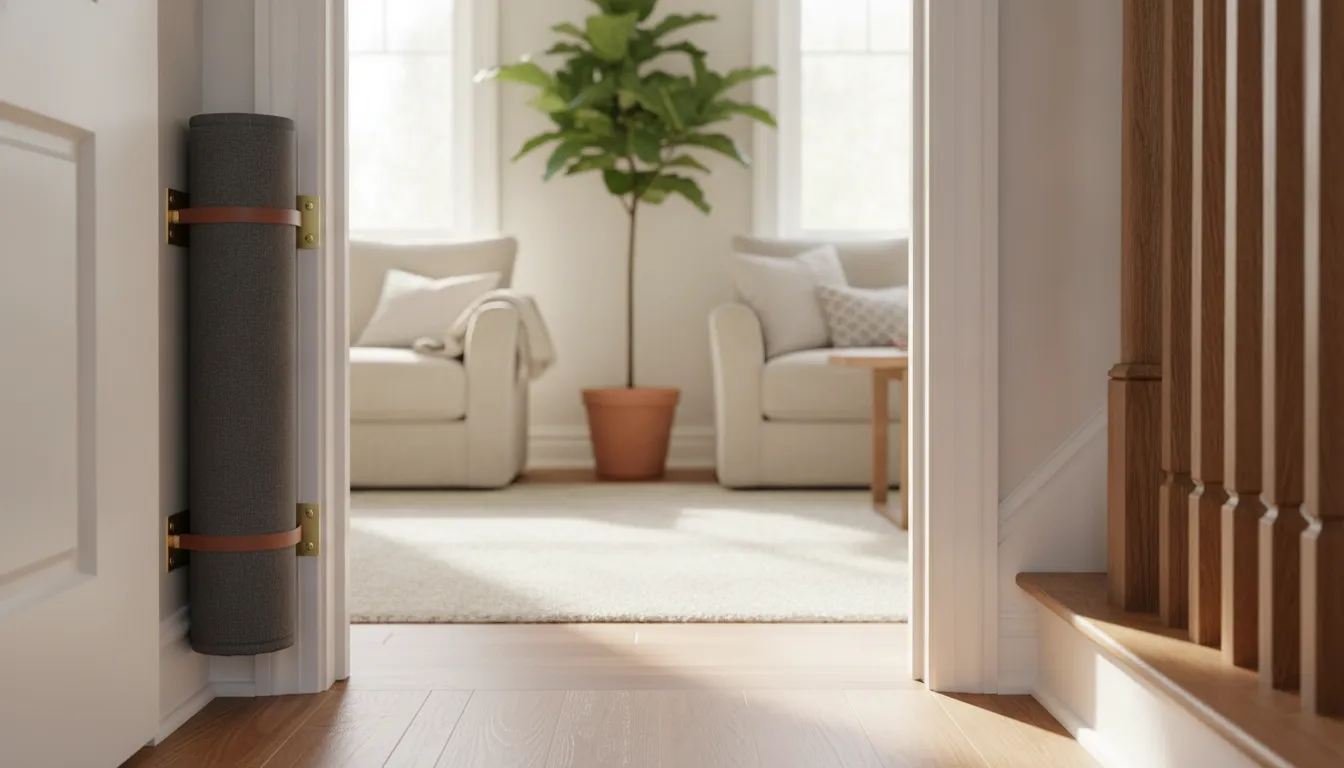
This configuration suits homes with open stairways where the barrier needs to be present without becoming the room's main visual feature. When the passage is open, the fabric rolls to the side instead of requiring storage for a rigid panel.
When wall-to-banister is the better fit
If one side ends at a wall and the other ends at a banister, choose wall-to-banister. This option uses the wall mounting kit and requires the wall-side installation described by the product instructions. Check for trim, unusual angles, or obstructions before ordering.
Review the installation video for either configuration. If your opening does not clearly match one of these layouts, pause and request product-specific support.
Why Choose Fabric for a Wide Stairway or Doorway?
Quick answer: Fabric can create a softer, more integrated alternative to a bulky rigid gate. The Stair Barrier offers more than 20 upholstery-grade fabric options, machine-washable and dryer-safe care, and roll-to-side storage. These features matter more when the gate spans a prominent opening.
A wide gate occupies more visual space than a narrow gate. A large plastic or metal frame can interrupt sightlines through an open living area. Fabric creates a clear boundary while working more naturally with surrounding colors and textures.
A considered look for design-conscious homes
The Stair Barrier is made for parents and pet owners who want safety products to work with the home they have created. Upholstery-grade fabric gives the barrier a finished appearance that feels closer to home furnishings than utility equipment.
Color choice can help the barrier settle into the room. The available colors include Midnight, Silverstone, Sandstone, Ivory Cloud, Charcoal Linen, Pebble Gray Linen, Classic Navy Linen, Parchment Linen, and Pacific Blue Linen. A barrier that looks at home can be easier to live with every day.
Practical care and storage
Stairways and doorways collect fingerprints, dust, and pet hair. Machine-washable, dryer-safe fabric makes routine cleaning easier. Follow the care instructions so the material continues to look and perform as intended.
The gate rolls to the side when the passage needs to stay clear. Its lightweight construction also supports portability between rooms or levels when household needs change.
Are Fabric Baby Gates Safe for Stairs?
Quick answer: A fabric baby gate can be an appropriate stair safety tool when it is designed for the application. Correctly matched to the opening, and installed according to the manufacturer's instructions. The Stair Barrier meets ASTM F1004 safety standards. No gate removes every hazard, so adult supervision remains necessary.
The Stair Barrier fabric safety gates are designed to meet the ASTM F1004 safety standard. ASTM F1004 is the consumer safety specification for gates and enclosures, covering performance and design considerations for this product category. A standard is an important comparison point, not a promise that a gate eliminates every possible risk.
Fit and installation are part of safety
A gate that is too short, attached to an unsuitable surface, or installed outside its directions cannot perform as intended. Confirm the width at the actual mounting points and select the configuration that matches the surrounding structure.
Follow every installation step. Check the mounting points periodically. Inspect the fabric and hardware after moving or reinstalling the gate. If the opening changes, repeat the fit and installation review.
Supervision remains essential
Use the gate as one layer of a broader home safety plan. Adults should continue to supervise children around stairs and barriers. Children can pull, climb, or misuse safety equipment. Regular checks and attentive supervision remain important even when the product is correctly installed and meets the applicable standard.
How to Plan the Installation Before Ordering
A wide gate works best when the installation plan is clear before the package arrives. Look at the opening from both sides. Note where a child or pet approaches the stairs, where adults walk through, and whether a door, trim piece, or furniture could interfere with the barrier.
For a banister-to-banister layout, inspect both banisters at the proposed attachment height. The shape and position of each banister affect how the straps or hardware sit. For a wall-to-banister layout, inspect the wall area as carefully as the banister. Trim, molding, fragile finishes, or an uneven corner may change the practical installation point.
Think about the gate's angle as well as its width. A stair opening may not run straight across the room. The Stair Barrier can be installed on an angle when the layout requires it, but the installation should follow the product directions. Do not improvise a mounting method to make a standard configuration fit an unsuitable surface.
Daily movement is another useful test. Picture carrying laundry, helping a child, or walking through while holding a pet's leash. A fabric barrier that rolls to the side can keep the passage flexible when access is needed. It still needs to be secured whenever the opening must be closed.
Before ordering, keep three notes together: the measured span, the mounting configuration, and any unusual feature that could affect installation. The stair gate fit guide can help organize the decision. If the measurements or surfaces remain unclear, request product-specific guidance before checkout.
How Does a Wide Fabric Gate Compare With Rigid Options?
Quick answer: A wide fabric gate prioritizes a lighter visual presence, flexible storage, and washable care. Rigid plastic or metal options may use a different mounting system and create a stronger visual boundary. Compare the installation surface, fit, daily access, and care routine rather than choosing by material alone.
Every gate has to solve the same basic problem: create a clear boundary that fits the opening and can be used consistently. The best choice depends on the room and the people using it. In an open-plan home, the appearance of a wide rigid frame may matter as much as its dimensions. In a high-traffic doorway, easy cleaning and storage may matter more.
| Factor. | Fabric gate. | Rigid gate. |
|---|---|---|
| Visual presence. | Upholstery-grade colors and a softer profile. | More prominent plastic or metal frame. |
| Storage. | Rolls to the side when open. | May require swing or panel clearance. |
| Care. | Machine-washable and dryer-safe fabric. | Care depends on the materials. |
| Fit. | Match span and mounting configuration. | Match the system to the surfaces. |
A fabric gate is not automatically the right choice for every opening. It is a strong fit when you want a stair-focused barrier that can blend into the room and move aside when the passage is open. A rigid option may suit a different layout or use case.
Compare whether the selected product fits the opening. Then confirm that it can be installed and used as directed.
For a design-conscious household, the decision is often about more than appearance. A gate that coordinates with the room can feel less like a temporary interruption. Washable fabric can support a practical care routine. A roll-to-side design can reduce the temptation to remove the barrier whenever adults need to pass through.
What to Check Before You Buy Extra Wide Fabric Baby Gate
Quick answer: Check the mounting span, surfaces, size range, daily access, care requirements, and installation plan before ordering. Then verify the configuration. This review helps prevent a common mistake: choosing a gate from a photograph without confirming how it fits the actual opening.
- Opening width: Measure between the actual mounting points. Wide covers 43 inches plus to 52 inches. Regular covers 36 inches to 43 inches.
- Mounting surfaces: Decide whether the layout is banister-to-banister or wall-to-banister. Do not choose by width alone.
- Boundary measurements: Use the span measured at the mounting points. If it is close to a size boundary, confirm the fit before ordering.
- Daily access: Consider who uses the opening and whether rolling the barrier aside will make everyday movement easier.
- Maintenance: Confirm that machine-washable, dryer-safe fabric suits your household routine.
- Installation plan: Review the buyers guide and installation details. Request help if the surface or angle is unusual.
A premium gate should earn its place through fit, function, and livability. The Stair Barrier combines a stair-focused configuration choice with fabric that can be cleaned, stored, and coordinated with the room.
The Stair Barrier Wide Fit at a Glance
Quick answer: Choose Wide for a mounting span greater than 43 inches and up to 52 inches. Choose Regular for 36 inches to 43 inches. The correct product also depends on whether the opening is banister-to-banister or wall-to-banister.
The 43-inch boundary deserves care. Measure instead of estimating from the appearance of the stairway. Apply the configuration-specific guidance to the span at the mounting points. If the measurement is close to the boundary, confirm the fit before purchase.
For two banisters, review the banister-to-banister Wide option. For a wall and banister, review the wall-to-banister option. Both support a design-led approach, but their mounting requirements differ.
Compare the Wide wall-to-banister fabric gate
Frequently Asked Questions
What is the widest fabric baby gate available?
The Stair Barrier Wide size fits mounting spans from 43 inches plus to 52 inches. If the span is 36 inches to 43 inches, Regular may be appropriate. Measure at the installation points and confirm the mounting configuration.
Are fabric baby gates safe for stairs?
A fabric gate can be part of a safer stairway setup when it is designed for the application, correctly fitted, and installed according to the manufacturer's instructions. The Stair Barrier meets ASTM F1004 safety standards. Adult supervision and regular checks are still required.
How do I measure for an extra wide baby gate?
Measure the clear width between the walls or banisters at the points where the gate will be installed. Measure at the relevant installation points, identify the configuration, and compare the span with the Regular or Wide range.
Do I need a wall-to-wall or banister-to-banister installation?
Choose banister-to-banister when both sides are banisters. Choose wall-to-banister when one side is a wall and the other is a banister. A wall-to-wall opening should be evaluated against the product options before purchase.
What are the benefits of fabric baby gates compared with metal?
Fabric can offer a softer appearance, upholstery-grade color choices, roll-to-side storage, and machine-washable, dryer-safe care. Material choice does not replace correct fit, installation, or supervision.
Choose the Right Wide Fit
The best extra-wide gate matches the measured opening, mounting surfaces, and way your household uses the space. Review the fit guidance, choose the appropriate configuration, and follow the installation instructions carefully.
Shop The Stair Barrier Wide fabric safety gate
Adult supervision remains essential. The right barrier can support a safer stairway or doorway while respecting the look and rhythm of your home.

Written by Arden Vale
Design & Safety Specialist
Arden provides expert guidance on blending ASTM safety standards with modern interior styling, helping parents and pet owners create secure, beautiful spaces.