


Keeping your child safe on the stairs means choosing a gate that works with your home, not against it. Traditional wooden gates can be heavy, hard to clean, and difficult to install without damaging your walls. Many parents assume a wood baby gate is the only reliable option for stairway safety. But modern fabric alternatives solve every one of these problems while looking better in your home.
Ready to upgrade from a clunky wood baby gate? Shop The Stair Barrier's premium fabric safety gates today and find a machine-washable, no-drill solution that fits your home.
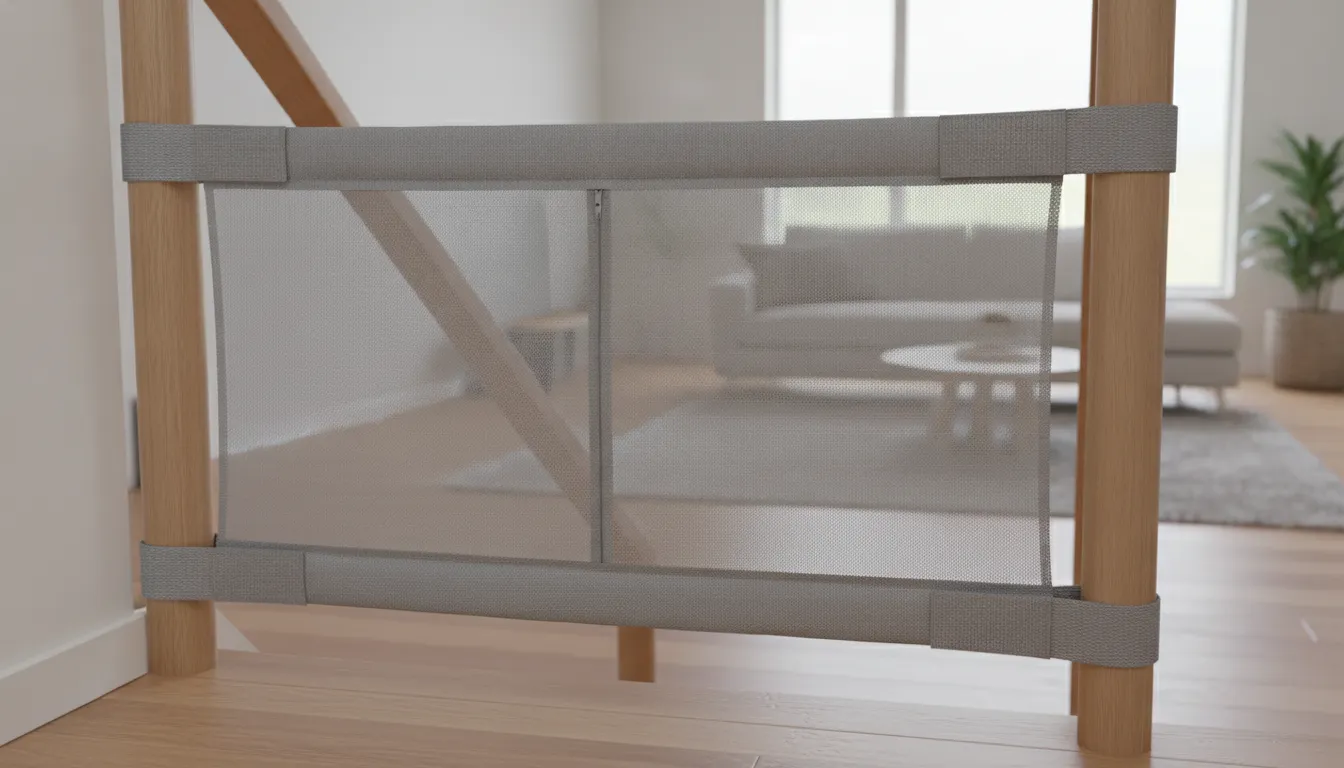
Modern fabric safety gates solve the biggest problems of wooden barriers. They weigh under 6 pounds and roll to the side when not in use. They install without drilling into your banisters or walls. Most importantly, they meet ASTM F1004 safety standards while providing a soft, climb-resistant panel. This guide compares wood and fabric gates across safety, maintenance, design, and installation so you can choose the right option for your family.
What Are the Hidden Downsides of a Wood Baby Gate?
A wood baby gate may look sturdy in the store. But daily use reveals problems that most parents do not anticipate until the gate is already installed. The biggest issues come down to weight, cleaning difficulty, and climbing risks that can make a wooden barrier more trouble than it is worth.
Heavy Weight and Hard Setup
Most wooden gates weigh between 15 and 25 pounds. That weight makes them difficult to move from room to room or take down when guests arrive. Many parents leave their wood gate in one spot for years simply because moving it is too much work. A premium fabric safety gate weighs less than 6 pounds. You can carry it from the living room to the guest room in seconds, and it rolls to the side when you do not need it.
Installation is equally frustrating with wooden gates. Hardware-mounted wood gates require drilling into walls and banisters. This leaves permanent holes and marks that remain long after your child outgrows the gate. Some parents try pressure-mounted wooden gates to avoid drilling. But pressure mounts are not safe for stairway use. They rely on friction against the wall and can dislodge when a child pushes against them. At the top of the stairs, this creates a serious fall hazard.
- Wood gates weigh 15-25 pounds and require drilling into walls
- Fabric gates weigh under 6 pounds and install without any drilling
- Pressure-mounted wood gates are not safe for stairway use
- Hardware-mounted wood gates leave permanent damage to banisters
Cleaning Challenges with Wooden Gates
Wood is a porous material. Spills from sippy cups, sticky fingerprints from toddler hands, and pet accidents all soak into the surface over time. You cannot put a wooden gate in the washing machine. Wipe-cleaning with a damp cloth only removes surface grime. It cannot reach the odors and bacteria that settle into the wood grain. Over months of use, a wooden gate can develop a permanent musty smell that no amount of scrubbing can fix.
Paint chipping is another common problem with wooden gates. As the finish wears, rough edges appear. These chips can catch on clothing or scratch small hands. If a teething child chews on a painted wooden bar, they risk swallowing paint chips. Fabric safety gates solve all of these issues. The fabric panel removes in seconds and goes straight into the washing machine and dryer. It comes out looking new every time.
- Remove the fabric panel from the gate frame, no tools required
- Machine wash on a gentle cycle with mild detergent
- Tumble dry on low heat or hang to line dry
- Reattach the clean panel in under one minute
Crypton fabric options add extra stain and odor resistance for high-traffic homes. This is the same fabric technology used in luxury upholstery and commercial furniture. It resists moisture penetration and prevents bacterial growth, keeping your gate fresh even after years of daily use.
Are Wood Baby Gates Safe for Your Stairway?
Safety is the most important factor when choosing a stair gate. While wood gates meet basic safety requirements when properly installed, they introduce risks that fabric gates avoid entirely. Understanding these differences can help you make an informed choice for your home.
Climbing and Entrapment Risks
Standard wooden gates use vertical or horizontal bars spaced roughly 2.75 inches apart. These bars create footholds that determined toddlers can use to climb over the gate. Once a child begins climbing, they are at risk of falling down the stairs on the other side. Falls from climbing are a leading cause of stair-related injury for children under two years old, as documented by the National Library of Medicine.
Fabric gates use a solid panel with no gaps or bars. This design removes climbing footholds entirely. Your child cannot grip a smooth fabric surface or find a place to step. There are no horizontal bars that act as ladder rungs. This makes fabric gates significantly safer for stairway use, especially at the top where a fall would be most dangerous.
Impact and Soft Tissue Injuries
Toddlers learning to walk near stairs often stumble and bump into gates. Wood is a hard, unforgiving surface. Contact with a wooden gate can cause bruises, cuts, and soft tissue injuries on a child's face or head. The same pediatric research shows that children aged two to six are frequently injured by impact with gate hardware and frame edges.
Fabric gates provide a soft surface that absorbs impact. If your child falls against the panel, the fabric gives slightly to cushion the collision. This does not compromise the gate's barrier function. Fabric gates still meet ASTM F1004 safety standards, which require the gate to remain securely in place under pressure. You get both safety and forgiveness in one product.
Fabric vs. Wood Baby Gate: A Maintenance Comparison
When you compare a premium fabric gate to a standard wood baby gate, the differences in daily upkeep are significant. Fabric gates are designed for real life with kids and pets. They anticipate messes and make cleanup as simple as tossing a panel in the wash.
| Feature | Premium Fabric Gate | Common Wood Gate |
|---|---|---|
| Cleaning method | Machine-washable and dryer-safe | Wipe-clean only |
| Stain resistance | High, Crypton options available | Low, porous surface absorbs spills |
| Physical wear | Resists 30,000+ double rubs | Prone to splinters and paint chips |
| Odor control | Resists odors and moisture | Absorbs spills and odors over time |
| Warranty support | Replacement parts available | Typically 6-12 months limited |
| Weight | Under 6 pounds | 15-25 pounds |
How Do Fabric Gates Install Without Damaging Your Home?
One of the biggest frustrations with a wood baby gate is the installation process. Standard hardware-mounted gates require drilling into both walls and banisters. You need a power drill, wall anchors, and the confidence to put permanent holes in your home. For renters or anyone with expensive wood banisters, this can be a dealbreaker.
Fabric gates offer a much better approach. The Banister-to-Banister fabric gate uses strong buckles that wrap around posts instead of screws. No drilling is needed on either side. The straps tighten securely without damaging the wood finish underneath. This preserves your banisters and works with curved or volute stair designs that rigid wood gates cannot accommodate.
For Wall-to-Banister installations, only the wall side requires drilling. This cuts installation work in half compared to a wood gate that needs hardware on both sides. The banister itself stays pristine.
Portability is another advantage. Because fabric gates do not require permanent hardware, you can take them down and reinstall them elsewhere. This makes them ideal for grandparents' homes, vacation rentals, or moving between floors as your child's needs change.
Can a Safety Gate Match Your Home Decor?
Most wood baby gates come in three finishes: natural oak, white, or dark stain. These limited options rarely blend with modern home decor. A heavy wooden gate can feel like a fence running through your living space. Even high-end wooden gates look utilitarian compared to the furniture around them.
The Stair Barrier offers over 20 upholstery-grade fabric options. Colors include Midnight, Silverstone, Sandstone, Charcoal Linen, Pebble Gray Linen, Classic Navy Linen, Parchment Linen, and Pacific Blue Linen. These fabrics match the quality of high-end furniture upholstery. The gate looks like a natural part of your home rather than a piece of baby equipment.
Fabric gates also disappear when not in use. The panel rolls to the side and the hardware is minimal. Your stairway stays open, clean looking, and free of visual clutter. Wood gates remain in place with their bulky frame and bars blocking the view and pathway even when the gate is open. If you value your home's appearance. A fabric gate gives you the best of both worlds: safety when you need it and an open space when you do not.
Which Gate Is the Smarter Choice for Your Family?
A premium fabric safety gate outperforms a standard wood baby gate in every category that matters to busy families. Fabric gates weigh less, making them portable and easy to store. They install without damaging banisters or walls. They clean in the washing machine in minutes. They provide a safer climb-resistant panel for stairway use. And they come in over 20 designer colors that blend into your decor.
Wood gates have one advantage: a lower upfront price at many big-box retailers. But when you factor in easier maintenance, longer lifespan, and the ability to take your gate with you when you move, fabric gates deliver better long-term value.
When you choose a fabric gate from The Stair Barrier, you get a product that meets ASTM F1004 standards while blending into your home. Safe never looked so good.
Frequently Asked Questions
Are wooden baby gates safe for use at the top of stairs?
Wooden gates can be safe at the top of stairs only if they are hardware-mounted into solid wall studs. Pressure-mounted wood gates should never be used at the top of stairs because they can dislodge when pushed. Fabric gates offer a no-drill alternative that still provides secure, ASTM F1004 certified protection for stairway use.
Can I install a wooden baby gate without drilling holes?
Some wooden gates offer a pressure-mount option that does not require drilling, but these are not safe for stairways. For stairs, you must use a hardware-mounted gate that bolts into wall studs. Fabric gates provide a better alternative with no-drill Banister-to-Banister models that wrap securely around posts without any drilling at all.
Is a wooden baby gate better than a fabric safety gate?
Not for most modern homes. Fabric safety gates offer significant advantages: machine-washable panels, weight under 6 pounds, climb-resistant solid panels, roll-to-side storage, and over 20 color options. Wood gates have a lower upfront cost, but fabric gates deliver better long-term value through easier maintenance and superior safety features.
How do you clean a wooden baby gate vs. a fabric gate?
Wood gates are wipe-clean only. The porous surface absorbs spills and odors over time. Fabric gates remove and machine wash in minutes. The panel goes in the washing machine and dryer, coming out clean and stain-free. This makes fabric gates far more practical for busy households with kids and pets.
What weight difference should I expect between wood and fabric gates?
Standard wood gates typically weigh 15 to 25 pounds depending on size and materials. Fabric gates from The Stair Barrier weigh under 6 pounds. This difference makes fabric gates easier to move, install, and store. It also reduces the structural stress on your banisters and walls during daily use.
Upgrade Your Stairway Safety Today
Your child's safety does not require compromising your home's style. The Stair Barrier fabric safety gates combine premium design with practical features that wooden gates cannot match. Machine-washable fabric, no-drill installation, and over 20 fabric colors make these gates the smart choice for design-conscious parents who refuse to settle for clunky plastic or wood barriers.
Explore The Stair Barrier collection and find the perfect fabric safety gate for your stairs.

Written by Arden Vale
Design & Safety Specialist
Arden provides expert guidance on blending ASTM safety standards with modern interior styling, helping parents and pet owners create secure, beautiful spaces.