


A gate that feels secure in a hallway can fail at the exact place where failure matters most: the top of a staircase.
Shop The Stair Barrier fabric safety gates for banister-to-banister openings.
Are retractable baby gates safe for top of stairs? Some are, but only when the manufacturer explicitly approves the model for stair-top use and its mounting method suits the opening. Never use a pressure-mounted gate at the top of stairs. Check the manual, safety certification, lock, fit, and mounting instructions before installation. A safety gate adds an important layer of protection, but it does not replace adult supervision.
Choosing the right gate is about more than style. The sections below explain the labels, mounting methods, and fit details to check before you buy.
Are retractable baby gates safe for top of stairs?
The short answer is that some retractable gates are safe for the top of stairs, but many are not. To keep your child safe, you must choose a gate made only for this area. A gate at the top of a staircase must handle more pressure than one in a hall. If a child leans on a gate that is not secure, it could give way and lead to a fall. This is why you must check the box or the manual for a top-of-stairs rating before you buy.
Are retractable baby gates safe for top of stairs? The short answer is that some retractable gates are safe for the top of stairs, but many are not. To keep your child safe, you must choose a gate made only for this area. A gate at the top of a staircase must handle more pressure than one in a hall. If a child leans on a gate that is not secure, it could give way and lead to a fall. This is why you must check the box or the manual for a top-of-stairs rating before you buy.
Why stair-top openings demand extra stability
Safety experts agree that you should use hardware-mounted gates at the top of stairs. These gates screw directly into your wall or banister. This link creates a strong frame that can hold up if a child pulls or stands on it. Gates that use tension alone, known as pressure-mounted gates, are not safe for the top of a staircase. They can shift or slip, which creates a big risk for falls.
Many retractable gates come with hardware-mounting kits. These allow the gate to lock firmly into place. If you are asking retractable gate safety at the top of stairs, the answer depends on how you set them up. Avoid any gate that only stays up by pushing against the walls. A strong lock and a solid frame are the best ways to stop accidents before they happen.
Check for safety seals
You should also look for a seal from a known safety group. The Juvenile Products Manufacturers Association (JPMA) and ASTM International test baby gates for strength and fit. They check the gate's lock, the mesh strength, and how well it stays in place. If a gate has these seals, it means it has passed tough tests for home safety. You should also check for product recalls to make sure your gate is up to date.
Not every retractable gate has a top-of-stairs rating even if it is certified. Some models are only for use at the bottom of stairs or in doorways. You must read the rules to be sure. Most safety groups suggest you install gates before your child is six months old. This gives you time to find the right fit and learn how to use the lock before your baby starts to crawl.
Key features for stair safety
A safe retractable gate should have a strong locking system. It needs to be easy for you to use but hard for a toddler to open. Some top-rated gates use a tall mesh design that is about 34 inches high. This height helps stop kids from trying to climb over the barrier as they grow. Since toddlers often pull on gates when they stand up, the mesh must be tight and strong.
Finally, make sure the gate sits close to the floor. There should be less than three inches of space at the bottom. This prevents a child from trying to crawl under the gate. Keeping the gate closed at all times is also vital. A gate left open for just a second can still lead to an injury. By picking the right gate and following the rules for setup, you can create a safe space in your home.
What makes the top of the stairs different?
The top of a flight of stairs is one of the most unsafe spots in a home for a small child. Unlike a flat doorway between two rooms, a stairway has a high risk of falls. If a baby gate fails here, the result can be a bad injury. This is why you must choose a gate with the right safety features for this one spot.
What makes the top of the stairs different? The top of a flight of stairs is one of the most unsafe spots in a home for a small child. Unlike a flat doorway between two rooms, a stairway has a high risk of falls. If a baby gate fails here, the result can be a bad injury. This is why you must choose a gate with the right safety features for this one spot.
When parents ask, choosing a retractable gate for stairs, the answer rests on how the gate is made and set up. Not all gates are the same. A gate that works well in a hallway may not be safe at the top of a flight of stairs. You need a gate that can handle the force of a child leaning or pushing against it without moving.
The need for hardware mounting
At the top of the stairs, safety experts agree that you should only use hardware-mounted gates. These gates are screwed directly into your wall or banister. This makes them much more secure than pressure-mounted gates. Pressure-mounted gates stay in place by pushing against the walls with tension. But they can slip or slide if a child leans on them, which is a big fall risk.
According to Nationwide Children's Hospital, you should use hardware-mounted gates to keep kids from pushing the gate down. Screwing the gate into the wall gives it the strong build needed for safety. This is the first thing you should check before you buy any gate for your stairs. If the gate does not screw into the wall, do not use it at the top of a flight of stairs.
Trip hazards and swing way
Another big thing at the top of the stairs is the "trip bar." Many metal baby gates have a bar that runs across the bottom of the frame. In a doorway, this is a small bother. At the top of the stairs, it is a big trip hazard. If you trip on that bar while carrying a baby, you could both fall down the stairs. Retractable gates and fabric barriers are great because they often have no bottom bar at all.
You also need to think about which way the gate opens. A safe top-of-stairs gate should only open toward the landing and away from the stairs. If a gate swings out over the stairs, a child could lean on it and fall if the lock fails. Always follow a retractable baby gate safety guide to make sure your gate is set up to open the right way.
Fitting banisters and walls
Many homes have stairs with a wall on one side and a banister on the other. Some even have banisters on both sides. Finding a gate that fits these odd shapes can be hard. You need a gate that can join to a post without leaving gaps. A good gate for stairs should work with many types of wood and metal posts. This helps get a tight fit that stays safe over time.
The height of the gate is also key. A child who can climb over a gate is no longer safe. Look for a gate that is tall enough to keep your toddler from trying to get over the top. Most safety rules say a gate height should be at least three-quarters of your child's height. This helps stop falls caused by climbing. At last, note that a gate does not replace adult care. Always keep an eye on your little ones when they are near the stairs.
Comparing gate styles for a stair-top opening
Choosing the right gate for the top of your stairs is vital for home safety. You need a gate that can hold the weight of a leaning child without moving. Not every gate style is made to handle this high-risk spot. It is key to know how each type works before you make a choice for your home. Picking the wrong gate can lead to falls that are easy to stop.
Comparing gate styles for a stair-top opening Choosing the right gate for the top of your stairs is vital for home safety. You need a gate that can hold the weight of a leaning child without moving. Not every gate style is made to handle this high-risk spot. It is key to know how each type works before you make a choice for your home. Picking the wrong gate can lead to falls that are easy to stop.
Rigid metal or wood gates
Hard gates made of metal or wood are a common choice for many homes. These gates often screw into your wall or banister to stay in place. This is called a hardware-mounted setup. It provides the firm hold needed to keep children safe at the top of a staircase. Many pros say you should only use hardware-mounted gates at the top of stairs to stop falls. These gates do not slip because they are joined to the house itself.
But some of these gates have a bar at the bottom that can be a trip risk. You must be careful when walking through them in the dark.
Pressure-mounted gate risks
You should not use a pressure-mounted gate at the top of your stairs. These gates stay in place by pushing against the walls with tension. They do not use screws or bolts to stay put. This means they can shift or fall over if a child leans on them. Per Nationwide Children's Hospital, about five children under age seven go to the hospital each day for gate harm. Many of these falls happen when a gate is not secure.
Tension gates are fine for hallways, but they fail the test for stair safety. You can find more tips in our retractable baby gate safety guide to help you pick a safe model.
Retractable mesh and fabric options
Many parents want to know, are retractable baby gates safe for top of stairs? The answer often depends on how the gate is made and tested. Some mesh gates are not strong enough for the top of a staircase. However, some models have a safety mark that shows they are fit for this use. You should look for a gate that meets ASTM F1004 safety rules.
High-end fabric gates offer a mix of safety and style that metal gates lack. They join firmly to banisters and walls without the risks of simple tension gates. These gates often roll to the side when you do not need them. This keeps the path clear and stops trips. To learn more, read our post on stair-top retractable gate guidance.
Meeting safety standards
When you shop for a gate, check for a safety mark from the JPMA. This shows the gate was tested by pros. A safe gate will have no gaps where a child's head could get stuck. It will also be tall enough to stop a toddler from climbing over it. The best gates are made in the USA and use strong parts that last for years. Always read the setup guide before you start. This ensures the gate works just like the maker planned. A well-set gate gives you peace of mind while your child plays.
| Gate Type | Installation | Stair-Top Safety | Aesthetics | Storage |
|---|---|---|---|---|
| Hardware-Mounted | Screws into walls | Very high | Plain look | Fixed in place |
| Pressure-Mounted | Tension only | Not safe | Basic look | Easy to move |
| Premium Fabric | Wall and banister kits | High | Elegant fabric | Rolls to side |
| Retractable Mesh | Hardware-mounted | Varies by model | Modern look | Retracts fully |
How to choose and install a gate for the top of stairs
Choosing a safety gate for the top of your stairs is a big part of home safety. Basic gates often fail to meet the high needs of these spots. To help you pick the right one, we made this clear list. Using these steps will help you find a gate that keeps your child safe and looks good in your home.
How to choose and install a gate for the top of stairs Choosing a safety gate for the top of your stairs is a big part of home safety. Basic gates often fail to meet the high needs of these spots. To help you pick the right one, we made this clear list. Using these steps will help you find a gate that keeps your child safe and looks good in your home.
Check the safety seal
Start by looking for the ASTM F1004 seal. This seal shows the product meets federal rules for child safety. About five children under age seven go to the hospital each day for gate-related injuries. This fact shows why picking a certified gate is vital. A certified gate has passed tests for strength and safe design.
Pick the right mount
You must use a hardware-mounted gate at the top of any stairs. These gates screw into your wall or post. This gives the strong frame needed to stop a child from pushing it down. Many ask, retractable gate fit and safety? They are only safe if they screw in and have top-of-stairs approval. Do not use a tension gate here as it can slip.
Measure your space
Before you buy, measure the width of your opening. A good fit ensures the gate has no gaps for a child to crawl through. You should also check for trim that might block the mount. If you have an odd space, you can use our measurement guidance on the Banister-to-Banister product page. These help you find a secure fit for your home.
- Review the opening: Measure the space between walls to ensure the gate you buy is wide enough to block it.
- Confirm stair approval: Check the box or manual to ensure the maker states the gate is safe for use at the top of stairs.
- Verify ASTM rules: Look for the ASTM F1004 label to ensure the gate meets current safety laws.
- Install the hardware: Screw the gate mounts into wall studs to ensure it stays in place when pushed.
- Set the swing path: Set up the gate so it only opens toward the hall, never out over the stairs.
- Check floor gap: Ensure the bottom of the gate is less than three inches from the floor so no one can crawl under it.
- Test the lock: Pull on the gate to ensure the lock holds and check for recalls at recalls.gov often.
Keep the gate secure
Once you set up your gate, keep it closed and locked at all times. An open gate gives a false sense of safety. Also, check the screws and fabric every few weeks to ensure they are tight and in good shape. If your child begins to climb over the gate, it is time to take it down. These small steps help keep your home safe for everyone.
Could a fabric safety gate fit challenging stairs?
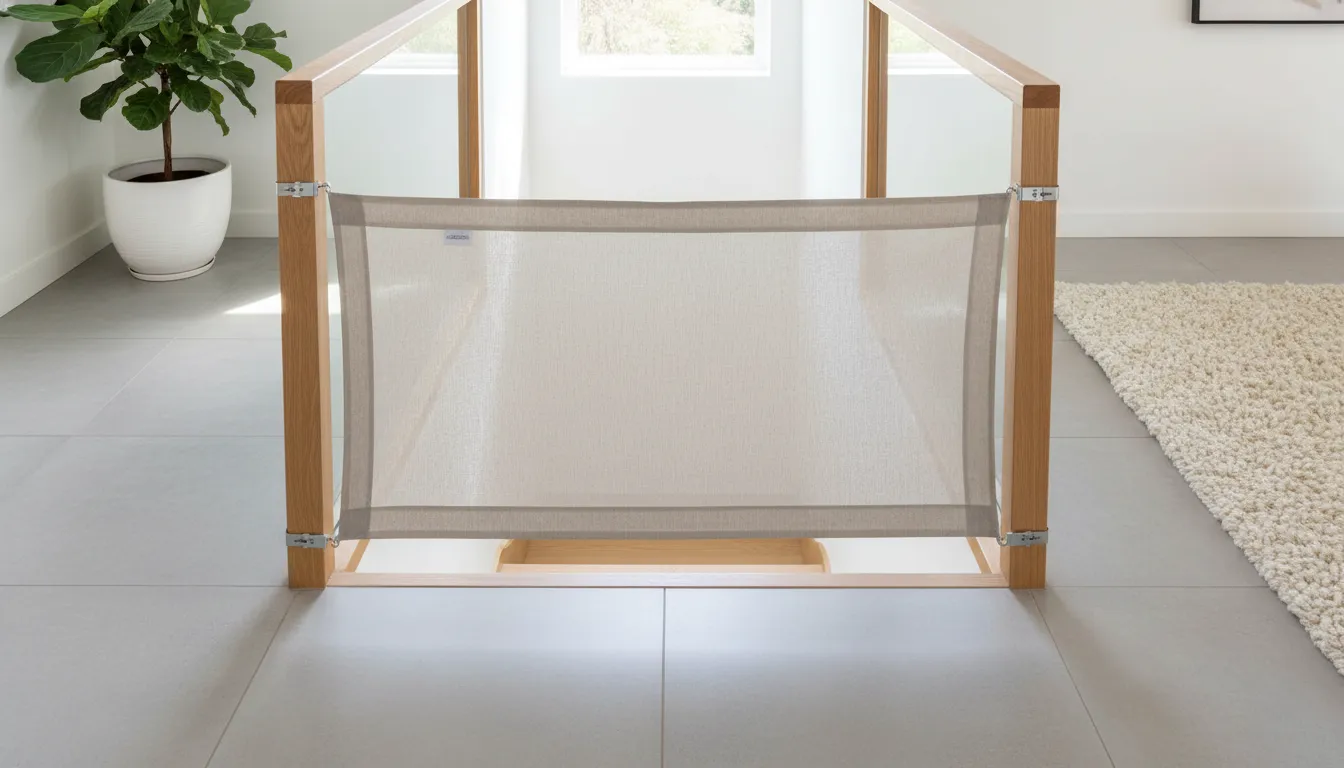
Finding a baby gate for stairs can be difficult when the opening has banisters, trim, or an unusual angle. The Stair Barrier offers a fabric safety gate designed for these challenging layouts. It combines a firm barrier with a softer, more design-conscious look than a rigid metal gate.
Could a fabric safety gate fit challenging stairs? Finding a baby gate for stairs can be difficult when the opening has banisters, trim, or an unusual angle. The Stair Barrier offers a fabric safety gate designed for these challenging layouts. It combines a firm barrier with a softer, more design-conscious look than a rigid metal gate.
Safety standards and the right configuration
The Stair Barrier meets ASTM F1004 safety standards and comes in configurations for banister-to-banister and wall-to-banister openings. Match the product configuration to the actual mounting surfaces, measure carefully, and follow the included instructions. Do not guess about fit or use. A gate adds a layer of protection, but it never replaces adult supervision.
Home-friendly fabric and storage
The Stair Barrier is available in more than 20 upholstery-grade fabric options, and its fabric is machine-washable and dryer-safe. When the opening is not in use, the lightweight barrier rolls neatly to the side. These details help the gate blend into a curated home without adding a swing arc or bottom trip bar.
Solving the banister problem
For banisters on both sides, the Banister-to-Banister model wraps around the posts without drilling into them. For a wall on one side and a banister on the other, the Wall-to-Banister model uses wall-side hardware and banister straps. Review the Banister-to-Banister model or Wall-to-Banister model to compare the fit for your opening.
Find The Stair Barrier configuration that matches your stairway.
Common stair gate mistakes to avoid
Setting up a safety gate seems simple, but small errors can lead to big risks. Many parents assume that any barrier will keep their child safe. However, using the wrong gate in the wrong spot is a top cause of home injuries. In the United States, about five children under age seven go to the hospital every day for baby gate injuries. Avoiding these common slips will help you keep your home secure.
Common stair gate mistakes to avoid Setting up a safety gate seems simple, but small errors can lead to big risks. Many parents assume that any barrier will keep their child safe. However, using the wrong gate in the wrong spot is a top cause of home injuries. In the United States, about five children under age seven go to the hospital every day for baby gate injuries. Avoiding these common slips will help you keep your home secure.
Using pressure mounts at the top of stairs
The biggest mistake is using a pressure-mounted gate at the top of a staircase. These gates stay in place by pushing against the walls. They do not screw into the wall, which means they can slip if a child leans or pushes on them. For the top of stairs, you must only use hardware-mounted gates. These screw directly into the wall or banister to provide firm structural security. A pressure gate at the top of a flight of stairs poses a major fall risk because it can give way without warning.
Choosing the wrong retractable gate
Parents often ask, are retractable baby gates safe for stairs? The answer depends on the model. Some people buy cheap mesh gates that lack the strength for stair tops. Only certain gates have the right safety certifications for this use. Check for a label that shows the gate meets ASTM or JPMA standards. If a gate is not built for stairs, it may sag or fail. Always pick a model like a Wall-to-Banister gate that is designed to stay tight and secure.
Leaving the gate open or unlocked
A gate only works if it is closed and locked. It is easy to leave it open just for a second while you carry laundry or toys. But a child can reach the stairs in that small window of time. Open gates provide a false sense of safety.
You should also check the fit of your gate once a week. Screws can loosen and mesh can stretch over time. Make sure you mount your gate less than three inches from the floor so a child cannot crawl under it. Checking your hardware often will keep the barrier working as it should.
Frequently Asked Questions
Are retractable baby gates safe for the top of the stairs?
Many experts think common retractable gates are not strong enough for the top of stairs. However, some special models can work if they have the right safety tags. Based on the University of Wisconsin-Oshkosh, you must use hardware-mounted gates in this area to prevent falls. These gates screw right into your wall to stay in place. Always look for a gate that is made for top-of-stairs use.
Is it safe to use pressure-mounted gates at the top of stairs?
No, it is not safe to use pressure-mounted gates at the top of a staircase. These gates only press against the wall to stay up. If a child leans on the gate, it can slide out of place. This can lead to a risky fall. Experts at Nationwide Children's Hospital say that only gates screwed into the wall are safe here.
Why are some retractable gates considered unsafe for top-of-stairs use?
Some retractable gates use mesh that can stretch or push aside. If the mesh is too loose, a child might slip through or fall over the top. Also, many of these gates use tension instead of screws to stay in place. This makes them less stable than a fixed gate. For the best safety, use a gate with a stiff frame and a strong lock. This helps keep your child from pushing the gate down.
What should I look for in a safe retractable gate for stairs?
You should look for a gate that has a seal of safety from the JPMA. This means the gate has passed tough tests. It should also be a hardware-mounted design that screws into your walls. A strong lock is another key feature to check. This lock prevents children from opening the gate on their own. Make sure the gate is tall enough so your child cannot climb over it as they grow.
Find a fabric safety gate that fits your stairs
The right gate depends on your opening, mounting surfaces, and the manufacturer's approved use. The Stair Barrier gives design-conscious families a fabric option for challenging banister-to-banister and wall-to-banister layouts. Measure carefully, follow every installation instruction, inspect the gate regularly, and continue supervising children near stairs.
Shop The Stair Barrier fabric safety gates to compare configurations and choose the right fit for your home.

Written by Arden Vale
Design & Safety Specialist
Arden provides expert guidance on blending ASTM safety standards with modern interior styling, helping parents and pet owners create secure, beautiful spaces.