


Finding a baby gate for odd stairs starts with understanding the opening, not buying the first gate that seems wide enough. Angled walls, offset banisters, decorative posts, baseboards, and extra-wide landings can prevent an ordinary doorway gate from fitting as intended. Map the mounting points, measure carefully, and choose a barrier designed for the actual shape and location of your staircase.
Send your stair photos and measurements for personalized fit guidance.
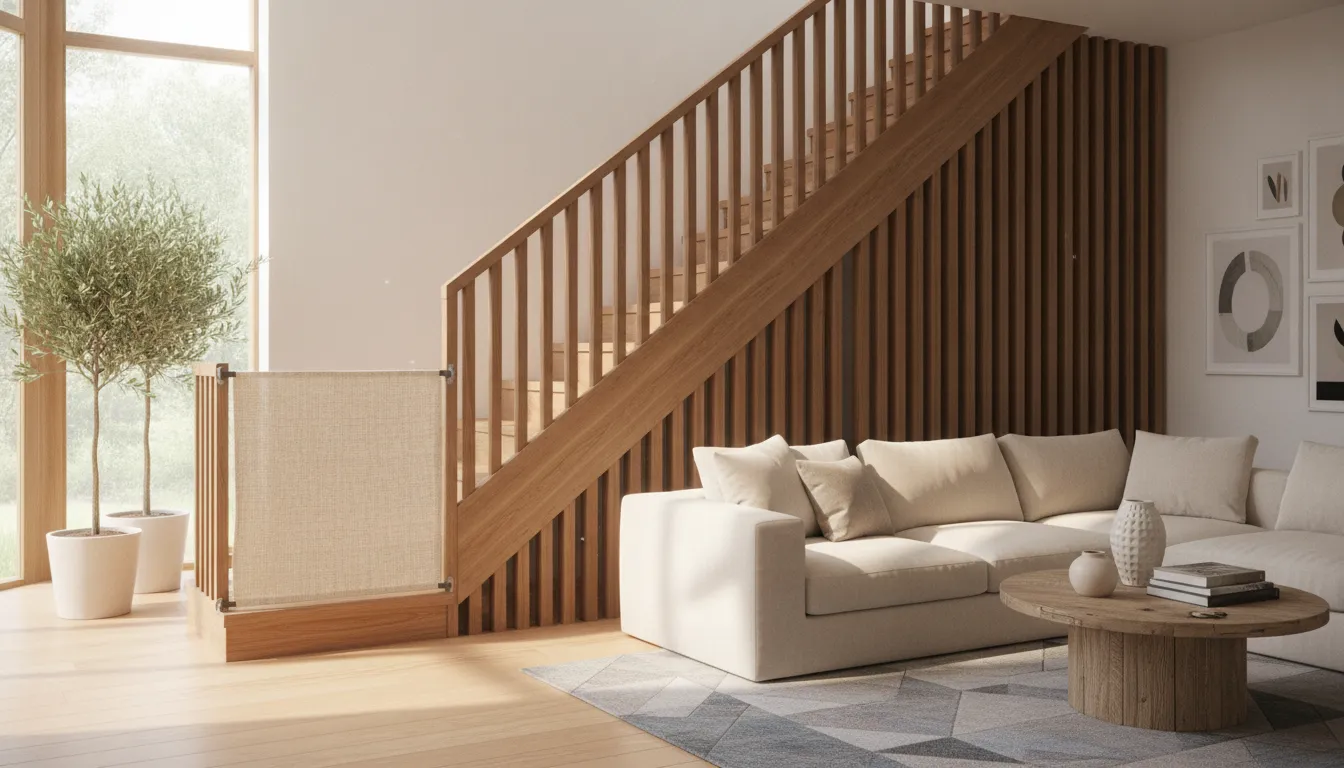
Why does a baby gate for odd stairs need a different plan?
Odd stairs need a different plan because most standard gates assume two flat, parallel surfaces directly opposite each other. An unusual stair opening may have angled walls, offset posts, uneven widths, or mixed mounting surfaces. Width alone cannot confirm that a gate will attach correctly or suit its intended stair location.
Before comparing products, identify what makes the opening unusual:
- Offset mounting points: The wall and banister do not line up directly across from one another.
- Angled surfaces: One or both mounting surfaces meet the opening at an angle.
- Non-flat posts: Rounded, carved, or tapered banisters do not offer a simple flat mounting face.
- Different widths: The opening is wider at the top or bottom because of trim, post shape, or wall angle.
- Extra-wide or irregular landings: A single straight gate may not span the space in a useful position.
- Mixed surfaces: One side may be a wood post while the other is drywall, wood trim, or another material.
These details affect fit, installation, and everyday use. A gate can match the measured width yet still be the wrong choice if it cannot connect to the available surfaces as the manufacturer directs. The location matters too. A setup used near stairs calls for location-specific guidance rather than assumptions based on a gate that worked in a flat doorway.
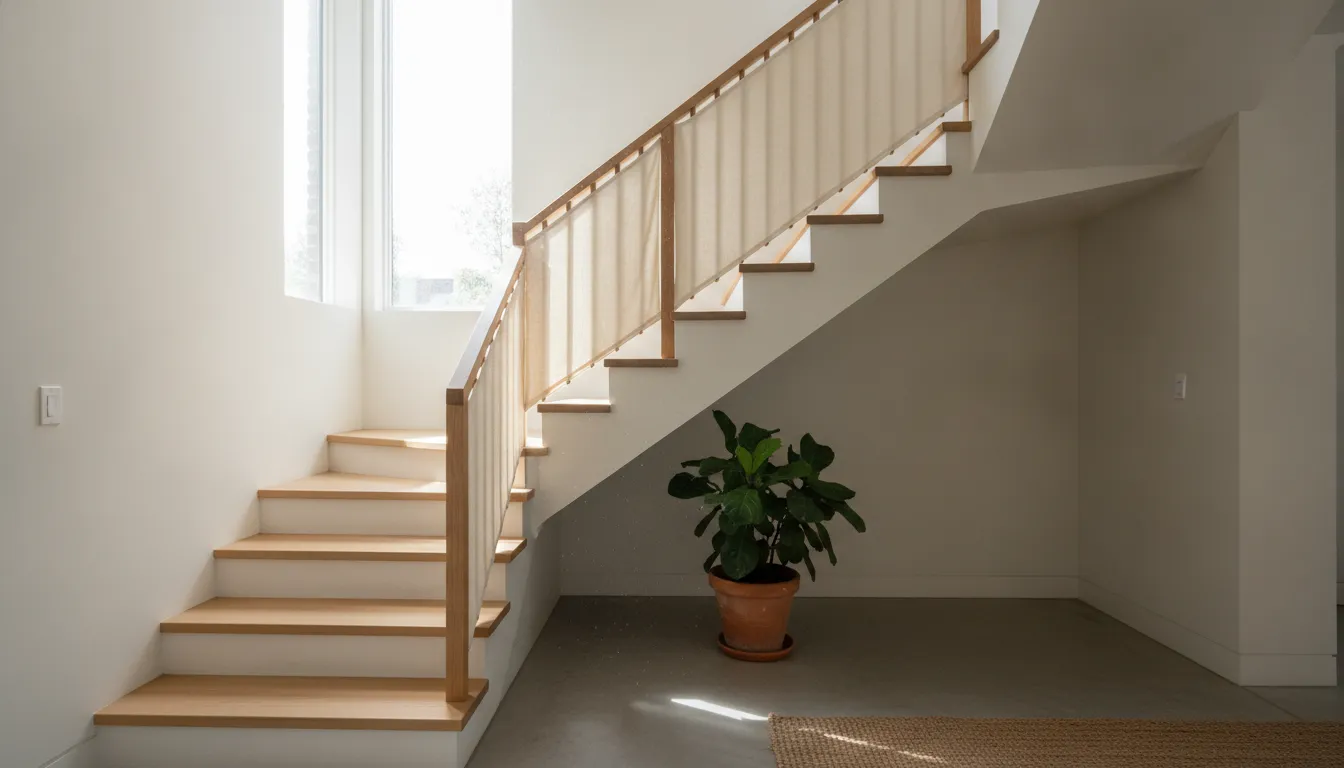
How should you measure an unusual stair opening?
Measure an unusual stair opening along the exact line where the gate would attach, then repeat the measurement near the bottom, middle, and top. Record each mounting surface, angle, obstruction, and offset. A labeled sketch plus clear photos gives a manufacturer more useful information than one width measurement.
1. Choose the intended gate line
Decide exactly where the barrier should cross the opening. Do not assume it must sit in the narrowest spot. On an irregular landing, a slightly different position may provide more suitable mounting surfaces and a clearer walking path. For a top-of-stairs location, consider only products and installation methods specifically intended for that use.
Stand back and look at the entire approach. Note where adults naturally step, where a door swings, and whether a handrail projects into the proposed gate line. Mark the left and right attachment areas with removable tape so every measurement refers to the same planned position.
2. Measure at multiple heights
Measure the distance between the intended left and right attachment points near the bottom, middle, and top of the planned gate. Record every number rather than averaging them. A meaningful difference signals nonparallel surfaces, tapered posts, baseboards, or trim that changes the usable opening.
Also record the height of baseboards and the circumference or width of each post at the intended attachment area. Do not assume a round or carved post has the same profile from top to bottom. Those differences can affect whether the manufacturer's approved attachment method is compatible.
3. Document each mounting surface
Note whether each side is drywall, wood trim, a square banister, a rounded newel post, or another material. Photograph the full surface and close details. Check whether the two planned attachment areas are directly opposite, slightly offset, or noticeably angled from each other.
Include nearby features in the photos. A close-up may show the post shape, but a wider view reveals the handrail, first stair tread, molding, and traffic path. Both views help explain the real installation conditions.
4. Check the surrounding path
Look for handrails, doors, molding, floor vents, and furniture that could interfere with installation or daily use. Consider how adults will operate or move past the barrier without creating a new trip hazard. A barrier that technically spans the opening can still be impractical if it blocks a door or narrows the landing too much.
5. Ask for fit guidance before ordering
If the measurements or mounting surfaces leave you uncertain, share photos and dimensions with the manufacturer before ordering. The Stair Barrier offers ask The Stair Barrier team to review your measurements and stair photos, which is more reliable than guessing from width alone. Include the proposed location and explain whether the barrier is intended for the top, bottom, or another part of the stairs.
Which gate style works for an awkward staircase?
The right gate style depends on the opening geometry, available mounting points, and intended location. Flexible fabric barriers can suit certain banister-based spans, while angle-mount or multi-panel designs may suit other layouts. Compare compatibility and installation instructions, not just width, before selecting any gate for an awkward staircase.
| Gate style | Often useful for | Important consideration |
|---|---|---|
| Flexible fabric stair barrier | Banister-to-banister and wall-to-banister openings, including some offset configurations | Confirm the opening dimensions and compatible attachment setup |
| Rigid angle-mount gate | Openings where two mounting surfaces do not face each other directly | Requires compatible hardware and secure installation points |
| Articulated multi-panel gate | Wide, angled, or irregular landings that need multiple connected panels | Needs enough room for the panel footprint and the manufacturer's required anchoring |
| Pressure-mounted gate | Some flat, level doorway openings away from stairs | Do not assume a pressure-mounted gate is appropriate for a stair location |
For stairs with open railings or banisters, a flexible barrier can avoid the bulky visual effect of a rigid metal or plastic gate while spanning a compatible opening. The Stair Barrier is a fabric safety gate made for stairway and doorway applications, with options for banister-to-banister fabric safety gates and wall-to-banister fabric safety gates.
Gate style does not override installation requirements. A flexible material is not permission to attach a barrier to an unsuitable surface, and a multi-panel layout still needs the placement and anchoring specified by its manufacturer. If a product's guidance does not clearly address the planned configuration, ask before ordering or choose a different approach.
What works for offset banisters and one-wall stairs?
For offset banisters or a wall-to-banister opening, measure between the exact intended attachment points and document how far the surfaces sit out of alignment. Choose a gate made for that connection type, and confirm compatibility with the manufacturer. Never force a standard doorway gate into a mixed or offset setup.
Banister-to-banister openings
Two banisters create a common odd-stair challenge, especially when they are not perfectly aligned. Start by measuring between the exact points where the gate will attach, not simply between the nearest edges of the posts. Confirm each post's shape and whether the chosen attachment method is compatible with both sides.
If one post is round and the other is square, document them separately. If a post tapers or has a decorative transition, identify a consistent attachment area rather than assuming any part of the post will work. Ask the manufacturer to review the photos when the suitable area is not obvious.
A fabric gate is especially appealing in design-conscious homes because it can provide a visually softer alternative to rigid metal or plastic. The Stair Barrier rolls neatly to the side when not needed, and its fabric is machine washable and dryer safe. More than 20 upholstery-grade fabric options make it easier to coordinate the barrier with the room rather than treating it as an afterthought.
Wall-to-banister openings
When one side is a wall and the other is a banister, record the width at the actual attachment heights and note any offset between the surfaces. Check whether the wall side includes a baseboard or projecting trim. Review the manufacturer's measuring and installation guidance before ordering. The goal is a configuration designed for that mixed mounting setup, not a standard doorway gate forced into place.
The Stair Barrier meets ASTM F1004 safety standards. As with any safety gate, correct selection, installation, inspection, and adult supervision remain important. No gate eliminates every risk or replaces attentive supervision.
Which installation details matter in odd spaces?
Baseboards, decorative posts, open railings, and nearby doors can change whether a gate fits and functions correctly. Inspect the entire stair approach, not only the opening width. Use only installation components approved for the selected product, follow its instructions, and ask the manufacturer about conditions the instructions do not address.
Baseboards and trim
A baseboard can make the lower opening narrower than the upper opening or prevent hardware from sitting flush. Measure both above and at the trim. Photograph the trim profile and note how far it projects from the wall. Do not compensate with unapproved spacers or improvised hardware; confirm the recommended solution with the manufacturer.
Decorative or rounded posts
Ornate newel posts can be difficult because their diameter or profile changes by height. Photograph the whole post and close-ups of the planned attachment area. Check whether decorative grooves, caps, or transitions interrupt that area. Use only compatible installation components and follow the provided instructions.
Wide and irregular landings
For a wide landing, consider whether a gate should cross the entire opening or create a controlled zone around the stair approach. Multi-panel gates may work where a straight gate cannot, but they need adequate room and correct anchoring. Compare the proposed panel footprint with the route people use every day, including the space needed to carry laundry or move around the landing.
Open railings and risers
A gate addresses only the opening it spans. If the staircase also has open railings, wide gaps, or open risers, assess those separately as part of a complete childproofing plan. The presence of a well-fitted gate does not resolve other accessible gaps. Read more about choosing a gate for the top of stairs before deciding on a configuration.
Doors, handrails, and traffic flow
Test the planned layout against daily movement. A nearby door should not strike the barrier or its attachments. A handrail should remain usable, and the barrier should not encourage adults to step awkwardly near the stairs. If the proposed line creates a conflict, reconsider the location and ask whether another compatible configuration is available.
How do you compare the best realistic options?
Compare realistic gate options by opening type, stair location, geometry, mounting compatibility, daily operation, care needs, and appearance. Eliminate any product that lacks clear guidance for the planned setup. Among compatible choices, select the one that fits household routines and can be installed, used, inspected, and maintained as directed.
- Opening type: Is it wall-to-wall, wall-to-banister, or banister-to-banister?
- Location: Will the gate be used at the top, bottom, or another part of the stairs?
- Geometry: Are the mounting points parallel, angled, or offset?
- Surface compatibility: Are the intended attachment points stable and compatible with the recommended installation method?
- Clearance: Will trim, doors, handrails, or furniture interfere with the barrier?
- Daily routine: Can adults operate or move past the barrier conveniently without leaving it unsecured?
- Home aesthetics: Will a rigid gate dominate the room, or would a fabric design blend more naturally?
- Care needs: Is the barrier easy to clean and store according to its care instructions?
- Manufacturer support: Can someone review an unusual setup before purchase?
Create a short list only after removing incompatible options. Then compare how each remaining choice would work during an ordinary day. Think about who will operate it, how often the area is used, and whether the barrier can be checked easily. Convenience never replaces correct fit, but it affects whether caregivers can use the chosen solution consistently.
For many compatible banister-based openings, The Stair Barrier combines practical fit options with a lightweight, roll-to-side design. Its washable fabric and broad selection of finishes also help it belong in a curated home rather than looking temporary or purely utilitarian. For more guidance, review this overview of stair gates for awkward stairs.
How should you use and maintain a stair gate?
Use a stair gate exactly as its manufacturer directs, and inspect its attachment points and condition regularly. Recheck it after cleaning, heavy use, or any impact. Keep the surrounding path clear, address loosening or damage promptly, and make sure every caregiver understands how to secure and operate the barrier.
Include a quick visual check in the household routine. Look at the attachment areas, fabric or panels, and any components used to secure the barrier. If something appears loose, worn, or damaged, stop relying on the gate until the issue has been addressed according to the manufacturer's guidance.
Follow all care instructions when cleaning. The Stair Barrier's fabric is machine washable and dryer safe, which supports practical upkeep, but it should still be washed and reinstalled as directed. Confirm the barrier is correctly secured after it has been removed or rolled aside.
Children should never climb or play on a gate. Safety gates are one layer of a broader childproofing plan and do not replace attentive adult supervision. Reassess the overall stair area as a child's mobility and reach change.
What should you send when requesting fit help?
Send the manufacturer the opening widths at multiple heights, full-view and close-up photos, the intended gate line, mounting surface details, and the planned stair location. Mention offsets, angles, baseboards, handrails, doors, and unusual post shapes. Clear information helps the manufacturer assess fit without relying on assumptions.
A useful photo set includes one image facing the opening, one from each side, and close-ups of both intended attachment areas. Add a simple sketch with the top, middle, and bottom measurements labeled. If the opening is offset, show the offset in the sketch rather than describing it only as "slightly uneven."
Explain what you do not know. For example, say that a post tapers below the handrail or that trim prevents a flat wall measurement. Questions are easier to answer when the uncertainty is visible and specific. Keep the proposed product and installation location in the same message so the guidance applies to the correct setup.
Request personalized help choosing a fabric safety gate for your unusual stairs.
Frequently asked questions
Can a baby gate be installed when the banisters do not line up?
Possibly. The right solution depends on the amount of offset, the gate design, and the available attachment points. Measure from the intended connections and send photos to the manufacturer before ordering.
What type of baby gate works with only one wall?
A wall-to-banister gate is designed for an opening with a flat wall on one side and a compatible banister on the other. Confirm measurements, mounting surfaces, and location-specific guidance before installation.
Are pressure-mounted gates suitable for odd stairs?
Do not assume they are. Pressure-mounted gates depend on opposing surfaces and may not be appropriate for stair locations. Choose a product and installation method specifically intended for your staircase and follow all manufacturer instructions.
How do I measure a baby gate for angled stairs?
Select the intended gate line, then measure at the exact lower, middle, and upper attachment points. Record surface angles, trim, and offsets. Photos help the manufacturer assess whether a particular setup will fit.
What if I am still unsure which gate fits?
Do not guess. Gather measurements and clear photos of the full opening, both mounting surfaces, and nearby obstacles, then request fit guidance.
Find a fit that belongs in your home
An unusual staircase does not need an improvised solution. Careful measurements, clear photos, and the right gate style can turn an awkward opening into a manageable project while preserving the look of your home. Use compatible products as directed, inspect them regularly, and keep adult supervision at the center of your stair safety plan.
For a premium fabric option, explore the appropriate banister-to-banister or wall-to-banister product, then share your unusual stair opening photos with The Stair Barrier team before ordering if the fit remains unclear.

Written by Arden Vale
Design & Safety Specialist
Arden provides expert guidance on blending ASTM safety standards with modern interior styling, helping parents and pet owners create secure, beautiful spaces.