


Common baby gates often turn your lovely open concept home into a messy building zone. You should not have to choose between a safe child and a home that looks like yours. Finding the right balance needs a smarter way to stay safe.
Explore our collection of fabric safety gates designed for open floor plans at The Stair Barrier to find the perfect match for your home.
Finding the perfect open concept baby gate needs a tool that spans wide gaps and ties to posts without door frames. Common metal or plastic gates often fail in open floor plans. They lack the right spots to attach and often look like ugly factory fences. A fabric safety gate from The Stair Barrier solves these issues with a flexible design that fits gaps up to 52 inches wide. These gates meet ASTM F1004 safety rules and use heavy straps that wrap around posts of any shape. This no-drill setup protects your wood while giving a safe spot for kids and pets. With 20 fabric choices, you can keep your home style while keeping your child safe. While no gate replaces your watchful eye, a stylish fabric gate helps you baby proof your home with ease.
Keeping a wide floor plan safe is more than just finding a long fence. Most parents find that the tools at big stores do not work with modern house features. The challenge begins with understanding why standard gates fall short.
Why Traditional Baby Gates Don't Work in Open Concept Homes
Open concept homes look great because they feel big and airy. But these layouts create real problems when you need to keep kids safe. Most safety gates on the market were made for standard door frames or narrow halls. When you take away those four walls, many traditional gates simply fail to do their job. An effective open concept baby gate must handle wide spans, odd angles, and beautiful woodwork without causing damage.
Missing door frames and walls
Traditional gates often need a flat surface on both sides to stay in place. Pressure-mounted gates use tension to push against a door frame. In an open plan, you might have a banister on one side and a wide wall on the other. Without a sturdy frame, these solutions won't work. You cannot just set them up anywhere you want.
Metal or plastic gates also have a fixed width that is often too short for modern homes. Many open rooms have gaps that are wider than 40 inches. Standard gates often cost between $25 and $80, but they lack the reach needed for large rooms. If you try to use them in a space they do not fit, they can become a trip hazard rather than a safety tool.
Safety risks on stairways
Many parents try to use pressure-mounted gates at the top of their stairs because they do not want to drill into their wood. This is a major safety risk. According to the U.S. Consumer Product Safety Commission, pressure gates should never be used at the top of a stairway. They can slip if a child leans on them, which may lead to a dangerous fall.
Hardware-mounted gates are safer for stairs, but they require you to drill holes into your home. This can ruin your expensive banisters or drywall. In an open concept home, the stairs are often a main focal point. Drilling into beautiful wood posts is a hard choice for most homeowners. You need a gate that stays firm without causing permanent damage to your house.
Visual flow and home design
Large metal or plastic gates can ruin the look of a curated home. They often look like cages and break the visual flow of an open floor plan. When you spend time and money on your interior design, a bulky gate feels out of place. It can make a beautiful room feel small and cluttered.
Most traditional gates stay in the way even when you do not need them. They do not fold or hide easily. This is a pain for parents who want their home to look nice after the kids go to bed. An open concept baby gate should blend into your life, not take over your living space.
What Makes a Great Open Concept Baby Gate?
A great open concept baby gate must span wide openings, attach without drilling, and match your home decor. The best gates meet ASTM F1004 safety standards while using fabric panels that roll aside when not needed. These features let you protect your child without sacrificing the open feel of your home.
Fits wide openings without door frames
Open floor plans often have gaps that are much wider than a normal door. A good open concept baby gate must span these spaces without losing its strength. You should look for a gate that fits openings from 36 to 52 inches. This range covers most large gaps between a wall and a banister post.
The Stair Barrier offers two main setups for these wide spots. The Banister-to-Banister gate costs about $119.99 and fits wide zones. If you have a wall on one side, the Wall-to-Banister gate is a great choice at about $147.99. Both styles come in Regular sizes for 36 to 43 inches and Wide sizes for gaps up to 52 inches. These sizes ensure you get a snug fit even in a room with a large, airy layout.
Safety marks and strong materials
Safety is the top goal when you buy any gate for your child. A high-quality gate should be at least 32 inches tall to stop an active child from climbing over. You should also check for safety labels from groups like the CPSC. These groups make sure the gate can hold up to pressure and will not trap small hands or heads.
Your gate should meet the ASTM F1004 standard for safety. This rule ensures the barrier is strong enough to protect your baby. You can learn more about these rules by reading about ASTM F1004 stair safety standards before you make a choice. A safe gate gives you peace of mind while your child plays in your open home.
Home style and easy cleaning
An open concept home is often the heart of your decor. You do not want a bulky metal gate to ruin the look of your living space. Look for gates made from thick, strong fabric that matches your style. Fabric gates often look more like home goods than a cage. They also roll to the side when you do not need them, which keeps your home looking open and clean.
The Stair Barrier uses top-grade fabrics in over 20 colors. You can pick shades like Midnight, Silverstone, or Sandstone to blend with your rugs and walls. These gates use a no-drill setup with straps and buckles for the banister side. This is perfect for renters who want to protect their woodwork. The fabric is also easy to wash in your machine. You can pull it off and wash it to keep your home fresh and free of germs.
Where Should You Place Baby Gates in an Open Floor Plan?
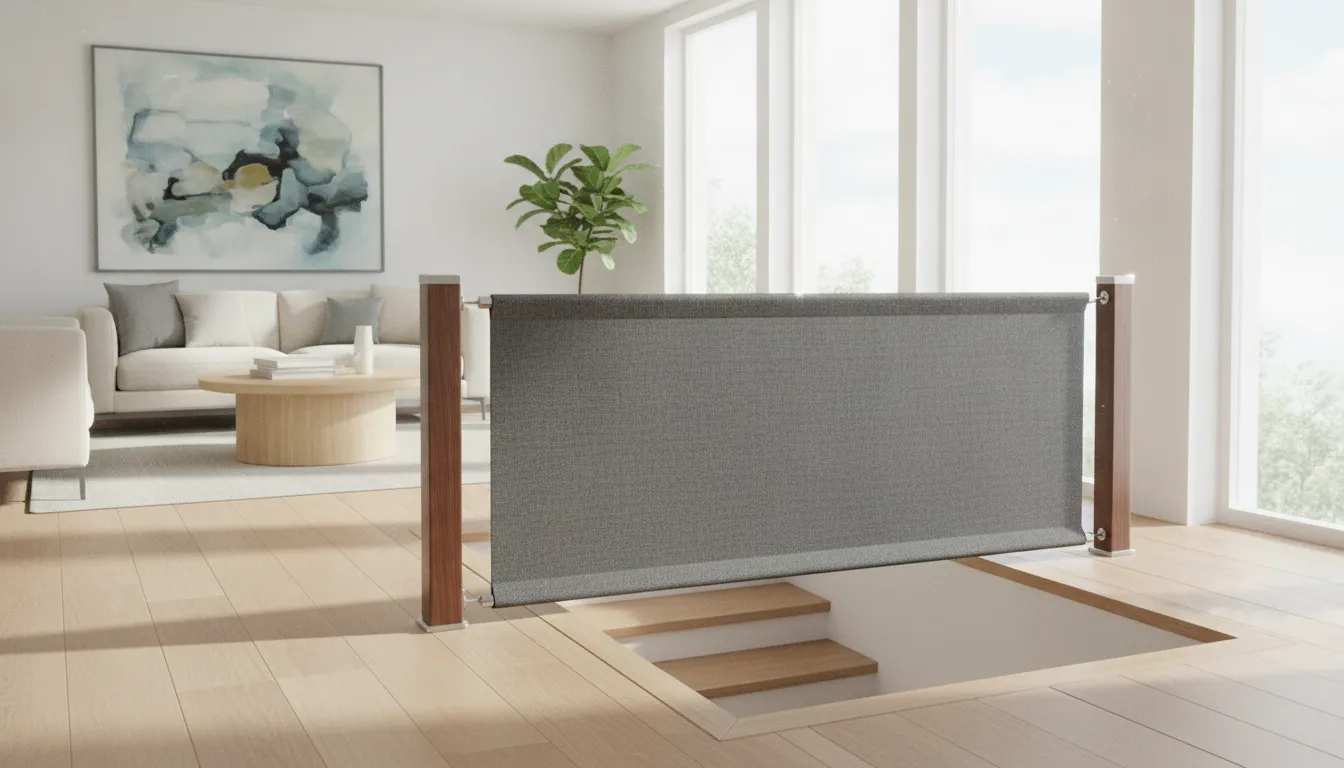
The best spots for baby gates in an open home include stair tops and bottoms, kitchen-to-living transitions, and wide hallway pinch points. Each location needs a gate that fits the specific shape of the opening. Fabric gates with strap-based mounting work well in all these spots because they adapt to banisters, walls, and odd angles without drilling.
Protect the top and bottom of stairs
The stairs are the main spot for any safety plan. You must secure both the top and bottom of each staircase. To keep your home safe, choose a gate that meets ASTM F1004 safety standards. These rules ensure the gate can handle the weight and force of an active toddler. For open stairs, you often have a banister on one or both sides. This makes standard gates hard to mount without a wall. You need a solution that works with your unique home shape.
A banister to banister baby gate is a vital tool for these spots. It uses strong straps and buckles to wrap around your posts. This no-drill system protects your wood while staying firm. You can even use these gates on curved or volute banisters. The fabric design fits non-standard shapes that metal gates cannot reach. It provides a tight seal that keeps your child away from the stairs. This protects your woodwork while keeping your kids safe.
Manage kitchen and living room zones
In a great room, the kitchen and living space often blend into one space. This makes it hard to keep kids away from hot stoves or sharp tools. You can use a wall-to-banister gate to create a clear line between these zones. This setup starts at $147.99 and fits gaps from 36 to 52 inches wide. It lets you keep an eye on your child while you cook or clean. You can set the gate in the best spot to keep the flow of the room open. The gate acts as a soft barrier that guides your child to safer zones.
Smart placement in the great room also helps you define safe play zones. You can block off areas with fragile decor, plants, or tech gear. Because these gates roll to the side, they do not block your view when they are open. This preserves the open feel of your home when the kids are not in the room. You get safety when you need it and style when you do not. You can choose a fabric color that matches your sofa or rugs. This keeps the room looking neat while you stay busy with home tasks.
Hallways and wide pinch points
Some open homes have wide hallways or entry points that lack a door frame. A standard gate will not fit these wide gaps. Fabric safety gates are a great fix because they work at an angle. If your walls do not line up, you can still get a tight fit. The wide model fits gaps up to 52 inches, which covers most large hallway spans. This makes it easy to close off a wing of the house or a specific room. These wide spots are often where kids like to run and play.
You may also have unique woodwork that makes mounting a gate hard. The Stair Barrier fits around volute posts and other complex shapes. The strap system is easy to set up and adjust for a snug fit. This ensures your gate stays in place even in the main parts of your house. Placing a gate here can help you manage the speed of play and keep kids in sight. The lightweight fabric is safe if a child bumps into it. No gate can replace adult supervision, but the right placement gives you peace of mind.
Fabric Gates vs. Plastic and Metal Barriers
Fabric safety gates offer better style, wider fit, and easier maintenance than plastic or metal gates in open concept homes. They weigh only six pounds, roll to the side when not needed, and come in over 20 upholstery-grade colors. Plastic and metal gates are bulkier, harder to store, and often require drilling or door frames to install.
The look and visual flow
In an open floor plan, your sightlines matter. Standard metal or plastic gates act as blocks that can make a large room feel cut off. Fabric gates roll to the side when you do not need them. This helps keep that airy, open feel. With over 20 colors like Midnight and Ivory Cloud, these solutions blend into your home decor. They do not fight your style.
Flexible fit for wide areas
Most plastic gates are made for narrow door frames. Open concept homes often have wide gaps or angled posts that stiff gates cannot span. Fabric barriers are light, at only six pounds. They can set up at an angle to fit what you need. They cover wide gaps from 36 to 52 inches while remaining easy to move or pack for travel.
| Feature | Fabric Safety Gates | Plastic or Metal Gates |
|---|---|---|
| Style | Blends with decor; rolls to side | Bulky; permanent barrier |
| Set up | No-drill straps for posts | Often needs drilling or frames |
| Care | Machine-washable and dryer-safe | Wipe-down only; can rust |
| Materials | Recycled REPREVE fabric | New plastic or coated metal |
| Weight | 6 lbs; includes carry bag | Heavy; hard to store or move |
| Wide Gaps | Fits up to 52 inches with ease | Needs extra parts for width |
Safety and strength
Strength is key when a toddler is on the move. While metal can be strong, fabric gates use tough cloth that meets ASTM F1004 safety rules. Using green materials like REPREVE recycled fabric, which uses 33 bottles per gate, these barriers provide a soft but firm wall. This soft design is often safer for kids who might bump into a hard metal rail. Always know that while these tools help, no gate replaces adult care at home.
How to Measure and Install Your Open Concept Gate
Measuring and installing an open concept baby gate takes four simple steps: measure your opening width. Choose your mounting kit, pick the right size and color, then secure the straps. The Stair Barrier gates use no-drill straps for banisters and small brackets for walls, making installation quick and damage-free.
Check your gate setup
First, find where your gate will attach on both sides. Banister to Banister (BB) kits use straps to wrap around wood or metal posts. Wall to Banister (WB) kits attach to a wall on one side and a post on the other. Both types fit wide openings and work with curved banisters at an angle.
Pick the right size
Measure the width of your opening at the top and bottom. Regular gates fit spaces from 36 to 43 inches wide. Wide gates cover gaps from 43 to 52 inches. The right size keeps the fabric tight across the span. You can choose from 20 plus fabric colors to match your home.
- Measure your opening width. Use a tape to find the space between your two points. Check the width at the floor and at 32 inches high. This helps you find any leaning posts or walls.
- Find your setup type. Choose a Banister to Banister (BB) kit for posts on both sides. Pick a Wall to Banister (WB) kit if you need to mount one side to a flat wall.
- Select your gate size. Match your data to the Regular or Wide size options. Most BB kits cost about 119 dollars while WB kits start near 147 dollars.
- Choose your fabric color. Pick from many options like Charcoal Linen or Sandstone. These fabrics are safe to wash and dry. They blend well with most home styles.
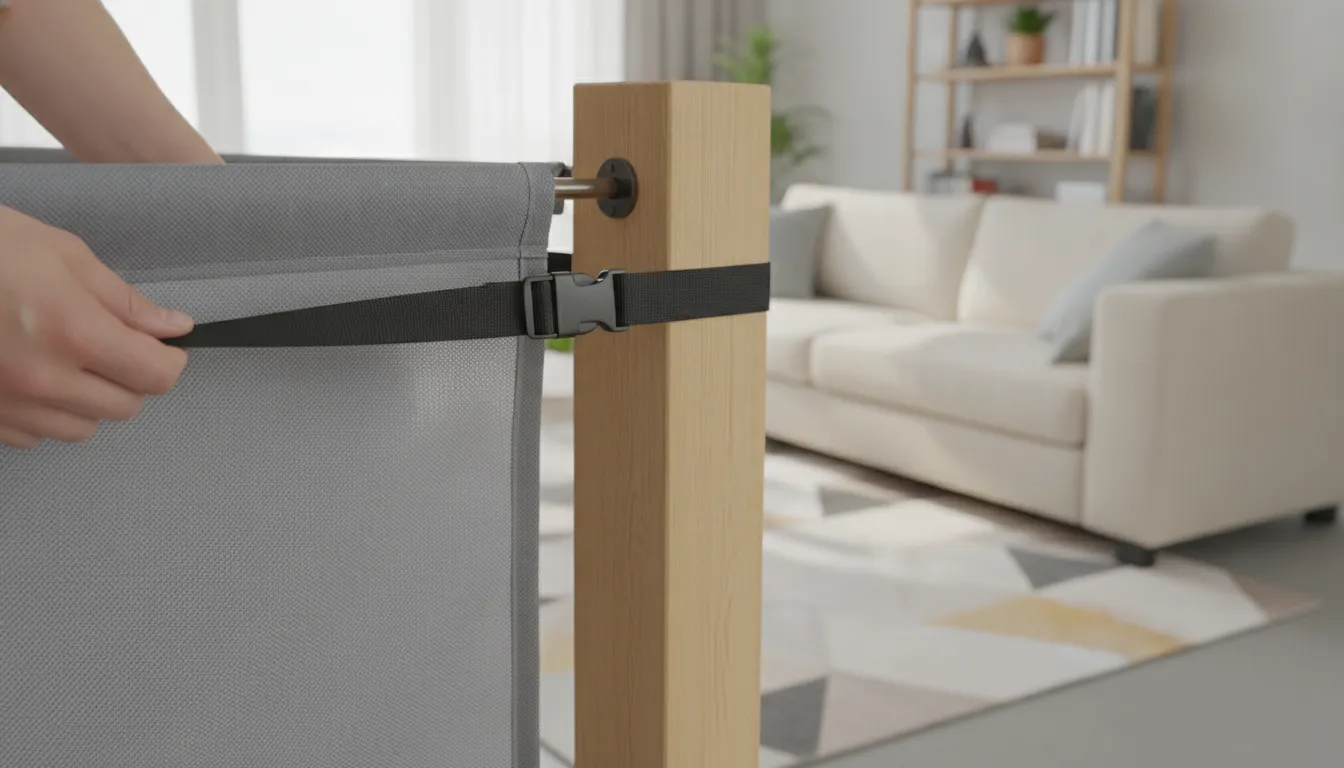
- Set up the mounting gear. For banisters, wrap the tough straps around the post. For walls, follow the baby gate installation measuring guide to mount small wall brackets.
- Snap the buckles and test. Snap the buckles and pull the straps to create high tension. Check that the gate is firm. It should not sag when you push on the fabric.
Tips for a safe fit
The BB model needs no drilling. This keeps your wood safe from holes. If you use a WB model, you only drill into the wall side. Always check the tension after you wash the fabric. This keeps the gate safe for your kids and pets.
The Lifestyle Benefits of a Design-Forward Safety Gate
A design-forward safety gate does more than block hazards. It improves your daily life by blending safety with home style, storing out of sight when not needed, and traveling easily. These gates offer flexible parts that fit the flow of a modern, open home.
Flexible storage and use
One big plus of a fabric gate is its roll-to-side build. In an open floor plan, you often want to keep sight lines clear. This is key when kids sleep or when you have guests. Unlike stiff gates that stay in the way, a fabric gate rolls to one side. This keeps your home looking its best. It removes the wall when you do not need it.
These gates also use top materials built for real life. The upholstery-grade fabric is easy to wash and dry. This makes it simple to clean up after messy kids or pets. Since the gates meet ASTM F1004 safety rules, you get peace of mind. You have a safe product that does not ruin your home look.
Safety for travel
If you travel or visit family, a heavy metal gate is hard to move. A fabric safety gate weighs only 6 pounds. It is light enough to carry in one hand. It fits into a bag for easy trips. This lets you take a safety tool with you to any home. It helps your child stay safe in new spots.
The setup is also quick and simple. For banister-to-banister spots, the gate uses straps and buckles. You do not need tools or drills. This protects your wood while giving a firm hold. Whether you are at home or away, you can set up a safe wall in minutes.
Sustainable style choices
Modern homes often have a look that old gates can ruin. With over 20 fabric colors like Midnight and Ivory Cloud, you can find a gate that fits your rugs. This choice ensures the gate looks like part of your plan. It does not look like a clashing tool.
Choosing a fabric gate can also help the planet. Many of these gates use REPREVE fabric made from recycled bottles. Each gate uses about 33 bottles. By picking a fabric safety gate, you help the earth. You get a strong, handmade product that lasts through the toddler years.
Frequently Asked Questions
Can you use a baby gate between two banisters?
Yes, you can use a baby gate between two banisters by using a model made for that setup. The Stair Barrier uses tough straps and buckles that wrap around both posts so you do not have to drill into your wood. These gates fit wide openings from 36 to 52 inches and work with many banister shapes like curved or volute styles.
Do fabric baby gates work for wide openings?
Yes, fabric gates are great for wide spaces in open homes because they cover gaps from 36 to 52 inches. Since they are soft, they can fit at odd angles or between uneven spots. Unlike stiff metal gates, these fabric gates can wrap around banisters of many sizes to provide a snug fit in your home.
Can a two year old open a safety gate?
Most safety gates use locks that toddlers cannot easily open on their own. Top fabric gates meet ASTM F1004 stair safety standards and use strong buckles that need an adult to release. While these gates are very secure, they do not replace the need for an adult to watch a child at all times.
What can be used instead of a baby gate?
If you have an open floor plan without door frames, you can use fabric gates that attach to walls or banisters with straps. Other choices include play yards or mesh guards for your stairs. Fabric gates are a top choice because they roll to the side when you do not need them, which keeps your home looking open.
Is there a baby gate that closes on its own?
Some safety gates offer a wrist strap that lets you close them hands-free, but most fabric gates require manual closing. The Stair Barrier gates use a buckle system that stays firmly in place. You must intentionally release the buckle to open it, which prevents toddlers from opening it on their own.
Ready to Protect Your Open Concept Home?
You now know what makes an open concept baby gate effective, where to place it, and how to install it. The right gate keeps your child safe while preserving the beauty of your home. Fabric safety gates solve the problems that traditional gates cannot handle in open floor plans.
Browse the full collection of fabric safety gates at The Stair Barrier to find the perfect open concept baby gate for your home. With 20-plus fabric colors, no-drill installation, and ASTM F1004 safety certification, you can protect your family without compromising your style.

Written by Arden Vale
Design & Safety Specialist
Arden provides expert guidance on blending ASTM safety standards with modern interior styling, helping parents and pet owners create secure, beautiful spaces.