


Stairs that once felt effortless can become a source of hesitation for an aging dog. Joint stiffness, reduced muscle strength, changes in coordination, and vision challenges may make each step less predictable, even when your dog still seems eager to follow you upstairs.
For senior dog stair safety. The most reliable first step is often preventing unsupervised access to the staircase with a securely installed gate while your veterinarian evaluates mobility changes. A fabric safety gate creates that boundary without adding a bulky visual barrier to your home. It should support supervision and broader mobility accommodations, not replace them.
Understanding why stairs become harder with age makes it easier to choose the right combination of limits, support, and daily routines for your companion. Start by looking at the physical changes that can turn a familiar staircase into a genuine fall risk.
Why Do Stairs Become Dangerous for Senior Dogs?
Stairs become dangerous for senior dogs because age-related changes -- arthritis, reduced muscle strength, vision decline, and coordination loss -- make balancing and lifting each paw harder. Each step asks a senior dog to absorb impact and control weight on declining joints. A fall on the stairs can cause serious injury, so understanding these changes is the first step in protecting your aging pet.
Stairs ask a dog to balance, lift each limb, and absorb impact repeatedly. As the body ages, changes that were manageable on level flooring can make each step less predictable. Arthritis, reduced strength, slower coordination, and vision changes may all contribute to a fall. Understanding these changes is an important part of keeping senior dogs safe on stairs, especially when a dog still appears confident in other parts of the home.
Arthritis and joint pain
Osteoarthritis is a chronic, progressive joint disease that commonly affects dogs. According to the Cornell Riney Canine Health Center, signs can include pain and difficulty navigating stairs or jumping onto furniture. A senior dog may hesitate before climbing, move more slowly, or struggle particularly on the way down, when joints must control the body's weight. Pain can also lead to compensating movements, which may reduce stability further.
Vision and balance decline
Stairs create a visual challenge because they involve changing surfaces, edges, shadows, and depth. A dog with reduced vision may misjudge where a step begins or ends, particularly in dim light or against a similar-colored floor. Balance and coordination can also decline with age. Arthritis, weakness, loss of coordination, and vision problems are commonly identified as reasons older dogs have trouble with stairs. Even a familiar staircase can become hazardous when one of these abilities changes gradually.
Muscle weakness and coordination
Age-related musculoskeletal changes often include stiffness in the joints, reduced range of motion, and a loss of muscle mass. The Ohio State University Indoor Pet Initiative notes that these changes can affect how aging pets move and maintain stability. Less hind-leg strength may make it harder to push upward, while weaker core control can make turning or stopping difficult. Fatigue can add another layer of risk late in the day.
This is also a household safety concern. A CDC report estimated an average of 86,629 fall injuries each year associated with cats and dogs. Limiting unsupervised access to stairs can help protect both pets and people, while veterinary guidance can address pain or mobility changes that deserve attention.
What Signs Indicate My Senior Dog Is Struggling on Stairs?
Common signs include hesitating at the top or bottom, slipping or stumbling, descending too quickly. Stiffness after using the stairs, reluctance to climb, sitting down mid-staircase, or needing to be carried between floors. Any of these behaviors means it is time to restrict stair access, consult your veterinarian, and install a sturdy safety gate to prevent unsupervised falls.
Dogs do not always show discomfort in obvious ways. A change in pace, posture, or confidence can be an early warning that stairs are becoming unsafe. Arthritis, weakness, loss of coordination, and vision problems are common reasons senior dogs struggle with stairs, so take new or worsening behavior seriously. Watch for these signs:
- Hesitating at the top or bottom: Your dog may pause, stare at the steps, shift weight from one paw to another, or seem unsure before starting. This loss of confidence can indicate pain, poor vision, or difficulty judging the next step.
- Slipping, stumbling, or misplacing paws: A senior dog who slips on a step, catches a paw, or drifts sideways may be having trouble with traction, balance, or coordination. Even one close call deserves attention.
- Descending too quickly or losing control: Rushing down the stairs is not always enthusiasm. Some dogs accelerate because they cannot control their weight or movement as they descend. This can turn a short staircase into a serious fall hazard.
- Stiffness after using the stairs: Notice whether your dog moves slowly, limps, stretches repeatedly, or takes longer to stand after reaching another floor. Arthritis can cause pain and difficulty navigating stairs, as documented by Cornell University's Canine Health Center.
- Reluctance to go up or down: Avoiding the staircase, turning around, whining, or waiting for someone to help can signal that the effort has become uncomfortable or frightening.
- Sitting down mid-staircase: Stopping on the steps may mean your dog is tired, painful, disoriented, or unable to continue safely. Do not encourage the dog to push through it.
- Needing to be carried: If your dog increasingly waits to be lifted between floors, that is a practical sign that independent stair use is no longer reliable.
These signs mean it is time to restrict stair access rather than wait for a fall. Keep your dog on the safer floor of the home, arrange a veterinary evaluation for new mobility changes. And use a properly installed safety gate to create a clear boundary. A gate helps manage the environment, but it does not replace supervision or medical advice. For a deeper look at available options, see our guide on how to choose the best dog gate for your specific home layout.
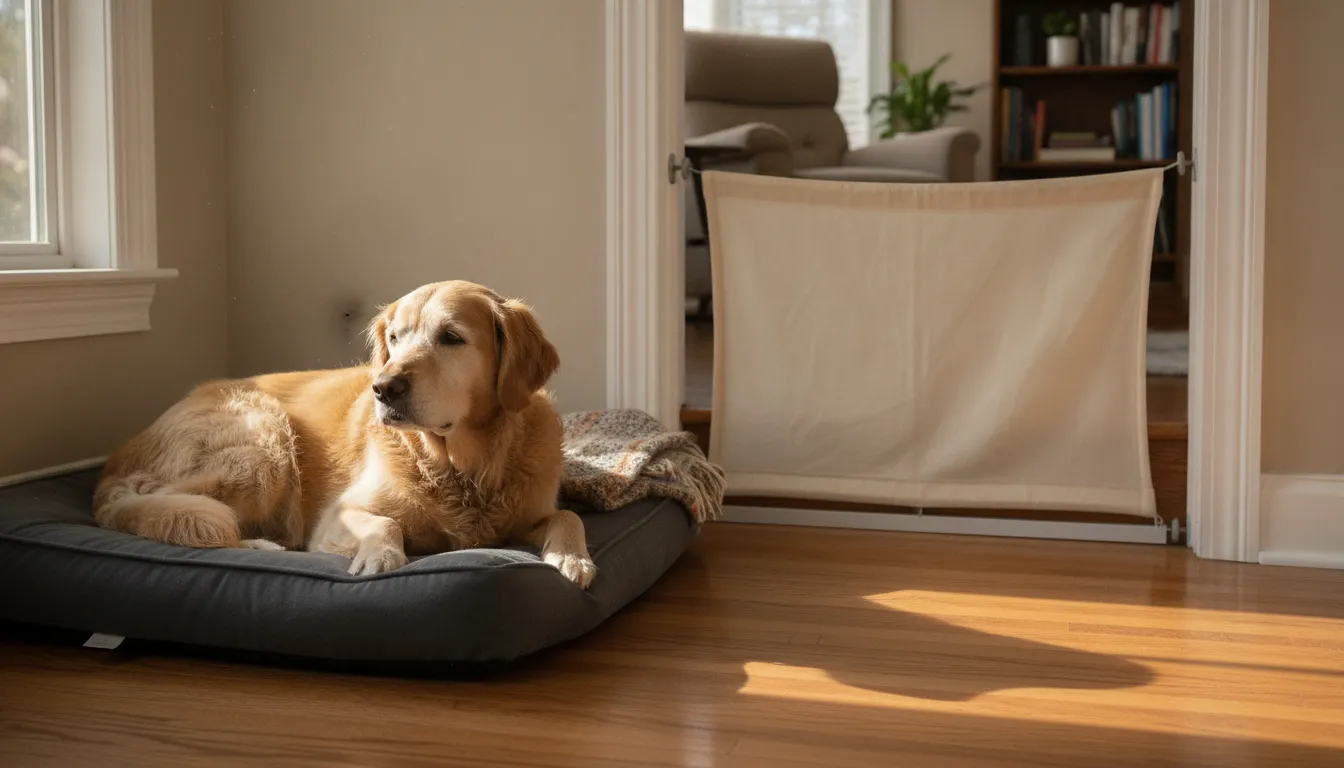
How Can Fabric Safety Gates Keep Senior Dogs Safe on Stairs?
Fabric safety gates prevent unsupervised access to stairways, which is one of the most effective ways to protect a senior dog from falls. Unlike bulky metal or plastic barriers, fabric gates create a calm physical boundary that blends into your home. When installed correctly on banister-to-banister or wall-to-banister configurations, a fabric gate can stop an aging dog from attempting stairs during unsteady moments.
For an aging dog, the safest staircase is often one they cannot reach without supervision. Safety gates can help prevent falls, especially when arthritis, weakness, reduced coordination, or vision changes make each step less predictable. The gate still needs to be sturdy and mounted correctly. A barrier that shifts when nudged by a determined dog is not a reliable part of your home safety plan. For pet owners specifically, our dog gate for stairs resource covers how to match a gate to your particular setup.
The Stair Barrier is designed for stair-focused installations, including banister-to-banister and wall-to-banister configurations. Depending on the layout, no-drill installation options can help secure the gate without putting holes in finished woodwork. Follow the installation guidance carefully, check that the gate is properly tensioned and anchored, and inspect the hardware periodically. The Stair Barrier gates are tested to meet ASTM F1004 safety standards, but no gate replaces supervision or veterinary guidance for a dog with changing mobility.
| Feature | Fabric safety gate | Pressure-mounted gate | Metal gate |
|---|---|---|---|
| Installation method | Designed for secure configurations such as banister-to-banister, with no-drill options for some layouts. | Held in place by pressure against opposing surfaces. | Typically hardware-mounted to wall or surrounding structure. |
| Security on stairs | Can restrict stair access when correctly mounted and used as directed. | Not recommended for stairways where a shifting gate could create a fall hazard. | Can provide a sturdy barrier when correctly installed. |
| Aesthetics | Soft fabric blends quietly into a considered interior. | Often has a visible rigid frame. | Rigid bars can feel visually heavy. |
| Ease of use for humans | Rolls to the side when open and is lightweight to handle. | May need repositioning if pressure changes. | Often heavier and more visually permanent. |
| Pet safety | Creates a clear physical boundary and the fabric is machine-washable. | May be less dependable if pushed or bumped on stairs. | Rigid construction can be secure but less forgiving around a busy home. |
Choosing a gate is one practical step in a broader senior dog stair safety plan. For more guidance on limiting access, see our article on dog gates for stairs. A thoughtfully installed fabric barrier can protect your dog's mobility while preserving the calm, cohesive feel of your home.
What Should You Look for in a Stair Gate for a Senior Dog?
For a senior dog, the best stair gate combines secure mounting, a forgiving surface, the right width for your opening, easy one-handed operation, and machine-washable fabric. Fabric safety gates excel in all these areas: they offer a softer barrier than metal or plastic, fit banister-to-banister openings securely, and store compactly when not in use. Measure your opening before choosing between Regular (36-43 inches) and Wide (43-52 inches) sizing.
For an older dog, the right stair gate should do more than fill an opening. It should create a calm, dependable boundary without adding hard surfaces that could become uncomfortable during a stumble or collision. Fabric safety gates are often preferred for their combination of function, portability, and appearance. Making them a thoughtful choice for homes where senior dog stair safety is a daily consideration.
- Quiet, forgiving construction: Fabric creates a softer visual and physical barrier than rigid plastic or metal bars. It can help limit access without making the stairway feel harsh or imposing.
- Secure mounting: At the top of stairs, choose a gate that is hardware-mounted and installed correctly. Do not rely on a pressure-mounted gate for a stair opening. The Stair Barrier is designed for secure banister-to-banister and wall-to-banister installations.
- The right width: Look for an option that fits your opening without gaps or improvised extensions. The Stair Barrier offers Regular sizing from 36 to 43 inches and Wide sizing from 43 to 52 inches. Use the measuring guide before choosing a configuration.
- Simple operation for people: A one-handed opening mechanism makes it easier to carry a laundry basket, manage a leash, or steady yourself while moving through the home. Your dog should be restricted from the stairs, but the gate should not make normal household routines difficult.
- Lightweight, portable design: A gate that rolls to the side for storage can keep the passage clear when supervision or access is appropriate. Portability is also useful when adapting more than one area of the home.
- Easy-care fabric: Senior dogs may have accidents, shed, or track in outdoor debris. Machine-washable and dryer-safe fabric makes regular cleaning more practical than caring for a rigid gate.
The Stair Barrier also offers more than 20 upholstery-grade fabric colors, so the gate can complement the room instead of competing with it. That premium price reflects more than appearance: you are choosing considered materials, a washable and portable design. Secure stair-focused installation options, and gates tested to meet ASTM F1004 safety standards. New puppy owners often discover how useful these same features are, as highlighted in our essential items for new puppy owners guide. No gate replaces supervision, but a well-fitted, correctly mounted barrier can be a durable part of a safer home for an aging dog.
How Do I Create a Senior-Dog-Safe Home Beyond the Stairs?
Beyond stair gates, create a senior-dog-safe home by adding non-slip runners on smooth floors, placing an orthopedic bed on the main living level. Raising food and water bowls to a comfortable height, and keeping water and toys on the same floor your dog uses most. Schedule regular senior wellness exams so your veterinarian can catch mobility issues early and recommend pain management, physical therapy, or other interventions.
A stair gate is an important layer of protection, but it works best as part of a larger plan for your aging dog's comfort and mobility. Small changes throughout the home can reduce slipping, limit unnecessary climbing, and make favorite resting areas easier to reach.
Improve traction and reduce climbing
Place non-slip runners over smooth hardwood or tile, especially along the paths your dog uses most. Secure the edges so the runner does not shift underfoot. Paw traction wax or properly fitted boots may also help on slick surfaces, although introduce either option gradually and supervise your dog while they adjust.
An orthopedic bed on the main floor gives your dog a supportive place to rest without requiring a trip up or down stairs. Keep it away from high-traffic areas and close to the family's usual living space, so your dog can remain comfortable without feeling isolated. Ramps can provide another way to reach a favorite piece of furniture. But they should have a stable base, a grippy surface, and a slope your dog can manage confidently. For a full home-safety checklist, read our guide on puppy-proofing essentials -- the principles apply equally to senior pets.
Make everyday resources easier to reach
Raised food and water bowls can reduce the need to bend deeply, though the ideal height depends on your dog's size, posture, and health. Ask your veterinarian whether raised bowls are appropriate, particularly if your dog has a history of digestive problems or difficulty swallowing. Keep water on the same floor where your dog spends the most time, and move toys or bedding away from areas that require climbing.
Pair home changes with veterinary guidance
Schedule regular senior wellness exams rather than waiting for a visible mobility problem. The University of Georgia's Veterinary Teaching Hospital explains that senior wellness visits are tailored to identify age-related issues early, including arthritis: learn more about senior wellness exams. Your veterinarian can help determine whether pain management, physical therapy, traction support, or another adjustment belongs in your dog's plan.
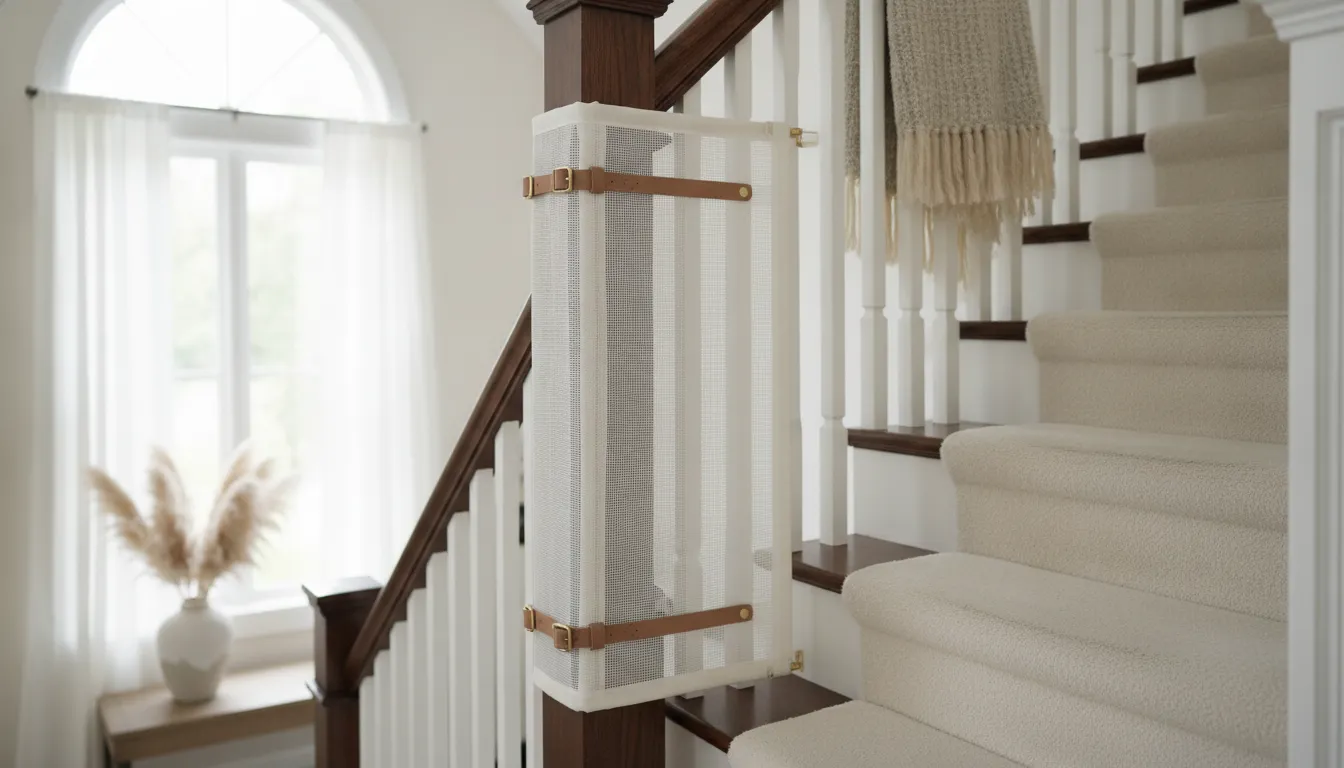
Finally, combine these adaptations with a reliable physical barrier at stair entrances. The Stair Barrier can help with preventing senior dogs from accessing stairs while keeping the rest of the home open and comfortable. For more everyday care ideas, read How to Best Care For Your Senior Dog.
Frequently Asked Questions
Here are answers to common questions about protecting senior dogs on stairs, including when to use a gate. How to recognize mobility changes, and what type of barrier works best for aging pets.
How can I help my senior dog navigate stairs safely?
Start by watching how your dog moves, then reduce the need to use the stairs when possible. Keep a comfortable bed, food, water, and favorite resting area on one floor. Non-slip runners, good lighting, and a ramp may improve traction and confidence. A securely installed safety gate can prevent unsupervised access when your dog is tired, hesitant, or unsteady.
Are baby gates safe for senior dogs on stairs?
A gate can be a useful way to block stair access, but safety depends on choosing the right design and installing it correctly. It should be sturdy, fit the opening, and stay closed when needed. Avoid treating any gate as a substitute for supervision, especially if your dog can push, jump, or lean against it. Fabric safety gates with secure mounting are generally the most reliable option.
Why do senior dogs have trouble with stairs?
Age-related changes can make stairs painful or difficult. Arthritis may cause joint pain, while reduced muscle strength, stiffness, declining coordination, or vision problems can affect balance. A new reluctance to use stairs, slipping, stumbling, or sitting midway deserves attention. Ask your veterinarian to evaluate sudden or worsening mobility changes.
What is the best type of gate for blocking stairs from dogs?
Look for a gate designed for the stairway opening, with secure mounting and a material that will not create unnecessary noise or visual bulk. A fabric safety gate can suit banister-to-banister layouts, store neatly to the side, and offer a softer, more considered look than many plastic or metal options. Measure the opening before choosing a size.
Should senior dogs be allowed on stairs at all?
Not necessarily. A stable dog may manage stairs with supervision, but limiting access is often the safer choice when your dog shows pain, weakness, hesitation, or poor balance. Discuss the safest routine with your veterinarian, then use gates and a comfortable single-floor setup to support that plan.
Ready to Create a Safer Stairway for Your Senior Dog?
A thoughtful barrier can help limit unsupervised access to stairs while keeping your home comfortable and considered. When you are ready to choose a fabric safety gate that fits your space, shop premium fabric safety gates at The Stair Barrier. Select the style and size that suit your stairway, then use the measuring guidance to plan your installation with confidence.

Written by Arden Vale
Design & Safety Specialist
Arden provides expert guidance on blending ASTM safety standards with modern interior styling, helping parents and pet owners create secure, beautiful spaces.