


The wall to banister baby gate provides a custom safety solution for staircases with one flat wall and one wood post. This setup is key for modern homes that feature open stairways or mixed design that standard pressure-mounted gates cannot handle safely. Unlike bulky metal gates, these fabric options offer a hardware-mounted fit on the wall side while using straps to secure the banister without drilling. Every gate from The Stair Barrier is built to meet ASTM F1004 safety standards to ensure your child remains protected. The lightweight fabric design allows the gate to roll to the side when not in use, keeping your home beautiful. This blend of high-grade safety and premium design makes it the best choice for parents who value both protection and style in their living spaces.
Browse Our Wall-to-Banister Baby Gates
Choosing the right gate requires understanding how your specific stairs function and where the safety risks lie. We will show why a Wall to Banister Baby Gate: The Perfect Solution for Tricky Staircases is often the best choice for your home layout. The path begins withWall to Banister Baby Gate: The Perfect Solution for Tricky Staircases
Many homes have a common but tough stair layout. You might have a flat wall on one side and a banister post on the other. This mix makes it hard to find a gate that fits well. Standard gates often fail to stay firm in these spots. A wall to banister baby gate is the best way to fill this gap and keep your family safe.
The challenge of uneven stair sides
Most gates work best when they connect two flat walls. But many modern stairs do not have this setup. One side may be drywall while the other is a round or square wood post. This uneven match creates a real risk. If the gate does not sit flush, it can shift or even fall. You need a tool that can handle both a flat side and a curved or angled post.
You may feel like you must change your home to make it safe. Some people try to build extra blocks or frames. But you do not have to do that. A benefits of a wall to banister baby gate include a design that fits this exact layout. It fastens to the wall on one end and wraps the post on the other for a snug fit.
Why pressure gates are not enough
Many parents pick pressure-mounted gates because they are easy to set up. These gates stay in place by pushing hard against the two sides. While they work in hallways, they are not the best for stairs. On a banister, the pressure can cause the post to bend or the gate to slip. This is why experts say hardware-mounted gates are better for stairs.
According to the Consumer Product Safety Commission, hardware-mounted gates provide a more secure fit at the top of stairs. This setup uses screws or straps to lock the gate in place. It does not rely on pressure alone. This means the gate will not pop out if a child or pet leans against it. Safety standards like ASTM F1004 ensure these gates can handle the daily stress of a busy home.
Safety that fits your home style
You do not have to trade style for safety. High-end fabric gates look great and work well on tricky stairs. These gates use tough fabric that can roll to the side when you do not need it. This keeps your path clear and your home looking clean. You can find a wall to banister baby gate solution that matches your decor perfectly.
These fabric gates are also easy to care for. Many are machine-washable and dryer-safe. This is a huge help for parents and pet owners. You get a gate that meets strict safety rules and still looks like part of your home. It is a smart way to find the right wall to banister baby gate for your unique space.
Why Traditional Baby Gates Fall Short on Uneven Stairs
Many homes have stairways where a flat wall sits on one side and a round or wood post sits on the other. This mix of surfaces makes it hard to use standard metal or plastic gates. Most of these gates need two flat, even walls to stay in place. When you try to put a flat gate against a round post, the gate can slip or move. This creates a big safety risk for small children who might lean or push against the gate.
The Danger of Pressure Mounted Gates
A pressure mounted gate works by pushing hard against two surfaces. This can work between two walls, but it is often unsafe for stairs. These gates can fail if they are not set up with exact pressure. The U.S. Consumer Product Safety Commission notes that these gates can fall if a child knocks or pushes them. This is why experts say you should use hardware mounted gates at the top of stairs to stop falls.
Uneven Surfaces and Gate Failure
Wood posts and drywall do not always line up. A Wall-to-Banister Gate is made to fix this specific problem. Standard gates often leave gaps or feel loose on one side because the post is not flat. These gaps are a hazard for children aged 6 to 24 months, who are the main focus of ASTM F1004 safety standards. If a gate is not firm, a child could get stuck or push the gate over and fall down the stairs.
The Need for a Specialized Solution
You need a gate that can grip a post while staying firm on the wall. A wall to banister baby gate uses straps or kits to wrap around the post. This gives you a tight fit that a metal expansion gate cannot match. Using the right wall to banister installation kit ensures the gate stays shut and safe. This keeps your home safe and looking good without the risk of a loose gate.
The Advantages of Premium Fabric Safety Gates
Choosing a premium fabric gate over a clunky metal or plastic gate changes how you feel about your home. Many parents struggle with bulky barriers that clash with their decor. A premium wall to banister baby gate offers a better way to stay safe. These gates use high-quality fabric that looks like fine furniture. You do not have to give up your style to keep your child safe.
Upholstery grade fabric and style
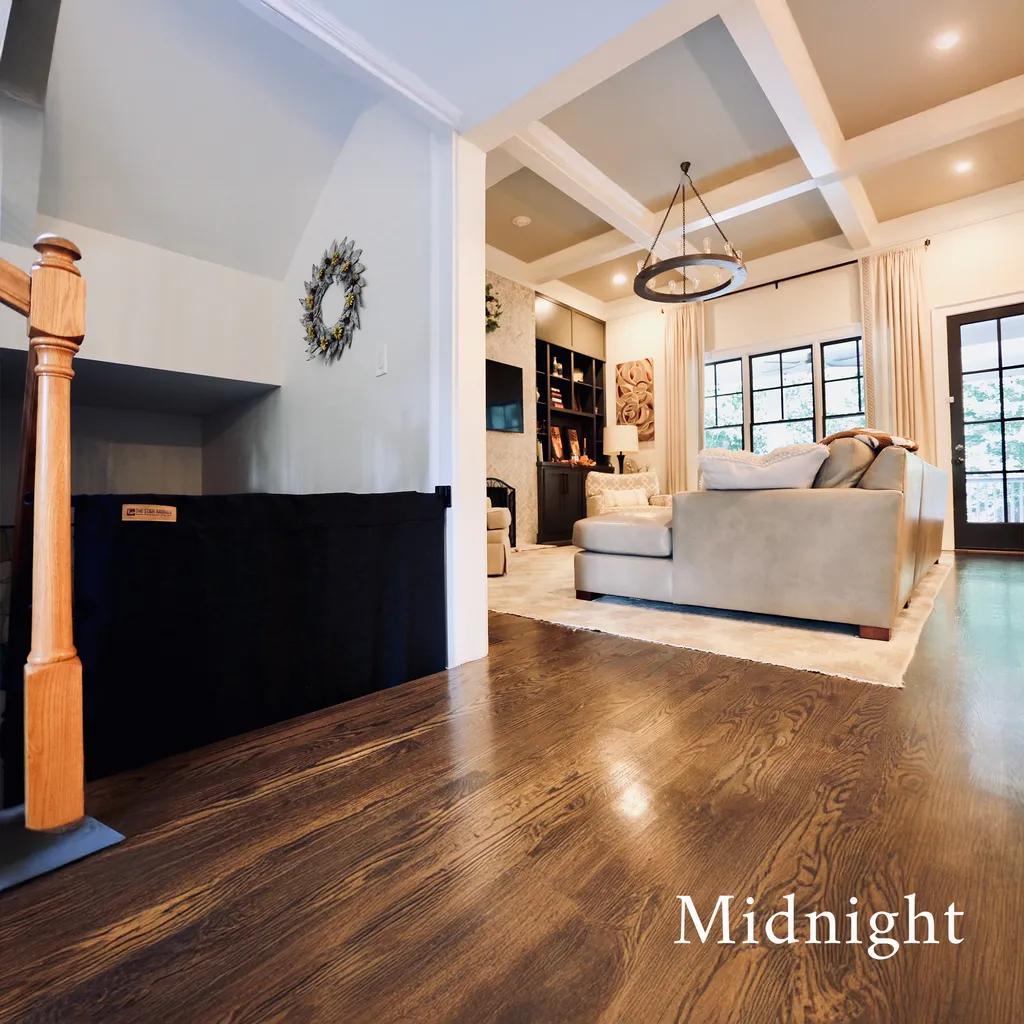
Design-focused homes need products that blend in. The Stair Barrier offers over 20 fabric options made from upholstery-grade materials. These choices let you match your gate to your rugs or sofas. You can pick colors like Pebble Gray Linen or Classic Navy Linen to suit your space. This approach is much better than using a plain white plastic gate that stands out for the wrong reasons.
Safety is still the most important factor for any parent. Every Stair Barrier gate meets ASTM F1004 safety standards to ensure a secure fit for children. These rules help reduce the risk of fall injuries on stairs. By choosing a fabric gate that meets these high bars, you get both safety and a beautiful look for your home.
Easy care and simple storage
Life with toddlers is messy, so easy care is a big win. The fabric on these gates is machine-washable and dryer-safe. When the gate gets dirty, you can just zip it off and clean it. This feature is a clear benefit of a wall to banister baby gate compared to metal gates that collect dust in hard-to-reach spots.
Storage is another area where fabric gates shine. The roll-to-side design lets you open the path without leaving a swinging door in the way. This is helpful for busy areas where a metal gate would be a trip hazard. You can also move the gate easily because it is very light. This portability makes it a great wall to banister baby gate solution for families who travel or visit grandparents.
Get Your Custom-Sized Fabric Safety Gate Today
Comparing Baby Gate Mounting Systems for Staircases
Choosing the right mount for your stairs is a vital task for home safety. A staircase often has unique shapes, like a flat wall on one side and a wooden post on the other. This setup needs an exact wall to banister baby gate to stay firm. You must find a gate that keeps kids safe but does not ruin your fine woodwork.
Strength and structural stability
Firmness is the top goal for any gate near a flight of stairs. The U.S. Consumer Product Safety Commission notes that hardware-mounted gates are best for these spots. These gates attach with screws or heavy straps to stop the gate from sliding. A loose gate can lead to a risky fall if a child pushes against it.
Security on the stairs is about more than just a locked door. The gate must resist the push of a toddler or a large dog. Most hardware models are strong because they screw right into the wall studs. This stops the gate from popping out under pressure. When you buy a wall to banister baby gate, look for straps that grip the post tight.
Push-fit gates rely on side force to stay in place. While easy to set up, they may slip on smooth wood or round posts. For the top of the stairs, experts advise against these because they lack a solid fix to the wall. A special wall to banister baby gate uses a mix of wall mounts and post straps for a tighter fit.
Meeting federal safety standards
When you compare gates, look for the ASTM F1004 mark. This is the U.S. rule for gates made for kids aged 6 to 24 months. It ensures the gate can hold up to a child's weight and force. A high-quality wall to banister baby gate will meet these rules while still looking great in your home. Always check the labels to be sure your new gate is tested and safe for stair use.
Guarding your home and banisters
Many parents worry about drilling holes into their costly stair posts. Heavy metal gates often need four or more screws in the wood to stay safe. A fabric gate offers a smarter way to guard your stairs. These gates use soft straps to wrap around the post. This keeps the post clean and free of holes.
Traditional gates can be a pain to move or store. They often block the path for adults even when the baby is not nearby. A fabric gate solves this by rolling out of the way. This leaves the full width of the stairs open for you to carry laundry or move furniture. Choosing a wall to banister baby gate made of tough fabric gives you safety and ease in one package.
If your home has odd shapes, you may need a wall to banister installation kit to bridge the gap. These kits help you set up a safe gate without the bulk of plastic frames. Since fabric gates roll to the side, they also keep your hallway clear when not in use. This blend of safety and style is ideal for modern homes.
| Mount Type | Stair Security | Woodwork Impact | Best Use |
|---|---|---|---|
| Hardware-Mounted | Excellent. | High (Requires drilling). | Permanent top-of-stair use. |
| Pressure-Mounted | Low. | Low (Can leave scuffs). | Hallways and doorways only. |
| Fabric Wall-to-Banister | High. | Very Low (No-drill straps). | Main stairs and tricky angles. |
| Retractable Gates | Average. | Medium. | Wide rooms or porch areas. |
Step-by-Step Guide to Installing a Wall to Banister Baby Gate
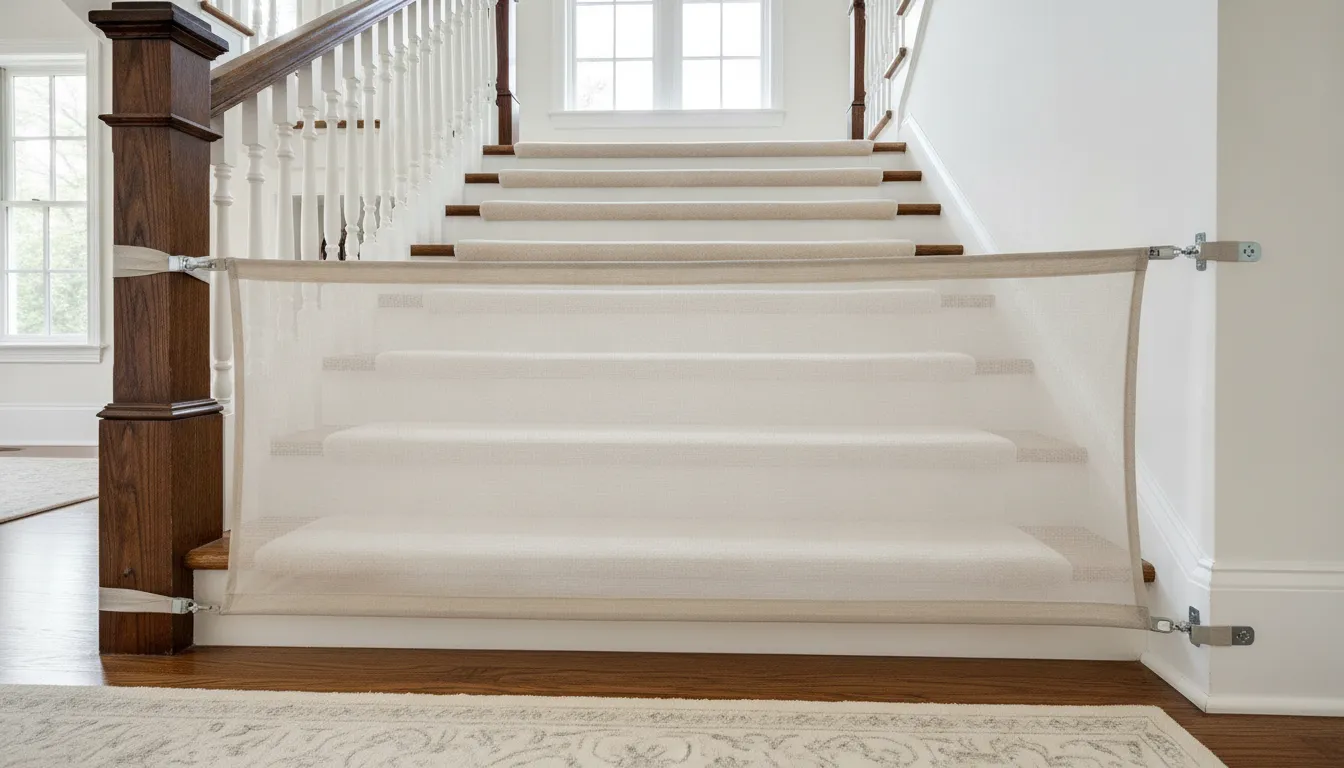
Setting up a safety gate where a flat wall meets a wooden post needs the right tools and care. You can secure your home while keeping your wood in top shape. A quality wall to banister baby gate solution lets you protect your child without drilling into your stairs.
Measure the opening and prepare tools
Start by measuring the width of your stairs. Check the gap from the wall to the outer edge of the banister post. Ensure the area is clear of trim or baseboards that might block a flush fit. You want a tight seal to meet ASTM F1004 safety standards for your child's care.
Gather your mounting kit and a drill for the wall side. You will also need the heavy-duty straps for the banister side. Check that your wall studs line up with your gate path. If you are not sure about your fit, view the measuring guide for help with tricky stairs.
Secure the wall side and banister straps
Mount the wall brackets first using the screws. Make sure the brackets are level and at the height the maker suggests. This hardware-mounted side gives the strength needed at the top of a staircase. Do not use pressure alone for these spots as it can fail over time.
Next, move to the wooden post. Wrap the straps around the banister and pull them tight. The fabric gate design lets you skip the drill on this side. Ensure the straps do not slip or slide up and down the post. Once set, hook the gate to the wall side to test the tension.
Final safety checks and testing
Push and pull on the gate to ensure it stays in place. It should not move more than an inch in any way. A safe gate must hold up to the weight of a toddler or a pet. Check the latch or clip to be sure it locks with ease every time you close it.
- Align the wall-side brackets with your wall studs for a firm hold.
- Drill pilot holes into the wall to prevent the wood or drywall from cracking.
- Screw the wall hardware into place and check that it is level.
- Wrap the heavy-duty straps around your banister post without using screws.
- Feed the straps through the gate buckles and pull until they are very tight.
- Attach the gate to both sides and test the latch to ensure a safe lock.
If you hit a snag, look at your manual or send a photo to support for help. Once your wall to banister installation kit is set, you can rest easy. Your stairs are now safe. The fabric gate can also roll to the side when you need to clear the path.
Choosing the Right Size and Color for Your Home Decor
Picking a gate starts with a good fit. You need the right size to keep your home safe. A wall to banister baby gate must be snug to work well. This setup joins a flat wall on one side to a banister post on the other. It is a great choice for tricky stairs where other gates might not fit. Using a fabric gate ensures you have safety without the clunky look of metal.
How to measure your staircase opening
To get the right fit, you must measure your opening. Use a tape to find the width from the wall to the banister. Most homes will use one of two sizes. Our Regular size fits widths from 36 inches to 43 inches. If your stairs are wider, the Wide size fits 43 inches up to 52 inches. Checking these sizes helps you buy the right product the first time.
Measuring the right way is the best path to safety. You can follow our measuring guide to be sure you have the right numbers. If your stairs have a baseboard or a trim, measure at the top and bottom. This helps you pick a wall to banister baby gate solution that stays firm. A tight fit is key to keeping the gate from moving when a child or pet leans on it.
Premium fabric colors for your home
Safety should not ruin your home's look. We use high-end fabric to make gates that blend in. You can choose from many colors that match modern decor. Our popular colors include Midnight, Silverstone, and Sandstone. If you like lighter tones, try Ivory Cloud or Parchment Linen. For a classic look, you can pick Classic Navy Linen or Charcoal Linen. We also offer Pebble Gray Linen and Pacific Blue Linen for a soft touch.
These gates are made in the USA. We care about how our work affects the earth, so we use green ways to make them. The fabrics are strong but soft to the touch. Our goal is to give you a gate that is both tough and pretty. You can roll the gate to the side when you do not need it. This keeps your hallways open and your home looking its best.
Safety standards and easy care
All our gates meet ASTM F1004 safety standards for kids. This means they are tested to hold up well and stay secure. Kids and pets can be messy, but our fabric is easy to clean. You can take the fabric off and wash it in your machine. It is also safe to put in the dryer. This keeps your gate fresh and clean for years. Having a washable gate is a big win for busy parents who want to keep germs away.
Frequently Asked Questions
Can you put a baby gate on a banister?
Yes, you can put a safety gate on a banister using a Wall-to-Banister setup. One side of the gate attaches to a flat wall and the other side clips to a banister post. This works well for stairs that have a railing on only one side. According to the CPSC, gates must meet strict safety rules to keep children safe from falls. Fabric gates are a great choice because they blend with your home.
How do you attach a baby gate to a round banister?
Attaching a gate to a round post needs the right gear to ensure a tight fit. You should use a gate designed for Wall-to-Banister use that includes heavy-duty straps. These straps wrap around the round post and keep the gate firm. This prevents the gate from sliding down or pulling loose. The measuring guide helps you find the right size for your post. This setup keeps the gate safe without damaging your wood railing.
What is the best baby gate for walls that do not line up?
If your wall and banister do not align, a fabric safety gate is the best fix. Metal gates often need flat, even surfaces to work. A fabric gate like the Stair Barrier can flex to fit an angled opening. This makes it a top choice for old homes or custom stairs. These gates meet ASTM F1004 safety rules for children aged six to 24 months. They provide a safe barrier even in tricky spots.
Is a wall to banister baby gate safe for the top of stairs?
Safety at the top of stairs is a top concern for parents. For the best safety, the CPSC says to use hardware-mounted gates in this area. These gates attach firmly to the wall and post so they cannot be knocked down. You must follow the maker's steps for a safe fit. A Wall-to-Banister gate that meets official safety rules can help prevent falls. Fabric gates also roll to the side so you do not have a trip risk when they are open.
How to Find a Safe and Stylish Wall to Banister Baby Gate Today
Leaving your stairs open is a very grave risk you do not need to take. Every moment you wait is another chance for a small child or pet to reach the top of the stairs alone which is a risk. You can fix this problem today by learning how to choose the right wall to banister baby gate for your stairs and your home. If you start right now, you can have a much safer home and stop the constant worry in just a few short days.
Ready to request help from our team? Browse our safe fabric gates to find the perfect gate for your stairs today.

Written by Arden Vale
Design & Safety Specialist
Arden provides expert guidance on blending ASTM safety standards with modern interior styling, helping parents and pet owners create secure, beautiful spaces.