


Heavy metal gates and plastic barriers can quickly turn a curated living space into a cluttered play zone. Your staircase deserves a safety solution that respects your style while protecting your family.
Shop The Stair Barrier fabric safety gates to find a design-conscious fit for your staircase.
Babyproof stairs without adding a messy look by choosing an attractive fabric safety gate that rolls to the side when not in use. Unlike bulky barriers that can interrupt a room, a well-fitted fabric gate blends into your home while meeting ASTM F1004 safety standards. Falls are the main cause of non-fatal injuries for children under age 19, according to the Centers for Disease Control and Prevention. Washable fabrics and banister-friendly installation options can help you protect your child, preserve your woodwork, and keep the staircase visually calm. No gate eliminates every risk or replaces adult supervision.
Creating a safer home starts with understanding the layout of your space and identifying every risk. A complete stair safety audit shows what your home needs before you choose a gate or make other changes.
Start with a calm, complete stair safety audit
A stair safety audit checks the landings, steps, railings, lighting, and surrounding floor for hazards. Clearing clutter and measuring the opening first makes it easier to choose a properly fitted barrier.
Falls are the main cause of kids getting hurt at home. In the U.S., about 8,000 kids go to the ER for hurts from falls every day. This fact from the CDC shows why a home check is key. You should look at your stairs before you start to make changes. A calm check helps you find small risks before they become big problems.
Top and bottom stair hazards
Walk to the top of your stairs first. Look for things that might make someone trip or slip. Rugs and loose toys are big risks for all. You need to make sure the top of the stairs is clear of mess. This helps keep both you and your baby safe when you move around. A clear path is the first step to a safe home.
Check the bottom of the stairs as well. Kids who crawl or walk can reach the bottom steps fast. You should find any sharp corners or hard floors that need padding. A quick walk through will help you see what needs to be fixed. It also makes it simpler to plan your baby proofing your stairs project. Knowing the space well helps you pick the right gear.
Stair railings and pole gaps
Railings must be strong and safe. Give them a firm shake to see if they move. If they feel loose, you will need to fix them. Strong railings are the first line of safety for people using the stairs. They should be able to hold weight without any sway or wobble. This check is key for homes with older stairs.
Check the gaps between the rails or poles. These are the tall poles that hold the railing up. If the space between them is more than four inches, a child's head could get stuck. You may need to add a guard or net to cover these gaps. This simple step keeps small bodies from slipping through. It is a key part of the work to babyproof stairs for peace of mind.
- Start at the top of the stairs and look for loose rugs or toys.
- Check that all lights work and the steps are easy to see.
- Walk down the stairs to feel for any loose steps or boards.
- Measure the space between the poles to ensure they are four inches or less apart.
- Shake the handrail to make sure it is bolted tight to the wall.
- Look at the floor at the bottom of the stairs for any sharp edges.
A full audit gives you a clear list of what to do next. You can pick the most needed fixes first. This keeps the work simple and not too hard. Once the audit is done, you will feel ready to pick the best tools for the job. Taking your time now saves you from worry later on.
Choose stair barriers that look intentional
Choose a stair barrier based on the opening, mounting surfaces, and daily traffic flow. A fabric safety gate can provide a secure fit while reducing the visual weight of a traditional metal or plastic gate.
Picking the right gate is the first step to baby proofing your stairs. Many parents use plastic gates, but these often clash with home decor. To keep your space looking its best, look for gates that blend into your home. Fabric gates offer a soft look that fits well in living rooms and halls. They give you the safety you need without the harsh look of metal bars.
Use hardware for stair safety
Safety is the most vital part of any gate you choose. For any gate at the top of the stairs, you must use a model that mounts with hardware. These gates screw into the wall or banister. This helps them stay firm when a child or pet pushes on them. Based on data from the CDC, home safety tools like stair gates help stop falls.
You should not use pressure-mounted gates on stairs. These gates stay in place by pushing against the walls and can slip if they are not set right. A child could push the gate over and fall down the steps. Instead, pick a gate that meets ASTM F1004 safety standards. This shows the gate is made for stair use and will keep your child safe.
Reduce visual clutter with fabric
Old baby gates are big and often get in the way. Fabric barriers are a better choice for homes that care about style. These gates roll to the side when you are not using them. This keeps your stairs open when the kids are in bed or out of the house. It is a simple way to keep a clean look in busy areas of the home.
Fabric options also let you match your gate to your style. You can find many colors and patterns that fit your rugs or chairs. This makes the gate feel like a part of your room rather than a fix. You must still watch your child at all times, but a Wall-to-Banister safety gate makes the job look better. It gives you peace of mind while your home stays beautiful.
How do you babyproof stairs with unusual railings?
For unusual railings, measure both the stair opening and each mounting surface. Banister-to-banister and wall-to-banister fabric gates can accommodate many curved, angled, iron, glass, or stone layouts without forcing a bulky standard gate into the space.
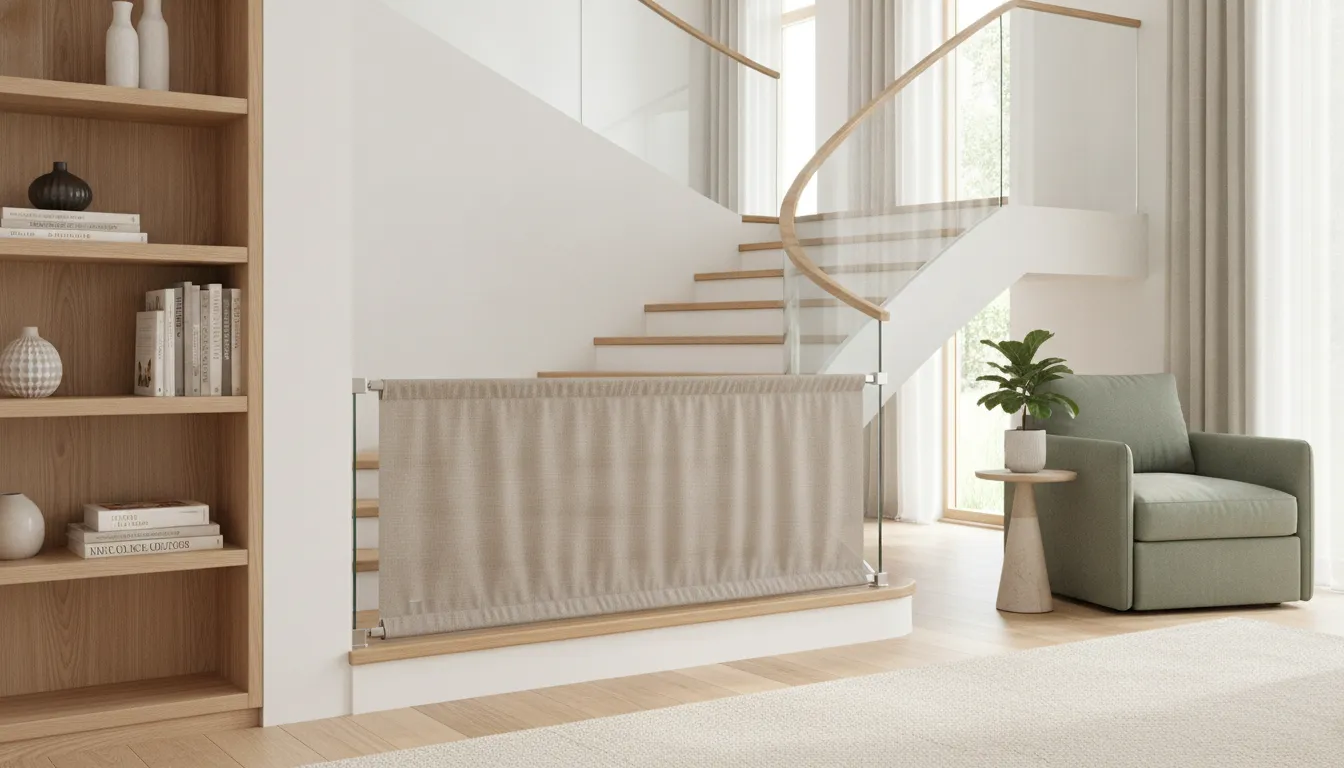
Most baby gates are made for flat walls and square posts. But many new homes have stairs with glass, stone, or wrought iron. These nice features can make it hard to babyproof stairs with common tools. You might feel stuck if you have a curved post or no wall to drill into. You do not have to change your home's look to keep your child safe. There are ways to fit a gate to almost any stair shape.
Your stair layout
The first step to babyproof your stairs is to find out where your gate will go. Most stairs fall into one of three groups. A banister-to-banister setup has posts on both sides. A wall-to-banister setup has a flat wall on one side and a post on the other. A wall-to-wall setup has flat walls on both sides. Knowing your layout helps you pick the right gate for your space.
Falls are the top cause of non-fatal hurts for kids in the U.S., as shown by the CDC. Because of this risk, you need a gate that fits your exact rail. Many parents try to use pressure gates on stairs. But these gates can slip if they are not pushed against a flat wall. On stairs, you should always use a gate made for that spot. The right fit keeps your child safe and gives you peace of mind.
Glass, iron, and stone solutions
Odd parts like glass or thin metal bars can be tricky. You cannot drill into glass or thin iron bars. For these cases, a fabric gate is often the best choice. A Banister-to-Banister safety gate uses strong straps and buckles. These straps wrap around your rail and pull tight. This means you do not need to drill or use tools on your fine wood or metal. It also works on curved posts that other gates cannot grip.
Stone and brick also make it hard to drill. If you have a stone wall, a Wall-to-Banister safety gate can help. You only need to drill on the wall side. The other side uses straps to grip the stone or wood post. This setup keeps your home safe while saving your walls from extra holes. These gates also meet ASTM F1004 rules for stair use. This is a great way to babyproof stairs without permanent harm to your home.
Another benefit of fabric gates is that they roll to the side when not in use. This reduces the mess in your home and keeps your stairs clear. You can open the gate with one hand, which is helpful when you are holding a child. The fabric is also easy to clean. Most can go in the wash and the dryer if they get dirty. This keeps your home looking fresh and safe at the same time.
Safety is not just about the fit. These gates are also made to be hard to climb. They have vertical struts that prevent kids from getting a foothold. This helps stop accidents before they happen. All parts are made in the U.S. from high-quality stuff. You get a gate that is strong, safe, and looks great in your home.
| Gate Type | Best For | Drilling Needed | Key Benefit |
|---|---|---|---|
| Banister-to-Banister | Stairs with posts on both sides | No drilling | Fits any banister shape |
| Wall-to-Banister | One flat wall and one post | Only on the wall side | Saves your rails from holes |
| Wall-to-Wall | Two flat walls | On both walls | Solid fit for hallways |
Expert fit help
If your stairs have an odd shape, do not guess on the fit. A gate that does not fit right is not safe. Look for a brand that offers real help. Some shops let you send in a photo of your stairs. Their pros will look at your rails and tell you which gate is best. This takes the fear out of the process. You will know for sure that your gate will work in your home.
Before you buy, check the Measuring and installation FAQs to be sure you have the right size. You will need to know the width of your opening and the height of your posts. Most gates come in regular and wide sizes to fit most homes. Taking a few minutes to measure now will save you time later. You can feel good knowing your stairs are safe and still look great.
Design an uncluttered safety zone around the stairs
An uncluttered stair safety zone keeps toys, rugs, cords, and extra gear away from the steps and landings. Coordinating the barrier with nearby finishes helps safety equipment feel intentional rather than temporary.
Keeping your home safe for a mobile child is a top task for parents. Falls are the leading cause of non-fatal injuries for kids up to 19 years old. According to the CDC, using stair gates helps to prevent these accidents.
But many parents worry that safety gear will make their home look messy. You can create a safe zone that stays clean and neat. The key is to pick tools that blend into your home decor. This way, you get peace of mind without losing your style.
Choose a gate that fits your style
Most baby gates are made of metal or plastic. These can look out of place in a warm, well-designed home. If you want to learn how to babyproof stairs, look for fabric options. Fabric gates use soft cloth that matches your rugs and drapes.
You can find gates in many colors and patterns. A gate that matches your wood or walls will not stand out. This helps your stairs feel open and tidy. It turns a safety tool into a part of your room's design.
A good gate should also be easy to use. Some models use buckles that are simple for adults to open. This means you do not have to fight with a heavy door every time you go up.
When the gate is not in use, it should not block your path. Fabric gates can roll to the side to stay out of the way. This is great for when guests visit or when the kids are in bed. It keeps the area around your stairs free from extra clutter.
Keep the stair path clear
Clutter on the floor is a major risk for trips and falls. This is true for both kids and adults. You should keep the area near your stairs clear at all times.
Do not leave shoes, toys, or baskets on the steps or landings. These items can be hard to see in the dark or when you are in a rush. If you have a small space, use closed bins to store these items. This keeps the path safe and makes the room look better.
You may also want to move decor away from the stairs. Large pots or floor lamps can be a hazard if a child bumps into them. Try to keep a three-foot zone of clear floor around the gate.
This gives you plenty of room to move as you open and close the barrier. A clear path makes it easy to spot any new toys that might have been left behind. It also helps you move safely while carrying a baby or a load of laundry.
Match your safety gear
When you are baby proofing your stairs, try to match all your gear. If you have more than one gate, use the same style for both. This creates the same look throughout your home.
You can also match the gate hardware to your banister or wall color. Many gates come with different strap or bracket options. Picking the right one can make the gate hard to see. It shows that you have put thought into both safety and the look of your home.
Good safety gear should meet high standards. Look for gates that meet ASTM F1004 standards for use at the top of stairs. This means they have been tested to be strong and safe.
While a gate must be tough, it can still be light and soft. A fabric gate is a great choice because it is easy to wash. You can keep it looking new and clean for years. This keeps your home safe and beautiful at the same time.
Make stair safety part of your daily routine
Daily stair safety means closing and securing the gate after every use, keeping the path clear, and checking the barrier regularly. Consistent habits matter because no gate replaces attentive adult supervision.
Explore fabric safety gates for your staircase and compare options that suit your home's layout.
Setting up a gate is the first step to baby proofing your stairs, but it is not the last. Safety works best when it becomes a part of how you live each day. By making small habits and checking your gear, you can keep your home safe without adding stress to your life. A good habit helps you feel sure that your little ones are safe.Keep safety gates closed and secure
Follow tips to babyproof stairs safely by keeping your gate closed at all times. It may seem simple, but a gate left open for even a minute can lead to a fall. Since falls are the main cause of injury for children ages 0 to 19, staying alert is key. Get into the habit of checking the buckles or latches every time you walk through the gate. This check only takes a second, but it gives you peace of mind. A fabric gate makes this habit easy for busy parents. It rolls out of the way when you do not need it, so it never clutters your hall. When your child is near the stairs, pull it across and click it shut. This simple act keeps your child safe while keeping your home looking great. You do not have to step over a heavy bar, which makes moving through your home much safer.Check hardware and fabric often
Safety tools need care to stay strong. Once a week, take a few seconds to look over your gate. Your house can shift as the weather changes, so you should also check that the gate still fits well between your walls or banisters. A quick check of your hardware includes:- Checking straps and buckles for any signs of wear.
- Making sure the screws are tight in the wall.
- Checking that the cloth has no tears or loose threads.
Teach safe stair habits
As your child grows, they will want to see more parts of the house. Children's skills can grow very quickly as they start to crawl and walk. While your gate helps, you must also teach them how to use the stairs with care. Show them how to hold onto the railing and take one step at a time while you watch. This helps them learn how to be safe as they get more mobile. Lighting is also a big part of stair safety in your daily life. Keep your stairs well lit so all can see each step clearly. You can use night lights or smart bulbs to make sure the area is never dark at night. By mixing good tools with smart habits, you create a space where your child can grow and play safely. When safety is a habit, your home feels like a calm and happy place.When should you update your babyproofing setup?
Review your babyproofing setup whenever your child reaches a new mobility milestone, your household changes, or the gate shows wear. Recheck the fit, buckles, fabric, and mounting points as part of a regular home safety routine.
Babyproofing is not a one-time chore. As your child grows, their needs change. Falls are the leading cause of injuries for kids under 19. You must check your home often to keep it safe. A setup that worked for a newborn may not stop a fast toddler. You should look at your gates and locks at least every few months.
Watch for growth milestones
Kids develop new skills very fast. Your baby may go from lying still to rolling over in just one day. Soon after, they will start to crawl and pull themselves up. This new movement means they can reach higher places. They might try to pull on your baby proofing your stairs setup. Check that your gates are still firm and secure as your child gets stronger.
When kids start to stand, they look for things to grab. They may use the rails of a gate to help them up. Make sure your gate is tall enough to stop them from leaning over the top. If they start to climb, look for gates with vertical struts. These are harder for small feet to use as steps. Always watch your child when they are near the stairs, even with a gate in place.
Check your home after big changes
Home changes can create new risks. If you move a chair or couch, it could become a step. A child might use it to climb over a gate or reach a high shelf. Always look at the path to your stairs after you buy new furniture. Make sure there are no items they can climb near the top or bottom of the stairs. You want to keep the area clear so your child stays safe.
Fixing up your home can also change how your gates fit. If you paint or swap your banisters, you should check your measuring and setup FAQs again. A new rail might be a different size or shape than the old one. You may need new straps or a different gate model to get a snug fit. A loose gate is a safety risk that needs a quick fix.
Prepare for guests and pets
Visitors can sometimes leave gates open or locks undone. If you have guests staying over, show them how to use your safety tools. Explain why it is vital to keep the stairs blocked at all times. Pets can also change the way you use your gates. A new dog might try to jump over or push through a barrier. Check that your gate can handle the extra force of a pet.
Use this quick checklist to see if your setup needs an update:
- Has your child started to crawl, stand, or climb?
- Did you move any furniture near the stairs lately?
- Are there new pets or guests in the home?
- Do all gates still meet safety standards for stair use?
- Are the latches and straps still tight and strong?
Safety devices like gates and rails help prevent fall injuries at home. But they are only one part of the plan. No gate can replace the watchful eye of a parent. Keep a close watch on your little one as they explore their world. Staying alert is the best way to keep your home a safe place for your family.
Frequently Asked Questions
These quick answers cover drilling, pressure-mounted gates, washable fabric, and railing checks. Always follow the gate manufacturer's instructions and continue supervising children around stairs.
Are there baby gates that do not require drilling?
Yes. Some safety gates use strong straps and buckles instead of screws. These no-drill gates wrap around banisters or posts to stay firm. This setup is great for renters or for homes with stone or iron rails. As shown by The Stair Barrier, these strap-based gates provide a safe fit without leaving holes in your wood or walls. They are easy to set up and move when you no longer need them.
Is it safe to use a pressure-mounted gate on stairs?
No. Pressure-mounted gates are not safe for stairs because they can slip if a child pushes them. These gates stay in place by pushing against walls, which is not strong enough for a staircase. The CDC says falls are a top cause of child harm. You should always use hardware-mounted gates for stairs. These gates screw into your wall or post to ensure they stay firmly in place at all times.
Can fabric safety gates be washed in a washing machine?
Yes. Strong fabric safety gates are made to be easy to clean. You can take the fabric off the frame and put it in your washing machine. Most of these fabrics are also safe to go in the dryer on low heat. This feature helps you keep your home looking clean and fresh. For best results, always check the care label on your gate before you start. This makes fabric gates a great choice for busy parents.
How do I check if my stair railings are safe for a toddler?
Use a ruler to measure the gaps between the rails on your stairs. If the space is more than four inches wide, a small child could get stuck or slip through. You should also check for any loose rails or sharp edges. If you find gaps that are too big, you may need to add a guard or net. Keeping these gaps small is a key way to prevent falls and keep your child safe as they grow.
Are you ready to shop for fabric safety gates?
Every day you wait to secure your stairs is another day you risk a dangerous fall that you could have stopped with the right tools. You do not have to live with the stress of open stairs or a home that feels like a cage filled with heavy metal. Our stair safety gate guide shows how you can get a safe and stylish gate today that rolls out of the way.
Ready to shop for fabric safety gates? Shop fabric safety gates now to find the right fit for your stairs and doorway. It is time to protect your whole family and keep your home beautiful and safe at the same time.

Written by Arden Vale
Design & Safety Specialist
Arden provides expert guidance on blending ASTM safety standards with modern interior styling, helping parents and pet owners create secure, beautiful spaces.