


Baby Gate for Bottom of Stairs: Safety Setup Guide
A baby gate for bottom of stairs helps stop a curious child from starting to climb while keeping the lowest steps out of reach. The right setup creates a secure barrier, fits your exact stair layout, and blends naturally into your home.
Find the right Stair Barrier gate for your staircase.
Finding the best baby gate for bottom of stairs starts with choosing a model that meets ASTM F1004 safety standards. You should look for a gate that mounts securely to your banisters or walls to keep your child from climbing. While many parents use pressure gates, hardware-mounted options provide a more stable fit for heavy use. A good choice should also feature a low or no-trip design to keep the path clear for adults. According to the Mayo Clinic, you must use approved safety gates at both the top and bottom of your stairs to help prevent injuries. High-quality fabric gates offer a safe way to block these openings while keeping your home looking modern.
Blocking the bottom of your stairs is a smart move for many families. To get the best results, you'll need to understand the unique needs of your stair layout.
Baby Gate For Bottom Of Stairs: What makes a baby gate right for the bottom of stairs?
Setting up a baby gate for bottom of stairs is a vital part of a safe home. The top of your stairs is the most risky spot, but the bottom needs a strong barrier too. Each year, about 2.2 million kids in the U.S. visit the ER for injuries from falls. Most of these kids are four years old or younger. A gate at the base of your stairs stops your child from climbing up when you are busy. It lets you rest easy while your little one plays nearby.
Choosing the right gate means more than just picking a pretty color. You need to think about how it mounts to your home and how safe it is for your child. Experts suggest using gates for kids from 6 to 24 months old. A good gate will be strong enough to hold up but easy for you to walk through. This helps you keep your home safe without making it hard to move around the house.
A secure fit for every stairway
The right gate for this spot must fit your stairs well. Many homes have odd shapes that make it hard to find a good fit. Common stair setups include:
- Wood posts on both sides
- A wall on one side and a post on the other
- Round or square banisters
- Wide openings that need a carefully measured fit
- Thick, rounded, or unusually shaped banister posts
You should measure your stairs for a gate before you buy one. A tight fit keeps the gate in place if a child pulls on the fabric. If your stairs have posts on both sides, you will need a special kit to keep it secure.
Your gate should also meet the ASTM F1004 safety standard. This rule ensures the gate is safe for kids to use each day. Gates that follow this rule go through many tests to make sure they are strong. Look for this code on the box or the gate itself before you set it up. It is the best way to know your gate is built to high safety levels.
Simple use for busy parents
The base of your stairs is a spot you use often. You need a gate that is easy to open and close through the day. Fabric gates are a smart pick because they are light and simple to move. Some can roll to the side when you do not need them. This keeps the way clear and helps you avoid trips. A no-trip design is very helpful at the bottom of the stairs where people walk the most.
When you are choosing a stair safety gate, find one that is easy to clean. Kids have messy hands, and gates can get dirty fast. Fabric gates that you can wash and dry save you a lot of work. You can just unzip the fabric and toss it in the wash. This keeps your home clean and fresh without much effort from you.
Style that matches your home
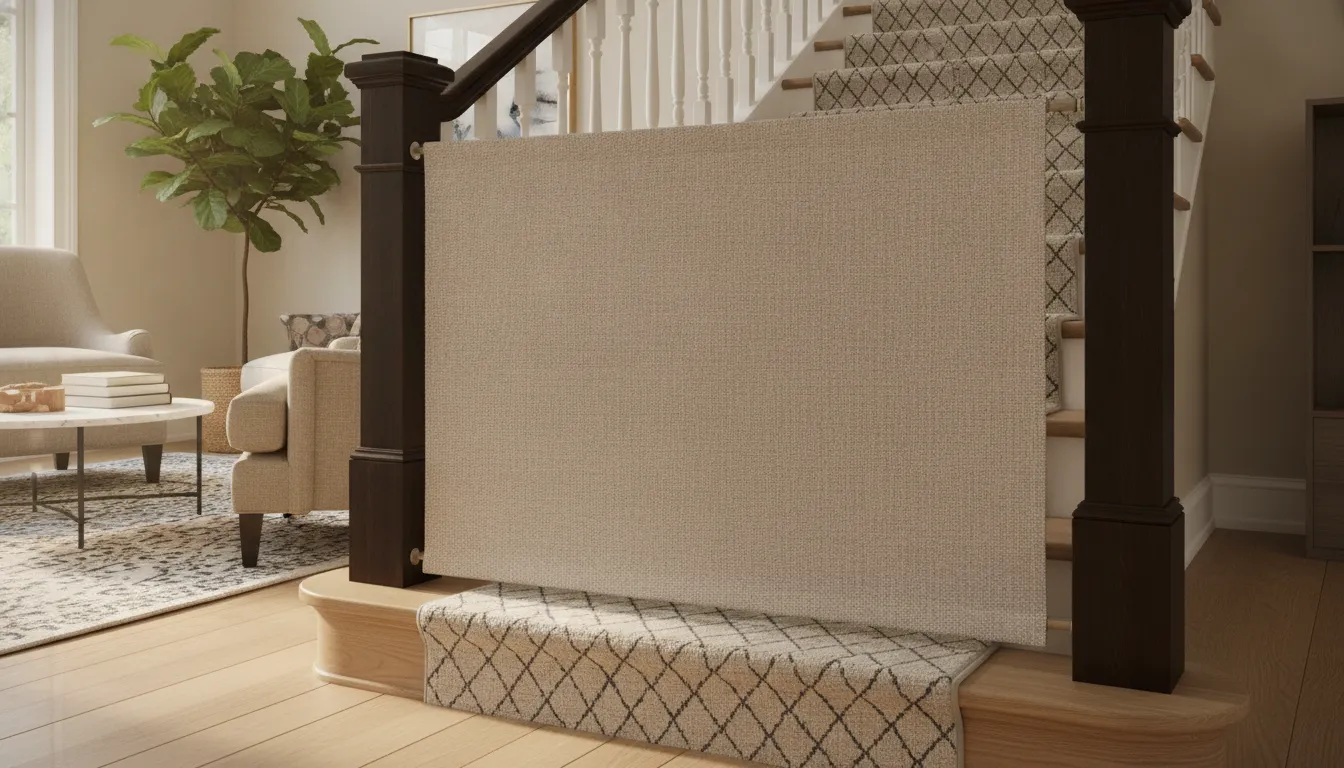
You do not have to give up your home's look for safety. Old gates can look like metal cages or bulky plastic toys. Modern fabric baby gates for banisters match your rugs or chairs. Since these gates sit in plain view, a nice fabric makes a huge change. You can pick colors and patterns that fit your own taste and home decor.
These gates turn a safety tool into a piece of your home's style. You can stay safe and keep your home looking its best at the same time. High-quality fabric gates look like a part of your furniture rather than a baby item. This is a great choice for parents who want a safe home that still looks nice and clean. It proves that safety and good design can go hand in hand.
Comparing gate types for the bottom of stairs
Finding the right baby gate for bottom of stairs use starts with safety. Falls are a top cause of harm for young kids. Each year in the U.S., about 2.2 million kids under 15 visit the ER for harm from falls.
While the top of the stairs is the most risky spot, the bottom also needs a strong barrier. You have three main choices: fabric, rigid swing, and pressure gates. Each type has pros and cons for your home.
Fabric safety gates for stairs
Fabric gates are a top pick for style and ease. Brands like The Stair Barrier make gates that use high quality fabric. These gates look great and fit well with your home decor.
They are also ASTM F1004 certified for safety. This means they meet strict rules for strength and build. You can roll them to the side when they are not in use.
This keeps your path clear and looks neat. For homes with banisters, fabric baby gates for banisters provide a snug fit without drilling into wood.
Rigid hardware-mounted gates
These gates are usually made of metal or wood. You screw them into the wall or a post. This makes them strong and steady. Many parents like these because they swing open like a door.
Some models have a no-trip design. This means there is no bar on the floor to trip over. This helps when you walk through with a child in your arms.
These gates are strong, but they are a long term part of your home. You should look at a choosing a stair safety gate guide to see if your wall can support the weight.
Pressure-mounted gate options
Pressure gates stay in place by pushing against the walls. You do not need tools to set them up. This makes them easy to move from room to room.
But you must be careful with where you put them. Never use a pressure gate at the top of the stairs. They can slip if a child leans on them, and families should follow the maker's placement instructions for every stair area.
At the bottom of stairs, a pressure-mounted model may include a bottom bar that creates a trip risk. Compare it with securely attached options, then choose the design suited to your exact stair layout.
Most of these gates are meant for kids between 6 and 24 months old. They are a good temporary fix for travel or visits.
| Gate Type | Mount Style | Best Feature | Care Needs |
|---|---|---|---|
| Fabric Gate | Strap or Bolt | Snug fit on banisters | Easy to wash |
| Rigid Swing | Hardware Bolt | No bar on floor | Wipe with cloth |
| Pressure Gate | Tension | No tools needed | Check tension often |
How to install a baby gate at the bottom of stairs
Setting up a baby gate for bottom of stairs is a key step for home safety. It blocks your child from trying to climb the stairs when you are busy. Experts say you should use gates at both the top and bottom of each staircase. This helps to stop falls that lead to many trips to the hospital each year. A fabric gate is a top choice for style and safety. It keeps your home looking great while it keeps your small ones safe in your main living areas.
Find your mounting spots
Before you start, you must find where to attach the gate. Look at your stairs to see if they have wooden posts on both sides. If they do, a Banister-to-Banister Gate is the best fit. If you have a wall on one side, you will need a kit for that. Look for a flat area on your post that is strong and solid. A firm spot keeps the gate from moving when a child pushes it. Make sure the floor is flat so the gate sits straight across the gap.
You should also check the height of your mounts. Most safety rules say the gate should be about 30 inches tall. This height keeps a toddler from going over the top. Make sure there are no toys near the stairs that a child could use to climb. Rugs should be flat so they do not trip you. A good plan makes setup much easier for you.
Measure the gap
Taking the right numbers is the most vital part of the job. A gate that is too small will leave gaps that are not safe. A gate that is too big will sag and not stay tight. Measure the gap at the floor and then measure again at 30 inches up. Use our Installation Resources to find help for stairs that have odd shapes. Our team can help you find the right size.
Do not guess the size of your stairs. Even a small error can make the gate less safe. Write down the numbers for the width at the bottom and the top. Our fabric gates fit many sizes, but a good fit is key. If you are not sure, send us a photo of your stairs. We can tell you which gate will work best for your home.
Set up the barrier
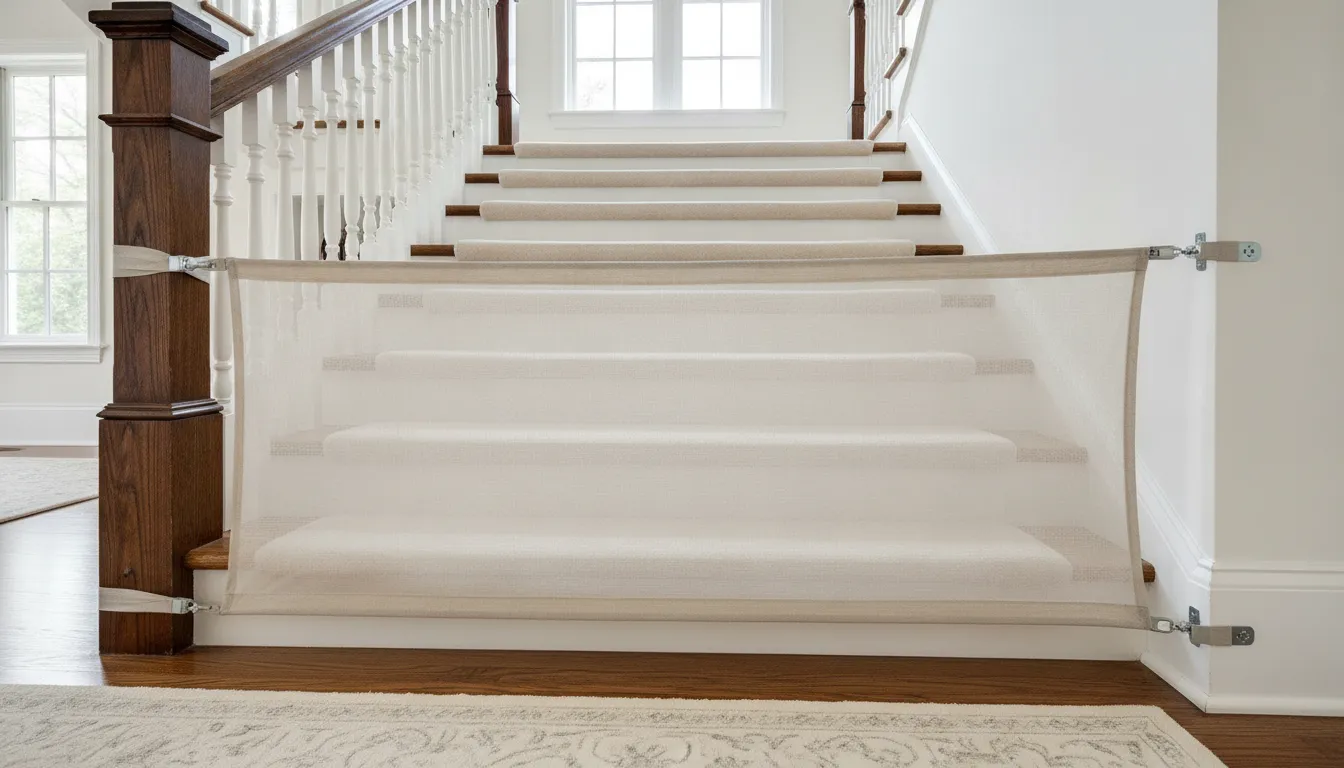
Once you have your gate, follow the guide to put it in place. A good gate must meet ASTM F1004 standards to be safe for home use. These rules help protect kids from 6 to 24 months old. Put the wall kit on first if your gate needs one. Then, wrap the straps around the post and pull them until they are very tight. The fabric should be firm like a drum and not have any loose spots.
After you finish the setup, you must test the gate to be sure it is safe. Push on the middle of the fabric and see if it holds firm. It should not move or pull away from the wall or post. You can find more tips on how to keep kids safe at home on the Mayo Clinic site. Recheck the straps every week to make sure they are still tight. A quick pull keeps your gate safe if the straps stretch.
- Clean the posts or walls to remove dust so the mounts stay in place.
- Mark the height for each strap on the post to keep the gate level.
- Attach the wall-side kit if you are using a Wall-to-Banister Gate.
- Wrap the strong straps around the banister post and pull them tight.
- Close the gate and check that the latch or clip is fully shut.
- Test the tension by pushing on the fabric to make sure it stays firm.
Choosing a gate for your staircase configuration
Finding the right baby gate for bottom of stairs starts with your home layout. Every set of stairs is unlike others. Some have two wood posts while others have a flat wall. You must look at where the gate will attach. A good fit is the first step in home safety. It prevents kids from climbing up when you are not looking. This guide helps you pick the best gate for your exact space.
Banister to banister setups
Many halls have stairs with two banisters. This is a banister to banister layout. Most older gates need you to drill into these posts. This can ruin the wood and leave lasting marks. A fabric gate offers a better way. It uses straps to wrap around the posts. This keeps your banisters safe and looks much better.
When you measure your stairs for a gate, check the width at the floor and the top. Fabric gates help because they can handle small gaps. They use strong fabric that stays tight. You can find many fabric baby gates for banisters that match your home style. These gates are also easy to roll to the side. This is great for busy spots near the front door.
Wall to banister layouts
A wall to banister layout is common in modern homes. One side of the stairs has a wall and the other has a post. This needs a gate that can attach to two surfaces. You will drill hardware into the wall side. The other side uses straps to grip the banister. This creates a firm wall that stays in place.
It is vital to pick a gate that meets top safety rules. The ASTM F1004 safety standard is the best rule for baby gates. These rules ensure the gate can hold up to daily use. They test for strength and how the gate locks. A wall-to-banister baby gate must be strong to keep kids safe. Using a gate that meets these rules is a smart move for any parent.
Style and custom fits
Some stairs have thick boards or odd trim that make gates hard to mount. If your trim is too high, a metal gate might not sit flat. This can create a gap where a child might get stuck. Fabric gates are often easier to fit in these spots. They can sit above the trim or move to fit the angle. This makes them a top choice for odd stairs.
You should also think about the width of your opening. Wide stairs need a gate that does not sag in the middle. Most gates have a limit on how far they can stretch. If your stairs are very wide, look for a gate built for that size. Experts at the Mayo Clinic say that gates should be at both the top and bottom of stairs. This helps prevent falls, which send many kids to the hospital each year.
Picking a gate is also about your style. Hard plastic and metal gates often stand out. Fabric gates blend in with your rugs and seats. They come in many colors and looks. This lets you keep your home looking neat while keeping it safe. When you are choosing a stair safety gate, think about how often you will use it. Fabric gates are light and easy to move. They are also easy to wash in a machine. This is helpful if they get dirty from sticky hands or pets. A clean and stylish gate makes your home feel more calm.
Explore the Wall-to-Banister Stair Barrier for a secure, design-friendly fit.
Bottom-of-stairs safety and daily-use checklist
Setting up a wall-to-banister baby gate is only the first step. You must use the gate the right way each day to keep your home safe. About 2.2 million kids in the U.S. go to the hospital for falls each year. This fact comes from the Mayo Clinic. Many of these falls happen on stairs. Using a gate at the top and bottom of your stairs can help lower this risk.
Daily safety habits
Check that the gate is latched every time you walk through it. A gate that is not shut is a trip hazard. It is also good to check the fit each morning. Fabric gates can shift with heavy use. If your gate feels loose, take a moment to tighten the straps. This keeps the baby gate for bottom of stairs safe for your child.
Watching your child is the best way to stay safe. No gate can take the place of a parent. Even with a gate in place, stay close when your child is near the stairs. Most falls happen when a child finds a way to get around a safety tool. Keep your eyes on your little one to catch any new tricks they might try.
Managing climbing hazards
Watch for things near the stairs that a child could climb on. Toddlers are fast and like to test their skills. Move chairs, toy chests, or stools away from the gate. If a child can climb up, they might try to go over the gate. This is risky at the bottom of the stairs. Make sure the area is clear of all things that help a child climb.
Check the gate for wear that might let a child get a foot-hold. The Stair Barrier uses a smooth fabric design to stop kids from climbing. There are no rungs to step on, unlike metal bars. This makes it much harder for a child to scale the barrier. You can read more about choosing a stair safety gate to prevent climbing.
Routine checks and care
Wash your fabric gate if it gets dirty. You can put Stair Barrier gates in the wash and dryer. This keeps the gear clean and looking new. While the gate is off, check the straps and buckles for any damage. If you see frays or cracks, it may be time for a new gate. Look for the label on the gate to find the date it was made.
Check the wall or banister where the gate attaches. Screws or straps may come loose over time. A firm fit is needed to keep the gate from failing if a child leans on it. Test the gate each week to make sure it stays in place. If it wobbles, fix the mounts right away.
Know when it is time to stop using the gate. Most gates are for kids between 6 and 24 months old. This is part of the ASTM F1004 safety standard from the CPSC. When your child can open the gate or climb over it, you should stop using it. Always follow these rules to keep your home safe for your child.
Why a fabric safety gate works in a busy home
Many homes have wide or odd-shaped stairs. A standard metal gate may not fit well in these spots. A fabric baby gate for bottom of stairs gives you more choice. It can wrap around banisters or fit into tight spaces. This makes it a great pick for a busy house where you need a tool that can bend.
Flexible design for tricky spaces
Stairs come in many styles. Some have wood posts on both sides. Others have a wall on one side. A fabric gate is soft and can move to fit the space. It works much better than a stiff metal frame. You can find fabric baby gates for banisters that you can set up without tools. This saves your home from deep holes or scratches on your wood trim.
These gates also work well in open floor plans. They do not need a flat surface to stay secure. The fabric pulls tight to block the path and stays in place. It keeps your kids and pets on the main floor. This gives you peace of mind while you do chores or cook a meal.
Useful features for daily use
Life with kids is messy. Drinks spill and hands can be sticky. Most metal gates are hard to clean once they get dirty. You have to scrub them by hand with a cloth. Fabric gates from The Stair Barrier are different. You can take the fabric off the frame and put it in the wash. It is also safe to put in the dryer. This helps you keep your home clean and smelling fresh.
Storage is also very easy. When you do not need the gate, you can roll it to one side. It stays out of the way against the wall or post. This is helpful when you have guests or need to move big items through the house. You do not have to take the whole gate down every time. The CPSC sets safety rules for these gates to keep children safe. Every gate should meet the ASTM F1004 standard.
Safe and stylish home design
Safety is the key part of any gate. Falls are a top cause of hurt for young kids. The Mayo Clinic says you should use safety gates at the top and bottom of all stairs. Our fabric gates meet the high bar of the ASTM F1004 safety test. They are strong enough to hold back an active child who likes to climb.
But safety does not have to be ugly. You can pick a fabric that matches your rugs or your couch. This lets the gate blend into your room. It feels like part of your home style instead of a piece of gear. When choosing a stair safety gate, think about how it looks and how it works. A good gate protects your family and looks great too. Just remember that no gate can take the place of watching your child.
For doorways elsewhere in your home, our sister brand Crafted Gates makes fabric gates designed for hallways and interior openings.
Frequently Asked Questions
Is it better to put a baby gate at the top or bottom of stairs?
According to the Mayo Clinic, you should put safety gates at both the top and bottom of each set of stairs. A gate at the top stops your child from falling down. A gate at the bottom keeps them from trying to climb up. Using gates in both spots is the best way to keep your home safe. It helps to lower the risk of falls for young children and toddlers in your house.
What can you use instead of a rigid baby gate for stairs?
If you want to avoid bulky metal or plastic, a fabric safety gate is a great choice. These barriers look nice and blend into your home. They are also soft and have no bars that can catch small hands. Fabric gates are easy to roll out of the way when you do not need to use them. This makes them a top pick for parents who want a clean look while they keep their kids safe at home.
Can you install a baby gate at the bottom of stairs without drilling into banisters?
Yes, you can find gates that use strong straps to wrap around your posts. This means you do not have to drill holes into your wood banisters. These gates are a great fit for the bottom of the stairs. They stay very firm and meet the same ASTM F1004 standards as other gates. This setup keeps your home safe without leaving marks or damage on your beautiful wood posts or stairs.
How long should a baby gate stay at the bottom of the stairs?
Most experts say to use gates for kids between 6 and 24 months old. The CPSC notes that safety standards for these products are for this age range. Once your child can climb over the gate or open it, you may need to take it down. Always watch your child near the stairs, even when you have a gate. Each child learns at a different pace, so use your best judgment as they grow and learn.
Ready to find the right stair gate?
Delaying your stair safety plan can lead to avoidable risks for your small child or pet. Setting up a secure gate now means you can relax knowing the most dangerous part of your home is blocked off. A safe home helps you focus on what matters most without constant worry. You can stop the daily stress of watching the stairs and start enjoying a more peaceful space with your family. Taking this simple step now prevents accidents before they happen and gives you the peace of mind you need as a parent. Do not wait for a close call when you can create a secure environment for your little one right now. The right gate fits your home and keeps your child safe every single day. Using a fabric gate makes your stairs safer without ruining the look of your home.
Ready to find the right stair gate? Find the right stair gate to protect your home today.

Written by Arden Vale
Design & Safety Specialist
Arden provides expert guidance on blending ASTM safety standards with modern interior styling, helping parents and pet owners create secure, beautiful spaces.