


A beautifully composed home can still be ready for a curious baby. The most effective baby proofing checklist does not begin with buying every safety product at once. It begins with seeing each room from a child's changing point of view, prioritizing the hazards with the most serious consequences, and choosing solutions that work with the way your family actually lives.
Shop the Banister-to-Banister fabric safety gate for a more considered approach to stair safety.
This room-by-room guide helps design-conscious parents create a safer environment without turning a carefully curated home into a maze of bulky plastic. Start early, work in deliberate layers, and remember that no product replaces attentive adult supervision.
Baby proofing checklist: start with the highest-risk areas
Quick answer: Address stairs, water, exterior doors, and heavy furniture first. Then secure windows, medicines, cleaning products, and electrical hazards. These areas deserve attention before smaller conveniences because the potential consequences are more serious.
Walk through the home once at adult height, then again from the floor. The second pass often reveals reachable cords, sharp corners, small objects, pet bowls, unstable decor, and climbable furniture that are easy to overlook. The U.S. Consumer Product Safety Commission's childproofing guidance emphasizes practical measures such as anchoring furniture, using window guards, covering unused outlets, and storing medicines and household chemicals out of reach.
- Control access to stairs and water. Evaluate the top and bottom of every staircase, pools, tubs, toilets, and outdoor water features.
- Anchor tip-over hazards. Secure dressers, bookcases, televisions, and consoles according to the manufacturer's instructions.
- Lock away dangerous substances. Medicines, cleaning products, alcohol, batteries, and sharp tools belong in secured storage.
- Review windows and doors. Address accessible windows, blind cords, balcony doors, and exterior exits.
- Remove choking and strangulation hazards. Check floors, low shelves, bags, cords, and older siblings' toys.
Create a short priority list rather than attempting the whole home in one afternoon. A staged plan is easier to maintain, and it lets you make thoughtful choices instead of settling for whatever product is immediately available. For more context before beginning, read how to prepare your home for a baby.
When should you start babyproofing your home?
Quick answer: Start before your baby becomes mobile, then update the plan as new skills emerge. Rolling, crawling, pulling to stand, walking, and climbing each create a different set of reachable hazards.
The calmest time to begin is often during pregnancy or the early newborn months. You can measure openings, order appropriate hardware, anchor furniture, and organize secured storage without rushing. The goal is not to predict an exact date when a child will crawl. It is to have the essential protections in place before movement surprises you.
Use developmental milestones as review points
At the rolling stage, focus on elevated surfaces and anything within reach of a changing area. Before crawling, clear floor-level hazards and examine outlets, cords, low cabinets, and pet supplies. Before pulling to stand, test furniture stability and remove items that could be pulled down. Before walking and climbing, reassess stairs, door handles, windows, and any furniture that resembles a step.
Household routines also change. Visitors may leave handbags within reach. Older children may bring small toys into common spaces. A new pet can relocate food bowls or make gates part of daily traffic. Treat babyproofing as a living system, not a one-time installation.
How do you babyproof stairs without sacrificing style?
Quick answer: Measure the opening, identify whether each side is a wall or banister, select a gate designed for that exact configuration, and install it according to its instructions. For design-conscious homes, fabric safety gates offer a softer visual alternative to conventional metal or plastic.
Stairways combine height, movement, and architectural details, so they deserve individual attention. First identify the installation type: banister-to-banister, wall-to-banister, or wall-to-wall. Then measure the opening at the points specified by the gate manufacturer. Do not assume that a standard rectangular gate will suit a curved banister, angled opening, or decorative newel post.
| Stair configuration | What to assess | Design consideration |
|---|---|---|
| Banister-to-banister | Post shape, opening width, and buckle placement | A fabric barrier can complement both traditional and modern millwork |
| Wall-to-banister | Wall mounting location and banister profile | Choose a fabric and hardware finish that recede into the room |
| Wall-to-wall | Opening width, swing clearance, and traffic flow | Consider how the gate looks both open and closed |
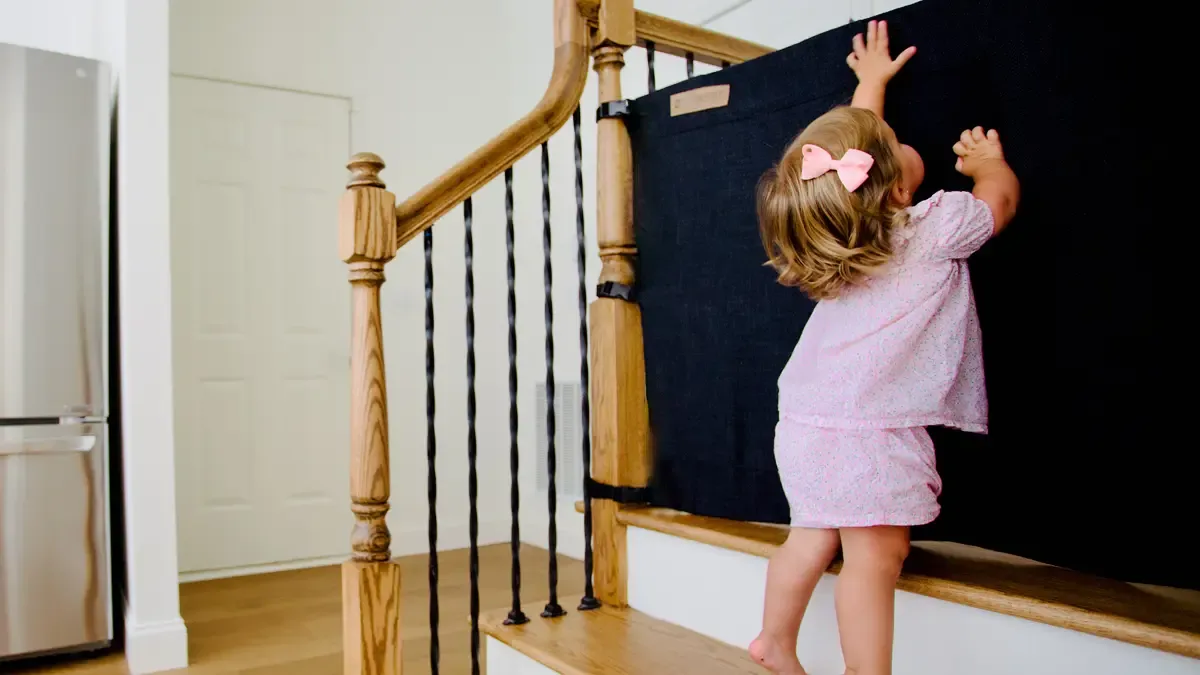
The Stair Barrier's fabric safety gates are available in 20-plus upholstery-grade fabric options, roll to the side when not in use, and are machine-washable and dryer-safe. The Banister-to-Banister configuration is designed for staircase openings with posts on both sides, while the Wall-to-Banister option addresses a different architectural condition. Both meet ASTM F1004 safety standards. They should always be installed and used as directed, with adult supervision.

Pressure-mounted gates can shift and introduce a threshold, so they are not recommended for the top of stairs. Before choosing any model, review what to consider when choosing baby gates for stairs and request fit guidance if the opening is unusual.
Explore fabric safety gates made for distinctive stairways and design-conscious homes.
Kitchen and bathroom essentials
Quick answer: In kitchens and bathrooms, secure hazardous storage and manage hot surfaces and water. Keep small objects out of reach and make adult routines part of the safety plan. These rooms change throughout the day, so passive protections and consistent habits must work together.
Kitchen checklist
- Store knives, cleaning products, alcohol, medicines, and breakable items in secured cabinets.
- Keep appliance cords, hot drinks, and tablecloth edges away from reachable surfaces.
- Use the back burners when practical and turn pot handles inward.
- Check floor level for dropped food, packaging, magnets, and other small objects.
- Keep batteries, especially button batteries, secured and out of reach.
Consider how the kitchen functions during its busiest hour. A latch is useful only if adults close it consistently. A beautifully organized upper cabinet can become the designated home for medicines and chemicals, while lower cabinets can hold safer items such as linens or unbreakable containers.
Bathroom checklist
- Stay within arm's reach during baths and drain the tub immediately afterward.
- Secure medicines, cosmetics, razors, cleaning products, and electrical styling tools.
- Use nonslip surfaces and keep floors as dry as possible.
- Set a safe household water temperature and test bathwater before use.
- Keep toilet lids, waste bins, and cabinets appropriately secured.
Living spaces and nursery safety
Quick answer: Anchor furniture, manage cords, cover unused outlets, remove unstable decor, and keep sleep spaces clear. In polished living spaces, the safest approach is often editing what is within reach rather than adding a visible device to every surface.
Begin with tip-over risks. Secure dressers, media consoles, bookcases, and televisions using appropriate anchors. A child may use drawers as steps or pull on furniture that has always seemed stable to an adult. Keep remotes, coin-sized decor, batteries, candles, and breakable objects above reach.
The scale of this hazard deserves attention. The CPSC reported an estimated annual average of 19,400 emergency-department-treated injuries associated with tip-over incidents from 2019 through 2021. It also reported 592 fatalities from 2000 through 2021, 81% of which involved children under 18. Review the CPSC's tip-over safety findings and anchoring guidance when assessing furniture and televisions.
Protect without overfilling the room
A room can remain sophisticated when safety decisions are integrated into its design. Move sculptural objects to higher shelving. Use closed storage for electronics and small accessories. Select substantial, stable furnishings, then anchor them properly. Route cords behind furniture and keep window-covering cords inaccessible.
In the nursery, follow current safe-sleep guidance from your pediatrician and authoritative public-health sources. Keep the sleep space free from loose items, place monitor cords well beyond reach, and reassess the crib setup as your child grows. The CDC notes that falls are a leading cause of nonfatal injury for children, which reinforces the value of controlling climbing opportunities and elevated surfaces.
For a complementary planning resource, use this childproofing checklist to compare priorities as your home's needs evolve.
Do not overlook these hidden hazards
Quick answer: Ordinary routines introduce easy-to-miss hazards. Look for handbags, charging cords, laundry products, pet supplies, visitor medications, and older children's toys. Reassess furniture after rearranging a room because a new position may make it climbable.
Look beyond permanent fixtures
Guests may place purses containing medicines or cosmetics on the floor. Grocery deliveries can leave plastic bags and packaging temporarily accessible. A charging cable can move from a desk to a sofa. Laundry pods may be transferred into a decorative container that is attractive but not secure. Add these routine-based risks to your checklist.
Plan for pets and siblings
Pet bowls, food, toys, and doors require consideration, especially when a pet needs access to spaces a baby should not enter. Older siblings may own toys with small parts and need a clear storage routine. Families managing both children and pets can review guidance on preparing your dog for a baby.
Audit outdoor transitions
Decks, balconies, garages, patios, and exterior doors can change the moment the weather improves. Check locks, railing gaps, stairs, grills, tools, garden products, and water features. A door that stays closed in winter may remain open throughout summer gatherings, so seasonal habits deserve their own review.
How often should you update your baby proofing checklist?
Quick answer: Review it at every new mobility stage and whenever the home changes. A five-minute monthly walkthrough can catch loose hardware, moved furniture, new cords, worn latches, and routines that no longer match your original plan.
Use recurring reviews to inspect each safety product according to its manufacturer's guidance. Confirm that gates remain correctly installed, furniture anchors remain secure, batteries are contained, and storage locks still function. Wash and care for fabric products as directed, then reinstall them carefully.
It is equally important to retire products when they are no longer appropriate. A barrier that worked for a crawling infant may not suit a confident climber. Follow product age and use guidance, and ask the manufacturer when you are uncertain. The Stair Barrier's customer support can help with measuring and fit questions for distinctive staircase configurations.
Find a Wall-to-Banister fabric safety gate that works with your staircase and your home's aesthetic.
Frequently asked questions
When should I start babyproofing my home?
Begin before your baby becomes mobile, ideally during the early months when you have time to assess each room carefully. Put the highest-priority protections in place first, then revisit the plan as your child begins rolling, crawling, pulling up, and climbing.
What should I babyproof first?
Prioritize stairs, pools, exterior doors, heavy furniture, windows, medicines, cleaning products, and other hazards that could cause a serious injury. Once those are addressed, work through lower-risk details room by room.
Are pressure-mounted gates appropriate at the top of stairs?
No. Pressure-mounted gates are not recommended at the top of stairs because they can shift and create a threshold that may become a tripping hazard. Choose a gate designed for the stair location and follow its installation instructions.
How often should I update a baby proofing checklist?
Review it whenever your child reaches a new mobility stage and after changes to the home, such as moving furniture, adding a pet, renovating, or hosting visitors. Regularly inspect installed products and follow manufacturer guidance.
Create a safer home without compromising its character
A considered baby proofing plan protects what matters while respecting the home you have thoughtfully created. Prioritize the highest-risk areas, choose solutions suited to the architecture, and revisit the plan as your child grows. Safe never looked so good, but supervision remains essential.
Shop The Stair Barrier's premium fabric safety gates and find the right fit for your home.

Written by Arden Vale
Design & Safety Specialist
Arden provides expert guidance on blending ASTM safety standards with modern interior styling, helping parents and pet owners create secure, beautiful spaces.